
Stuffed Cabbage Rolls

There is something undeniably nostalgic about the aroma of a traditional stuffed cabbage rolls recipe simmering on the stovetop. Often associated with Sunday dinners and heritage cooking, this dish represents the pinnacle of comfort food. Each roll is a carefully wrapped package of seasoned meat and grains, slow-cooked until the leaves become buttery and tender enough to cut with a fork. It is the kind of meal that fills the entire house with a savory, sweet, and slightly tangy scent, promising a dinner that is both incredibly filling and deeply soul-satisfying.
While some may find the process of rolling cabbage leaves intimidating, it is actually a rhythmic and rewarding kitchen task that yields a massive reward. This recipe focuses on a balanced ground beef and rice filling tucked inside tender cabbage leaves and bathed in a rich, savory tomato sauce. Whether you grew up eating these at your grandmother’s table or are looking to master a classic technique for the first time, this editorial guide will walk you through the nuances that make this dish a perennial family favorite.
Why This Recipe Is a Keeper
- Incredible Depth of Flavor: The combination of slow-simmered tomato sauce, savory meat, and the natural sweetness of cooked cabbage creates a complex flavor profile that only improves with time.
- Budget-Friendly Ingredients: By utilizing humble staples like cabbage, rice, and ground meat, you can create a high-volume, impressive meal that feeds a crowd without breaking the bank.
- Perfect for Meal Prep: These rolls actually taste better the next day after the flavors have had a chance to meld, and they are one of the most freezer-friendly meals in existence.
- Satisfying Textures: You get the softness of the slow-cooked leaves contrasting with the hearty filling, all brought together by a silky sauce that begs to be soaked up with crusty bread.
Ingredients You’ll Need
The beauty of this traditional stuffed cabbage rolls recipe lies in how it transforms basic pantry and produce items into something extraordinary. Success starts with selecting the right head of cabbage and ensuring your filling is seasoned perfectly to stand up to the long simmering process.
- Green Cabbage: Look for a large, heavy head with loose outer leaves. The leaves need to be pliable enough to roll without cracking, which is achieved through a quick blanching process.
- Ground Beef and Pork: A blend of meats provides the best flavor and moisture. Beef offers a hearty base, while pork adds fat and tenderness to the ground beef and rice filling.
- Long-Grain Rice: This acts as a binder and absorbs the juices from the meat as it cooks. Using parboiled or slightly undercooked rice ensures it finishes perfectly during the simmer.
- Tomato Sauce and Crushed Tomatoes: This forms the base of the braising liquid. The acidity in the tomatoes helps tenderize the cabbage leaves over the long cooking time.
- Aromatics (Onion and Garlic): Finely diced onions and minced garlic are essential for building a savory foundation within both the filling and the sauce.
- Paprika and Herbs: Sweet Hungarian paprika provides a subtle warmth and color, while fresh parsley or dill adds a necessary hit of brightness to the heavy dish.
- Beef Broth: This is used to thin the sauce, ensuring there is enough liquid to completely braise the rolls without the sauce becoming too thick or burning.
- Sugar and Vinegar: A small amount of each creates that classic “sweet and sour” undertone that is characteristic of many Eastern European versions of this dish.
Variations and Smart Swaps
While the classic version is iconic, this recipe is highly adaptable to different dietary needs and flavor preferences. You can easily modify the components while keeping the essential technique the same.
- Protein Alternatives: If you prefer a lighter roll, you can substitute ground turkey or chicken for the beef. Just be sure to add a little extra moisture to the filling to prevent it from becoming dry.
- Grain Swaps: Instead of white rice, try using cooked buckwheat (kasha), quinoa, or even riced cauliflower for a lower-carb comfort food alternative.
- Vegetarian Option: Create a meatless version by using a mixture of chopped mushrooms, cooked lentils, and walnuts. The mushrooms provide a similar umami depth to the traditional meat filling.
- Sauce Styles: While tomato is standard, some regions use a creamy mushroom sauce or a simple lemon-garlic broth. You can also add sauerkraut to the pot for an extra punch of tanginess.
How to Make This Traditional Stuffed Cabbage Rolls Recipe
Step 1: Prep and Soften the Cabbage Leaves
The first step in creating tender cabbage leaves is removing the core and softening the head. Place the whole head of cabbage in a large pot of boiling salted water. As the outer leaves soften, carefully peel them away one by one with tongs. If the inner leaves are still firm, let them boil for another minute or two until the entire head is dismantled. Once the leaves are cool enough to handle, use a paring knife to shave down the thick central vein on the back of each leaf, making it flat and easier to roll.
Step 2: Mix the Hearty Filling
In a large mixing bowl, combine your ground meats, rice, finely chopped onions, garlic, and seasonings. It is important not to overwork the meat; mix just until the ingredients are evenly distributed. This ensures the filling remains light and juicy rather than becoming a dense, rubbery log inside the cabbage. Some cooks prefer to sauté the onions before adding them to the meat for a sweeter, more mellow flavor profile.
Step 3: Roll the Cabbage Envelopes
Place a softened cabbage leaf on a flat surface. Depending on the size of the leaf, place 2 to 4 tablespoons of the meat mixture near the stem end. Fold the sides of the leaf inward over the filling, then roll from the bottom up, much like a burrito. Ensure the roll is snug but not overly tight, as the rice will expand slightly during the cooking process. A well-rolled cabbage roll should stay closed without the need for toothpicks.
Step 4: Build the Braising Liquid
In a separate bowl or pitcher, whisk together your tomato sauce, crushed tomatoes, beef broth, sugar, and vinegar. This sauce should be pourable and well-seasoned. If you like a bit of heat, this is the stage where you can add a pinch of red pepper flakes or extra black pepper. The balance of sweet and tangy is the hallmark of a traditional stuffed cabbage rolls recipe, so taste your sauce before adding it to the pot.
Step 5: Layer and Simmer to Perfection
Line the bottom of a heavy Dutch oven with any leftover or torn cabbage leaves; this prevents the rolls from sticking and burning. Pack the rolls into the pot, seam-side down, in neat layers. Pour the savory tomato sauce over the top, ensuring it seeps down between the rolls. Cover the pot tightly and simmer over low heat for about 90 minutes to two hours. You’ll know they are ready when the cabbage is translucent and completely tender to a knife’s touch.
Pro Tips for the Best Results
- Core Deeply: When prepping the cabbage, cut a deep square around the core. This allows the boiling water to penetrate the center and makes the leaves fall off much more easily.
- Don’t Overcook the Rice: If you are pre-cooking your rice, leave it slightly “al dente.” It will absorb the flavorful fats and juices from the meat as it simmers in the pot, resulting in a much tastier filling.
- The Freezer Method: If you want to avoid boiling, you can freeze the whole head of cabbage for 24 hours, then thaw it. The freezing process breaks down the cell walls, making the leaves perfectly pliable once thawed.
- Let Them Rest: After the cooking time is up, let the pot sit off the heat for 15-20 minutes. This allows the sauce to thicken slightly and the rolls to firm up, making them easier to serve without falling apart.
Troubleshooting Common Problems
Why are my cabbage rolls tough?
If the cabbage leaves are still “snappy” or tough, they likely haven’t simmered long enough. This dish relies on a long, slow braise to break down the tough fibers in the cabbage. Ensure your heat is low and the pot is tightly covered to trap the steam. Additionally, make sure you shaved down the thick central ribs of the leaves before rolling.
Why did my rolls fall apart in the pot?
Rolls usually fall apart if they weren’t packed tightly enough or if the sauce was boiling too vigorously. The rolls should be nestled closely together so they support each other. A gentle simmer—barely a bubble—is all you need. If you have extra space in the pot, you can weigh the rolls down with a heat-proof ceramic plate during cooking.
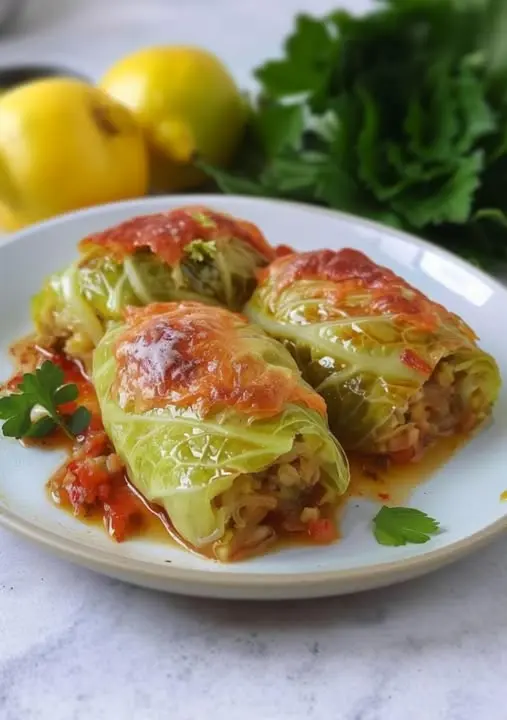
How to Serve Stuffed Cabbage
This traditional stuffed cabbage rolls recipe is a complete meal on its own, but the right accompaniments can elevate it even further. The most classic way to serve these is with a generous dollop of cold sour cream on top, which cuts through the acidity of the tomato sauce and adds a luxurious creaminess.
Recommended Side Dishes
To soak up the extra savory tomato sauce, serve the rolls alongside mashed potatoes or a side of buttered egg noodles. For a lighter pairing, a crisp cucumber salad with dill and vinegar provides a refreshing contrast to the warm, rich rolls. Many people also enjoy a thick slice of rye bread or sourdough to ensure not a drop of the sauce goes to waste.
Garnishing for Presentation
While cabbage rolls aren’t inherently the most “glamorous” looking dish, a sprinkle of fresh herbs can make a huge difference. Finely chopped parsley or fresh dill adds a pop of green that makes the plate look vibrant and appetizing. A final crack of black pepper over the sour cream adds the perfect finishing touch.
Storage and Make-Ahead
One of the best things about this family favorite is how well it stores. In fact, many people argue that the leftovers are superior because the rice has more time to absorb the nuance of the sauce.
Storing Leftovers
Store any remaining rolls in an airtight container in the refrigerator for up to 4 days. When reheating, it is best to do so gently on the stovetop with a splash of water or extra broth to loosen the sauce, or in the microwave at 50% power to ensure the centers get hot without the outside becoming rubbery.
Freezing Instructions
Stuffed cabbage rolls freeze beautifully. Once they have cooled completely, place them in a freezer-safe container, covering them with the remaining sauce. They will keep well for up to 3 months. To serve, thaw them overnight in the refrigerator before reheating. This makes them a fantastic option for a double-batch cooking session.
Final Thoughts
Mastering a traditional stuffed cabbage rolls recipe is a rite of passage for many home cooks. It is a dish that rewards patience and attention to detail, turning simple ingredients into a sophisticated, multi-layered meal. From the first bite of the melt-in-your-mouth cabbage to the savory, seasoned filling, every element of this dish is designed to provide warmth and satisfaction. Whether you are serving this for a special holiday or a quiet Sunday evening, it is a recipe that brings a sense of tradition and heart to the dinner table.
Frequently Asked Questions
Can I make this recipe in a slow cooker?
Absolutely. A slow cooker is an excellent tool for this dish because it maintains a consistent low heat. Simply layer the rolls and sauce in the crockpot and cook on low for 6 to 8 hours. The result will be incredibly tender cabbage leaves and a filling that is infused with flavor. Just be sure to reduce the amount of broth slightly, as the slow cooker produces more moisture.
Do I have to cook the rice before putting it in the meat mixture?
Most traditional recipes call for either raw rice or parboiled rice. If you use raw rice, make sure your filling has enough moisture (from the meat and onions) for the rice to absorb. If you find your filling is often too dry, try boiling your rice for only 5-7 minutes before mixing it in. This gives the rice a head start without it becoming mushy during the long simmer.
What is the best type of cabbage to use?
Standard green cabbage is the traditional choice because it is sturdy and holds its shape during long cooking times. However, Savoy cabbage is a beautiful alternative; its crinkled, lace-like leaves are very flexible and look stunning when plated. Avoid red cabbage for this specific recipe, as it can turn the filling and sauce an unappetizing color and has a much tougher texture.
How do I prevent the cabbage leaves from tearing?
The key to intact leaves is proper softening. If you try to peel a raw cabbage leaf, it will shatter. Boiling the head or using the freezer method is essential. Also, when you are shaving down the thick rib on the back of the leaf, be careful not to cut all the way through the leaf. Shaving it flat makes the leaf much more pliable and less likely to snap at the “hinge” point.
Is this recipe gluten-free?
This traditional stuffed cabbage rolls recipe is naturally gluten-free, provided you check the labels on your beef broth and tomato products. Rice is a gluten-free grain, making this an excellent comfort food option for those with dietary restrictions. Always ensure your spices, like paprika, are pure and do not contain anti-caking agents derived from wheat.
Vegetarian Stuffed Cabbage Rolls

These savory cabbage rolls are a hearty vegetarian alternative to the classic comfort food, featuring a savory filling of rice and mushrooms baked in a zesty tomato sauce.
- 1 large head green cabbage
- 2 cups cooked long-grain white rice
- 1 lb mushrooms, finely chopped
- 1 medium onion, finely diced
- 3 cloves garlic, minced
- 1 can (15 oz) tomato sauce
- 1/2 cup vegetable broth
- 1 tbsp olive oil
- 1 tsp dried thyme
- Salt and black pepper to taste
- 1Preheat your oven to 350°F (175°C).
- 2Bring a large pot of water to a boil. Carefully remove the core of the cabbage and submerge the whole head in the water. Boil for 5-8 minutes, peeling off the outer leaves as they become soft and pliable. Set aside 12 large leaves.
- 3In a large skillet, heat olive oil over medium heat. Sauté the onion, garlic, and mushrooms until the mushrooms have released their moisture and are browned.
- 4In a large mixing bowl, combine the mushroom mixture with the cooked rice, thyme, salt, and pepper.
- 5Trim the thick central rib from each cabbage leaf. Place about 1/4 cup of the rice mixture in the center of a leaf, fold in the sides, and roll up tightly.
- 6Place the rolls seam-side down in a 9x13 inch baking dish.
- 7Mix the tomato sauce and vegetable broth together and pour evenly over the rolls.
- 8Cover the dish with foil and bake for 45-50 minutes until the cabbage is tender.
Keywords: vegetarian cabbage rolls, mushroom stuffed cabbage, meatless dinner, healthy comfort food, golubtsi


