
Strawberry Cheesecake

There is something undeniably timeless about a perfectly executed cheesecake, especially when it is topped with a vibrant, glossy layer of sun-ripened berries. This best homemade strawberry cheesecake recipe delivers a dessert that strikes the ideal balance between a rich, velvety New York-style base and a bright, slightly tart fruit topping. Unlike store-bought versions that can often feel overly dense or artificial, this version focuses on high-quality dairy and the natural sweetness of fresh strawberries to create a showstopper that feels both sophisticated and deeply comforting.
Mastering this dessert is less about professional baking skills and more about understanding a few key techniques, such as the water bath and the cooling process. By following a few simple steps to manage temperature and aeration, you can achieve a creamy cheesecake texture that is completely free of cracks and carries a smooth, melt-in-your-mouth consistency. Whether you are preparing this for a holiday gathering or a special summer celebration, the results are consistently impressive and worth every minute of patience required during the chilling stage.
Why You’ll Love This Recipe
- Perfect Texture Contrast: The combination of a buttery, crisp graham cracker crust and a dense, silky filling provides a satisfying mouthfeel that keeps the dessert from feeling one-dimensional.
- Fresh Fruit Forward: Instead of using canned pie filling, this recipe utilizes a homemade strawberry compote that highlights the natural acidity and floral notes of fresh berries.
- Foolproof Method: By utilizing a water bath and a gradual cooling cycle, the recipe minimizes the risk of common pitfalls like surface cracking or a rubbery internal structure.
- Make-Ahead Convenience: Because cheesecake actually improves in flavor and structure after 24 hours in the refrigerator, it is the ultimate stress-free dessert for entertaining.
Ingredients You’ll Need
To achieve the best homemade strawberry cheesecake recipe, every ingredient serves a specific structural or flavor-based purpose. Selecting high-quality dairy is the most important factor in the final outcome.
- Full-Fat Cream Cheese: This is the backbone of the dessert. It is essential to use the brick-style variety rather than the spreadable kind from a tub to ensure the filling sets firmly enough to slice.
- Granulated Sugar: Sugar does more than just sweeten; it helps to break down the proteins in the cream cheese, resulting in a smoother batter that incorporates air more evenly.
- Sour Cream: Adding a touch of sour cream introduces a subtle tanginess that cuts through the richness of the cheese while contributing to a softer, more luxurious texture.
- Large Eggs: Eggs act as the primary binding agent. They provide structure as they bake, allowing the cheesecake to puff slightly and then set into a stable, sliceable form.
- Pure Vanilla Extract: A high-quality vanilla enhances the dairy notes and provides a warm aromatic background that complements the brightness of the strawberries.
- Graham Crackers: These provide the classic slightly salty, honeyed base that anchors the sweet filling. Finely grinding them ensures the crust stays together without crumbling excessively.
- Unsalted Butter: Melted butter binds the crumbs together. Using unsalted butter allows you to control the exact level of seasoning in the base.
- Fresh Strawberries: For the topping, look for deeply red, fragrant berries. They are cooked down slightly to intensify their juice while maintaining enough structure to offer a bite.
- Lemon Juice: A splash of citrus in the strawberry topping prevents the sauce from becoming cloying and helps the natural pectin in the fruit set the glaze.
Variations and Smart Swaps
While the classic version is a crowd-pleaser, there are several ways to adapt the best homemade strawberry cheesecake recipe to suit your personal preferences or dietary needs.
- Alternative Crusts: For a deeper flavor, swap the graham crackers for crushed vanilla wafers or even chocolate sandwich cookies. A chocolate base pairs exceptionally well with the strawberry topping.
- Mixed Berry Topping: If strawberries aren’t at their peak, you can use a combination of raspberries, blueberries, and blackberries to create a forest-berry glaze with a more complex tartness.
- Greek Yogurt Swap: If you find yourself out of sour cream, full-fat plain Greek yogurt is an excellent substitute. It provides a similar tang and moisture level without thinning the batter.
- Lemon Zest Infusion: For a more aromatic filling, fold the zest of one large lemon into the cream cheese mixture. This adds a bright, citrusy lift that enhances the fruit topping beautifully.
How to Make the Best Homemade Strawberry Cheesecake
Step 1: Prepare and Blind-Bake the Crust
The foundation of any great cheesecake starts with the base. Combine your finely ground crumbs with melted butter and a touch of sugar, pressing the mixture firmly into the bottom of a springform pan. It is helpful to use the bottom of a flat measuring cup to ensure the crust is even and packed tightly. Baking the crust for about ten minutes before adding the filling is a critical step; it toasts the crumbs and creates a barrier that prevents the crust from becoming soggy once the wet batter is added.
Step 2: Cream the Cheese and Sugar
In a large mixing bowl, beat the room-temperature cream cheese and sugar together until the mixture is completely smooth and free of lumps. This is the only stage where you can mix vigorously. The goal is to ensure the sugar is fully dissolved into the fat. If the cheese is too cold, you will end up with small white flecks in your finished cake that are impossible to remove later, so ensure your ingredients have sat out for at least two hours before starting.
Step 3: Gently Incorporate the Eggs
Once the base is smooth, add the eggs one at a time. This is where many bakers make a mistake; you must mix on low speed just until the yellow of the yolk disappears. Over-mixing at this stage introduces too much air into the batter, which causes the cheesecake to rise like a soufflé in the oven and then collapse, leading to deep cracks on the surface. A slow, steady incorporation ensures a dense, professional-grade creamy cheesecake texture.
Step 4: The Water Bath Method
To protect the delicate dairy proteins from the harsh, direct heat of the oven, use a bain-marie, or water bath. Wrap the outside of your springform pan in several layers of heavy-duty aluminum foil to prevent leaks, then place it inside a larger roasting pan. Fill the roasting pan with boiling water until it reaches halfway up the sides of the cheesecake pan. This creates a humid environment and ensures the edges don’t overcook before the center is set.
Step 5: The Slow Cooling Process
Perhaps the most important step for the best homemade strawberry cheesecake recipe is the cooling cycle. When the timer goes off, the center should still have a slight jiggle like gelatin. Turn off the oven, prop the door open slightly with a wooden spoon, and let the cake sit inside for an hour. This gradual drop in temperature prevents the cake from shrinking too quickly, which is the primary cause of surface tension cracks. After the hour is up, let it reach room temperature on the counter before moving it to the fridge.
Step 6: Simmer the Strawberry Compote
While the cake chills, prepare the topping by simmering sliced strawberries with sugar and lemon juice. You want to cook them just long enough for the juices to release and thicken into a syrupy glaze, but not so long that the berries lose their shape entirely. This homemade strawberry compote should be chilled completely before being poured over the set cheesecake. Adding a warm topping to a cold cake will cause the surface of the cheesecake to melt and become slippery.
Pro Tips for Success
- Use Room Temperature Ingredients: This is non-negotiable. Cold cream cheese will result in a lumpy batter, and cold eggs can cause the fat in the cheese to seize up.
- Avoid Opening the Oven: Every time you open the door, you lose heat and humidity. Trust the timer and only check the “jiggle” at the very end of the baking window.
- Seal the Pan Carefully: To prevent the water bath from seeping into your crust, consider using a slow-cooker liner or a silicone pan protector over the foil for an extra layer of waterproofing.
- Clean Slices: For professional-looking slices, dip a long, thin knife into hot water and wipe it dry between every single cut. This prevents the filling from sticking to the blade and tearing the cake.
- Strain the Berries: If you prefer a very smooth topping, you can strain the seeds from the strawberry sauce after cooking, though most people enjoy the rustic look of the whole fruit.
Troubleshooting Common Problems
Why Did My Cheesecake Crack?
Cracks usually happen for two reasons: over-mixing the eggs or cooling the cake too fast. If you whip too much air into the batter, it expands and then contracts sharply. Similarly, moving a hot cake directly to a cold counter causes the structure to “shock.” If a crack does appear, don’t worry—the homemade strawberry compote is the perfect “edible glue” to hide any surface imperfections.
Why Is the Crust Soggy?
A soggy crust is almost always the result of a water bath leak. Ensure you are using heavy-duty foil and that the foil comes all the way up the sides of the pan. If you find the crust is consistently soft, try pre-baking it for five minutes longer to ensure the butter and crumbs have fully caramelized into a solid layer.
Why Is My Filling Lumpy?
Lumps occur when the cream cheese isn’t soft enough before mixing or when cold liquids (like sour cream or eggs) are added to the cheese too quickly. To fix a lumpy batter before baking, you can push it through a fine-mesh sieve, though it is much easier to simply ensure your ingredients are properly tempered beforehand.
How to Serve This Cheesecake
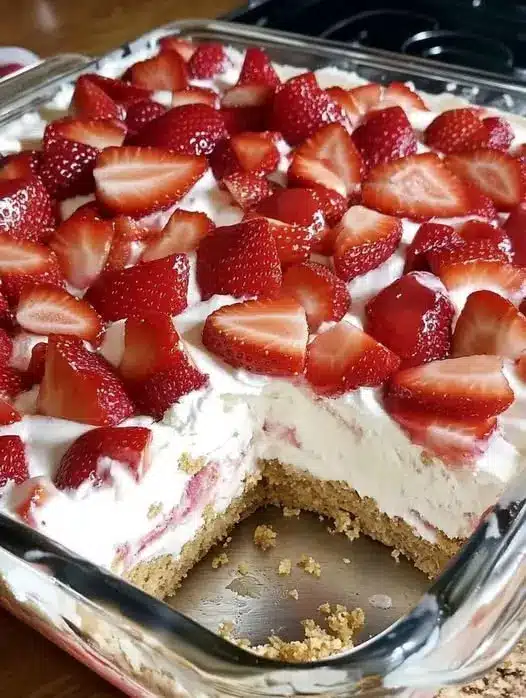
Presentation is key when serving the best homemade strawberry cheesecake recipe. While the fruit topping is beautiful on its own, a few simple garnishes can elevate the dish for a formal event. Consider adding a few sprigs of fresh mint for color contrast or a light dusting of powdered sugar around the edges of the plate. If you want to lean into the indulgence, a dollop of lightly sweetened whipped cream on the side is always a welcome addition.
Timing your serving is also important. Cheesecake is best served slightly chilled but not ice-cold. Taking the cake out of the refrigerator about 20 to 30 minutes before serving allows the fats in the cream cheese to soften just enough to release their full flavor profile and achieve that signature creamy cheesecake texture. For a summer garden party, keep the cake on a chilled marble slab to prevent it from becoming too soft in the heat.
Storage and Make-Ahead
Storing Leftovers
Cheesecake should always be kept refrigerated. Cover it loosely with plastic wrap or store slices in an airtight container to prevent the dairy from absorbing other odors in the fridge. It will remain fresh and delicious for up to five days, making it an excellent dessert for grazing throughout the week.
Freezing
You can freeze the baked cheesecake base (without the topping) for up to three months. Wrap the cooled cake tightly in several layers of plastic wrap and then a layer of foil. When you are ready to serve, thaw it overnight in the refrigerator and add the fresh homemade strawberry compote just before serving for the best texture.
Making It Ahead
Because the flavor deepens and the structure stabilizes overnight, I actually recommend making this dessert a full 24 hours before you plan to serve it. This allows the graham cracker crust to soften slightly into the filling and ensures every slice comes out clean and firm.
Final Thoughts
Creating the best homemade strawberry cheesecake recipe is a rewarding process that results in a dessert far superior to anything found in a bakery case. By focusing on the details—like room-temperature ingredients and a gentle baking environment—you can produce a professional-quality cake in your own kitchen. The combination of the rich, tangy filling and the bright, ruby-red strawberries makes this a versatile treat that fits any occasion. Once you see how much better a scratch-made cheesecake tastes, it will likely become a permanent fixture in your dessert rotation.
Frequently Asked Questions
Do I really need a water bath for this recipe?
While you can bake a cheesecake without one, it is highly recommended for this specific style. The water bath regulates the temperature and provides moisture, which is essential for achieving a creamy cheesecake texture without the edges becoming overbaked or the top cracking. It acts as an insurance policy for a perfect finished product.
Can I use frozen strawberries for the topping?
Yes, frozen strawberries work perfectly well for the sauce, especially when fresh berries are out of season. Just keep in mind that frozen berries release more water, so you may need to simmer the sauce for a few extra minutes to achieve the desired thickness. For the best visual appeal, try to find “whole” frozen berries rather than sliced ones.
What if I don’t have a springform pan?
A springform pan is ideal because it allows you to remove the sides without disturbing the delicate cake. If you don’t have one, you can use a regular deep-dish cake pan lined with parchment paper that hangs over the edges. You will need to be very careful when lifting the cake out, and it is best to do this only after the cake is fully chilled and firm.
How do I know for sure when the cheesecake is done?
The “jiggle test” is the most reliable method. Gently shake the pan; the outer two inches of the cake should be set and firm, while the center should still wobble slightly like a bowl of Jell-O. If the entire cake is firm, it is overbaked. If the center looks liquid or sloshes, it needs more time. The residual heat during the cooling phase will finish cooking the center perfectly.
Can I make the crust without a food processor?
Absolutely. You can place the graham crackers in a large zip-top bag and crush them with a rolling pin or the bottom of a heavy skillet until they reach a fine, sandy consistency. Just ensure there are no large chunks left, as these can cause the graham cracker crust to fall apart when you try to slice the finished cheesecake.
Classic Strawberry Cheesecake

A rich, velvety New York-style cheesecake topped with a glossy homemade strawberry glaze and fresh berries. This decadent dessert features a buttery graham cracker crust and a creamy filling that melts in your mouth.
- 1 1/2 cups graham cracker crumbs
- 1/4 cup granulated sugar
- 6 tbsp unsalted butter, melted
- 32 oz cream cheese, softened to room temperature
- 1 cup granulated sugar
- 1 cup full-fat sour cream
- 1 tsp pure vanilla extract
- 4 large eggs, room temperature
- 1 lb fresh strawberries, hulled and sliced
- 1/4 cup strawberry jam, warmed for glazing
- 1Preheat your oven to 325°F (163°C) and lightly grease a 9-inch springform pan.
- 2In a medium bowl, combine graham cracker crumbs, 1/4 cup sugar, and melted butter. Press firmly into the bottom of the pan.
- 3In a large mixing bowl, beat the softened cream cheese and 1 cup sugar until smooth and creamy.
- 4Mix in the sour cream and vanilla extract until fully incorporated.
- 5Add the eggs one at a time, beating on low speed after each addition just until blended to avoid over-mixing.
- 6Pour the batter over the prepared crust. Bake for 60 to 70 minutes, or until the edges are set and the center is still slightly wobbly.
- 7Turn off the oven and let the cheesecake sit inside with the door slightly ajar for 1 hour to prevent cracking.
- 8Refrigerate for at least 6 hours, or ideally overnight, before removing from the pan.
- 9Arrange fresh strawberry slices on top and brush with warmed strawberry jam before serving.
Keywords: strawberry cheesecake, homemade dessert, baking, cream cheese recipe, classic cheesecake


