
Ribeye Steak

Few things in the culinary world are as universally satisfying as a perfectly prepared steak. When you learn how to cook ribeye steak at home, you unlock the ability to recreate a high-end steakhouse experience without the premium price tag. Known for its incredible marbling and rich, beefy flavor, the ribeye is widely considered the king of steaks. Whether you are preparing a romantic dinner or a weekend feast, mastering the art of the sear and the butter baste ensures a result that is tender, juicy, and packed with savory depth.
The beauty of this method lies in its simplicity and reliance on classic techniques. By focusing on temperature control and high-quality aromatics, you can achieve a deeply caramelized crust—the Maillard reaction—that contrasts beautifully with a melt-in-your-mouth interior. This guide will walk you through the nuances of selecting the right cut, preparing the meat for the pan, and the critical step of resting, ensuring your cast iron skillet becomes your favorite tool for protein perfection.
Why This Recipe Is a Keeper
- Steakhouse Quality: Achieve that iconic, dark-brown crust and edge-to-edge pink interior that usually requires a professional broiler.
- Incredible Flavor: By using the butter-basting technique, the steak is infused with the essence of fresh garlic and woody herbs like rosemary and thyme.
- Accessible Elegance: While it feels like a luxury meal, the process requires only a few pantry staples and a single heavy-duty pan.
- Total Control: Cooking at home allows you to monitor the internal temperature precisely, ensuring your steak is never overcooked or under-seasoned.
Ingredients You’ll Need
Before you turn on the stove, it is essential to have your ingredients prepped and ready. Because this method moves quickly once the steak hits the heat, having your aromatics smashed and your butter measured will prevent any unwanted burning or stress in the kitchen.
- Ribeye Steak: Look for a cut at least 1.5 inches thick. This thickness allows you to get a great sear on the outside without overcooking the center.
- Kosher Salt: The coarse grains are ideal for drawing out moisture and creating a seasoned “dry brine” that helps the crust form.
- Freshly Cracked Black Pepper: Using fresh pepper provides a much more vibrant, spicy kick than pre-ground varieties.
- High-Smoke Point Oil: Use avocado, grapeseed, or canola oil. Avoid extra virgin olive oil for searing, as it will smoke and turn bitter at high temperatures.
- Unsalted Butter: This is used for basting at the end. Unsalted allows you to control the seasoning, while the milk solids brown to create a nutty aroma.
- Garlic Cloves: Smashed whole cloves release their oils into the butter without burning as quickly as minced garlic would.
- Fresh Herbs: Rosemary and thyme are the classic choices, providing a piney, earthy fragrance that cuts through the richness of the beef.
Simple Swaps and Variations
The Reverse Sear: If you have an exceptionally thick steak (over 2 inches), consider the reverse sear. You bake the steak at a low temperature in the oven until it reaches about 115°F, then finish it in a hot pan for the crust.
Different Fat Sources: For an even richer flavor, you can use beef tallow or clarified butter (ghee) instead of oil. Ghee has a very high smoke point and a deep, buttery flavor that stands up to intense heat.
Spice Rubs: While salt and pepper are traditional, you can add a dry rub including garlic powder, onion powder, or even a touch of smoked paprika for a southwestern flair.
How to Make the Perfect Ribeye
Step 1: Temper and Dry the Meat
Start by removing your steak from the refrigerator at least 30 to 45 minutes before cooking. This allows the meat to come closer to room temperature, which ensures more even cooking. If the center is ice-cold when it hits the pan, the outside will overcook before the middle is ready. Use paper towels to pat the steak extremely dry on all sides. Moisture is the enemy of a good sear; if the surface is wet, the steak will steam rather than brown. Once dry, season generously with kosher salt and pepper, making sure to coat the edges as well.
Step 2: Get the Pan Ripping Hot
Place a heavy cast iron skillet over high heat. Add a tablespoon of high-smoke point oil and wait until it begins to shimmer and just starts to release a faint wisp of smoke. This high heat is vital for the Maillard reaction, the chemical process that creates the complex, savory flavors in the crust. If the pan isn’t hot enough, you won’t get that signature steakhouse char, and the meat may stick to the surface of the pan.
Step 3: The Initial Sear
Carefully lay the steak into the pan, laying it away from you to avoid oil splatters. You should hear a loud, aggressive sizzle immediately. Press down slightly with a spatula or tongs to ensure the entire surface of the meat makes contact with the metal. Sear for about 2 to 3 minutes without moving the steak. Once a deep, dark brown crust has formed, flip it over. Use your tongs to sear the fat cap on the side of the steak for about 30 seconds to render out some of the fat and crisp up the edges.
Step 4: The Butter Basting (Arrosé)
Lower the heat to medium-high and add the butter, smashed garlic cloves, and fresh herbs to the pan. As the butter melts and begins to foam, tilt the skillet slightly so the butter pools at the bottom with the aromatics. Use a large spoon to continuously pour that hot, flavored butter over the steak. This technique, known as butter basted steak, adds incredible moisture and flavor while finishing the cooking process gently. Continue this for 2 to 3 minutes, or until an instant-read thermometer hits your desired internal temperature (usually 130°F to 135°F for medium-rare).
Step 5: The Essential Rest
Remove the steak from the pan and place it on a warm plate or a wooden cutting board. Pour any remaining butter from the pan over the top. Let the steak rest for at least 5 to 10 minutes. This is perhaps the most important step in how to cook ribeye steak correctly. During resting, the muscle fibers relax and reabsorb the juices. If you cut into it too soon, those juices will run out onto the board, leaving you with dry, tough meat.
Pro Tips for the Best Results
- Use a Meat Thermometer: Don’t rely on the “finger poke” test. A digital thermometer is the only way to guarantee a perfect medium-rare result every single time.
- Salt Early: If you have time, salt the steak 24 hours in advance and leave it uncovered in the fridge. This acts as a dry brine, deeply seasoning the meat and drying out the surface for a superior crust.
- Don’t Crowd the Pan: If you are cooking multiple steaks, ensure there is plenty of space between them. Crowding drops the pan temperature and causes the meat to boil in its own juices.
- Finish with Flaky Salt: After slicing, sprinkle a little bit of Maldon or fleur de sel over the meat. It provides a delightful crunch and enhances the beefy flavor.
Troubleshooting Common Problems
Why is my steak gray and not brown?
This usually happens for two reasons: the pan wasn’t hot enough, or the steak was too wet when it hit the oil. Ensure you see a bit of smoke from the oil before adding the meat, and always use paper towels to pat the surface dry. Also, avoid flipping the steak too early; it needs uninterrupted contact with the heat to develop a crust.
Why is there a thick gray band around the edges?
A gray band indicates that the outside of the steak cooked much faster than the inside. To minimize this, ensure you temper the meat properly before cooking. You can also try flipping the steak more frequently (every 30 seconds) if you aren’t doing the butter-basting method, which helps heat penetrate more evenly from both sides.
Why is my garlic bitter and black?
Garlic burns easily at high temperatures. If you add the garlic at the very beginning of the sear, it will burn. Always wait until you have flipped the steak and lowered the heat slightly before adding your butter and aromatics for the basting phase.
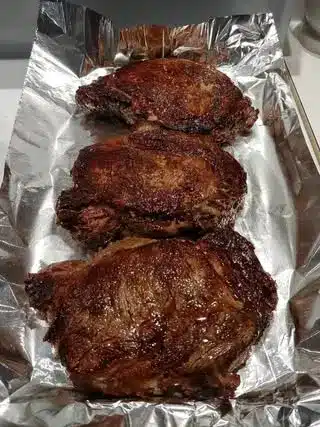
How to Serve Your Ribeye
Once your steak has rested, slice it against the grain to ensure maximum tenderness. The ribeye is a rich cut, so it pairs best with sides that can balance that intensity.
Garnishes and Sauces
While the butter-basting liquid is a sauce in itself, you can elevate the dish with a dollop of compound butter made with blue cheese or chimichurri for a bright, acidic contrast. A simple red wine reduction made in the same pan after the steak is removed can also add a sophisticated touch.
Classic Side Dishes
You can’t go wrong with the classics. Garlicky mashed potatoes, crispy duck fat fries, or a loaded baked potato are traditional for a reason. For something lighter, consider roasted asparagus with lemon zest, sautéed mushrooms, or a crisp wedge salad with blue cheese dressing.
Storage and Make-Ahead
Storing Leftovers
If you happen to have leftovers, store the steak in an airtight container in the refrigerator for up to 3 days. Leftover ribeye is excellent when thinly sliced for steak sandwiches, tacos, or tossed into a cold noodle salad.
Reheating
The best way to reheat steak without turning it into rubber is to use the oven. Place the steak on a wire rack over a baking sheet and heat at 250°F until the internal temperature reaches 110°F. Then, give it a very quick 30-second flash-sear in a hot pan to crisp up the exterior again.
Final Thoughts
Learning how to cook ribeye steak is a culinary milestone that brings the joy of a professional kitchen into your own home. By respecting the meat—letting it temper, searing it aggressively, and basting it with aromatics—you create a meal that is far more than the sum of its parts. Remember that patience is your best friend; the time spent waiting for the pan to heat and the meat to rest is what separates a good steak from a legendary one. Put on your apron, get that skillet hot, and enjoy the process of creating a truly world-class meal.
Frequently Asked Questions
Should I leave the bone in or buy boneless?
Bone-in ribeyes (often called Cowboy steaks) are beautiful for presentation and can help the meat stay slightly more moist near the bone. However, boneless ribeyes are much easier to sear evenly because the bone won’t lift the meat off the surface of the pan. Both are delicious, so choose based on your preference for ease versus aesthetic.
What is the best oil for searing steak?
You want an oil with a high smoke point, which means it won’t burn or produce toxic smoke at the 400°F+ temperatures required for searing. Avocado oil is the gold standard, but grapeseed oil and vegetable oil are also excellent, affordable choices. Never use butter alone for the initial sear, as the milk solids will burn instantly.
How do I know when my steak is medium-rare?
The most reliable method is using an instant-read thermometer. For a perfect medium-rare, you want to pull the steak off the heat when it hits 130°F to 135°F. The temperature will continue to rise about 5 degrees while it rests (this is called carryover cooking), bringing it to the ideal final window of 135°F to 140°F.
Can I cook a ribeye in a non-stick pan?
While you can, it isn’t recommended. Non-stick coatings are generally not designed for the extreme high heat required to get a proper steakhouse crust. Additionally, cast iron or stainless steel provides much better heat retention and distribution, which is crucial for a consistent sear. A cast iron skillet is the best tool for the job.
Do I need to trim the excess fat before cooking?
With a ribeye, you want to keep most of that fat! The large “eye” of fat and the marbling are what provide the flavor. However, if there is a very long, dangling piece of fat on the edge, you can trim it slightly so it doesn’t flare up in the pan. Generally, you want to render that fat down during the cooking process to add flavor to the entire steak.
Perfect Pan-Seared Ribeye Steak

Achieve a restaurant-quality steak at home with this simple pan-seared ribeye method. This steak features a deep golden crust and is basted in rich garlic butter and fresh herbs for maximum flavor.
- 1 (16-ounce) boneless ribeye steak, 1.5 inches thick
- 2 tablespoons high-smoke point oil (such as avocado or grapeseed oil)
- 1 teaspoon kosher salt
- 1/2 teaspoon freshly cracked black pepper
- 3 tablespoons unsalted butter
- 3 cloves garlic, smashed
- 2 sprigs fresh rosemary or thyme
- 1Prepare the steak: Take the steak out of the refrigerator 30 minutes before cooking to bring it to room temperature. Pat it thoroughly dry with paper towels.
- 2Season: Generously season both sides and the edges of the steak with kosher salt and black pepper.
- 3Heat the pan: Heat a heavy cast-iron skillet over high heat until it begins to smoke slightly. Add the oil to the pan.
- 4Sear: Carefully place the steak in the skillet. Sear for 3-4 minutes without moving it until a thick, brown crust forms.
- 5Flip: Flip the steak and sear the other side for another 3 minutes.
- 6Baste: Reduce heat to medium. Add the butter, garlic, and herb sprigs to the pan. Once the butter melts, tilt the pan and spoon the foaming butter over the steak repeatedly for 2 minutes.
- 7Rest: Remove the steak from the pan and place it on a cutting board or warm plate. Pour the remaining butter over it and let it rest for at least 5-10 minutes before slicing.
Keywords: ribeye steak, pan-seared steak, dinner, steakhouse style, keto, low carb


