
Oklahoma Fried Onion Burgers

The Oklahoma fried onion burger recipe is more than just a regional specialty; it is a masterclass in how simple ingredients can be transformed through heat and pressure into something extraordinary. Originating during the Great Depression in El Reno, Oklahoma, this burger was born out of necessity—onions were cheap, while beef was expensive. By smashing a mountain of thinly sliced onions into a small ball of meat, cooks were able to stretch their supplies while creating a burger that offered an intense, sweet, and savory flavor profile that remains unmatched by modern gourmet variations.
What sets this specific style apart is the way the onions and beef become a singular entity. As the meat sears on a ripping hot surface, the onions underneath are effectively deep-fried in the rendered beef fat, caramelizing into a sweet, charred tangle that fuses directly into the patty. It is a smashed onion burger that relies on high heat and a heavy spatula to achieve its signature crispy edges and juicy interior, proving that you don’t need a long list of toppings when the foundation is this flavorful.
Why You’ll Love This Recipe
- Incredible Flavor Depth: The natural sugars in the onions caramelize against the high heat of the skillet, creating a rich, savory-sweet crust that acts as a built-in condiment.
- Budget-Friendly Simplicity: This Depression-era burger uses pantry staples—beef, onions, and buns—to create a high-impact meal without requiring expensive specialty ingredients.
- Perfect Texture Contrast: You get the crunch of the seared beef, the softness of the steamed potato bun, and the jammy consistency of the fried onions all in one bite.
- Quick Cooking Time: Because the patties are smashed thin, they cook in just a few minutes, making this an ideal choice for a fast but impressive weeknight dinner.
Ingredients You’ll Need
To master the Oklahoma fried onion burger recipe, you need to focus on the quality and preparation of a few key components. Since there are no complex sauces to hide behind, the ratio of fat to lean meat and the thickness of your onions will determine the success of your burger.
- Ground Beef: Use 80/20 ground chuck. The higher fat content is essential because it provides the oil necessary to “fry” the onions as the burger sears. Leaner meat will result in a dry patty and scorched onions.
- Yellow or White Onions: These varieties have the right balance of moisture and sugar for caramelization. The key is slicing them paper-thin—ideally with a mandoline—so they can wilt and crisp quickly.
- Potato Buns: These are the gold standard for this recipe. Their soft, squishy texture allows them to absorb the steam and beef fat without falling apart.
- American Cheese: While you can use other types, the classic meltability of American cheese creates a creamy barrier that holds the onions and beef together.
- Kosher Salt and Black Pepper: Generous seasoning is required to cut through the sweetness of the onions and the richness of the beef fat.
- Yellow Mustard (Optional): Many traditional Oklahoma cooks add a swipe of yellow mustard to the raw side of the burger before flipping to add a subtle tang.
Variations and Smart Swaps
- Pepper Jack Twist: If you prefer a bit of heat, swap the American cheese for Pepper Jack. The spiciness complements the sweetness of the caramelized onions beautifully.
- Slider Style: For parties, use smaller 2-ounce portions of beef and dinner rolls to create miniature versions of this cast iron skillet burger.
- Pickled Element: While traditionalists stick to onions and meat, adding a few thick-cut dill pickle chips provides a necessary acidity that cuts through the rich beef fat.
- Beef Blends: If you want a more “gourmet” flavor, try a blend of ground chuck and brisket. Just ensure the overall fat content remains around 20% for the best frying results.
How to Make an Oklahoma Fried Onion Burger
Step 1: Prep the Onions and Beef
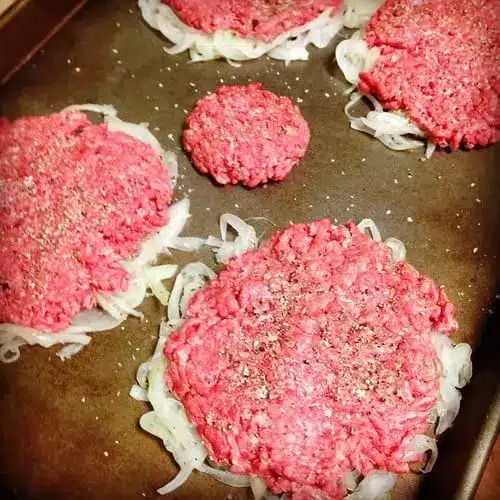
The success of the Oklahoma fried onion burger recipe depends entirely on your preparation. Slice your onions as thin as humanly possible; they should be translucent. If they are too thick, they won’t soften in time and will remain crunchy and pungent rather than sweet and jammy. Portion your beef into 4-ounce balls, but do not press them into patties yet. Keeping the meat in a loose ball allows for a more dramatic “smash” later, which creates those coveted crispy, lacey edges on the perimeter of the burger.
Step 2: The Initial Sear and Onion Application
Heat a heavy cast iron skillet or flat-top griddle over medium-high heat until it is just beginning to smoke. Place the beef balls onto the dry surface—do not add oil, as the beef fat will provide all the lubrication needed. Immediately place a large handful of the thinly sliced onions directly on top of each beef ball. The amount of onions should look excessive; they will wilt down significantly as they cook, so don’t be afraid to pile them high.
Step 3: The Big Smash
Using a heavy-duty, non-slotted metal spatula, press down firmly on the onions and beef. Apply enough pressure to flatten the meat into a thin patty, forcing the onions deep into the raw beef. Hold the pressure for a few seconds to ensure the meat makes full contact with the hot metal. Season the top of the onions generously with salt and pepper. The goal here is to create a seal where the onions and beef are fused into one single layer.
Step 4: The Flip and Steam
Once the bottom of the meat is deeply browned and crispy (usually about 2 to 3 minutes), slide the spatula underneath the patty, making sure to get under the onions. Flip the entire burger so the onion side is now in direct contact with the skillet. Place a slice of American cheese on the meat, then place the bottom bun directly on the cheese and the top bun on top of the bottom bun. This “stacks” the burger while it’s still cooking, allowing the steam from the onions to soften and warm the bread.
Step 5: Assembly and Serving
After about 2 minutes on the onion side, the onions should be dark brown and caramelized. Use the spatula to lift the entire stack—buns and all—off the griddle. The onions will be fused to the meat, and the cheese will be perfectly melted. This method ensures that every component is at the peak temperature when it hits the plate, providing that signature “diner-style” experience at home.
Pro Tips for Success
- Tip: Use a mandoline for the onions. Achieving the necessary paper-thin consistency by hand is difficult and inconsistent. Uniformly thin onions ensure even caramelization.
- Tip: Do not use a non-stick pan. To get the “lacey” crispy edges characteristic of a smashed onion burger, you need the surface tension of cast iron or stainless steel.
- Tip: Keep the beef cold until the moment it hits the pan. Cold fat hitting a hot pan creates a better sear and prevents the patty from becoming crumbly.
- Tip: Use a heavy spatula or a dedicated burger press. If your spatula is too flimsy, you won’t be able to apply enough pressure to properly fuse the onions into the beef.
- Tip: Don’t skimp on the salt. Onions become very sweet when fried, and you need a good amount of salt to balance the flavor profile.
Troubleshooting Common Problems
Why Are My Onions Burning Instead of Caramelizing?
This usually happens if your heat is too high or your onions are too thick. While you want a hot pan for the sear, if the onions are turning black and bitter within seconds of flipping, turn the heat down to medium. The onions should fry in the beef fat, which protects them from burning as long as there is enough moisture and fat present.
Why Is My Burger Falling Apart?
A burger that falls apart is often the result of using meat that is too lean or not smashing firmly enough. The 80/20 fat ratio acts as the “glue” for this Oklahoma fried onion burger recipe. Additionally, make sure you don’t flip the burger too early; the meat needs to develop a crust to hold its shape during the flip.
How to Serve Your Burgers
Because the Oklahoma fried onion burger recipe is so rich and savory, it is traditionally served with simple, high-acid accompaniments. In El Reno, these are often served with nothing more than a few dill pickle chips and perhaps a side of yellow mustard for dipping. The simplicity is the point—you want the flavor of the caramelized onions to remain the star of the show.
If you are looking to turn this into a full meal, classic crinkle-cut fries or a cold, vinegary coleslaw are excellent side dishes. The acidity of a vinegar-based slaw helps cleanse the palate between bites of the rich, fatty burger. For beverages, a cold root beer or a crisp lager provides a refreshing contrast to the salty, umami-heavy flavors of the beef and fried onions.
Storage and Make-Ahead
Storing Leftovers
While this burger is best enjoyed immediately, you can store leftover patties in an airtight container in the refrigerator for up to 3 days. However, avoid storing the patties inside the buns, as the bread will become soggy from the residual moisture in the onions.
Reheating
To reheat, place the patty in a skillet over medium heat with a teaspoon of water and cover with a lid. The steam will help melt the cheese and re-moisturize the onions without overcooking the beef. Avoid the microwave, as it will turn the meat rubbery and the onions mushy.
Making It Ahead
You can prep the onion slices and portion the beef balls up to 24 hours in advance. Store the sliced onions in a sealed bag with a damp paper towel to keep them from drying out. Do not smash the burgers until you are ready to cook, as the fresh smash is vital for the texture.
Final Thoughts
The Oklahoma fried onion burger recipe stands as a reminder that culinary excellence doesn’t require complex techniques or expensive equipment. By mastering the heat of a cast iron skillet and the art of the “smash,” you can create a burger that rivals any high-end restaurant offering. It is a humble, soulful dish that celebrates the beauty of caramelization and the timeless appeal of a well-seared piece of beef. Whether you’re a history buff or just a lover of great food, this burger is a mandatory addition to your cooking repertoire.
Frequently Asked Questions
What is the best onion to use for this recipe?
Yellow onions are the traditional choice because they have a high sugar content that leads to deep caramelization without becoming overly sharp. White onions also work well as they offer a slightly cleaner, more pungent flavor that mellows significantly when fried in beef fat. Avoid red onions, as they can become somewhat bitter when subjected to the intense heat required for this cooking method.
Can I make this burger on an outdoor grill?
It is difficult to make a true Oklahoma fried onion burger on a standard grill grate because the onions would fall through and you wouldn’t be able to “fry” them in the beef fat. However, if you have a cast iron griddle attachment for your grill, it works perfectly. The flat, solid surface is necessary to capture the rendered fat and ensure the onions and beef fuse together properly.
Why do you put the buns on top of the burger while it’s cooking?
This is a classic diner technique used to “steam” the buns. As the onions fry and the meat finishes cooking, moisture is released in the form of steam. By placing the buns on top, that steam softens the bread and infuses it with the aroma of the beef and onions. It ensures the bun is warm and pliable, making it easier to compress when you take a bite.
Do I need to add oil to the pan first?
No, you should start with a dry, hot pan. Because you are using 80/20 ground beef, the fat will render out almost immediately upon smashing the meat. This fat is exactly what you need to fry the onions. Adding extra oil can make the burger overly greasy and may prevent the beef from developing the necessary crust against the metal surface.
Can I use a different type of cheese?
While American cheese is the classic choice for its superior melting properties, you can use sharp cheddar or Swiss. Just be aware that these cheeses have higher oil content and different melting points, so they may not “bind” the onions to the patty as effectively as the processed oils in American cheese do. If using cheddar, grate it finely so it melts quickly before the beef overcooks.
Oklahoma Fried Onion Burgers

A regional masterpiece from El Reno, Oklahoma, these burgers are famous for their paper-thin onions smashed directly into the beef. The onions caramelize and fuse with the meat, creating an incredibly flavorful, sweet, and savory crust.
- 1 lb Ground beef (80/20 blend)
- 2 Large yellow onions, sliced paper-thin
- 1 tsp Kosher salt
- 1/2 tsp Black pepper
- 4 Slices American cheese
- 4 Hamburger buns, buttered
- Dill pickle chips and yellow mustard
- 1Prepare the Onions: Use a mandoline to slice the onions as thin as possible. They should be translucent and paper-thin to ensure they caramelize properly.
- 2Portion the Beef: Divide the ground beef into four 4-ounce portions. Roll them into loose balls; do not overwork the meat.
- 3Sear: Heat a large cast-iron skillet or griddle over medium-high heat until very hot.
- 4The Smash: Place the beef balls on the hot skillet and immediately top each with a generous pile of sliced onions. Use a heavy spatula to press down firmly, smashing the onions into the beef until the patty is thin.
- 5Season: Sprinkle the patties with salt and pepper. Cook for 2-3 minutes until the edges are crispy and browned.
- 6The Flip: Carefully flip the patties so the onion side is down. Place a slice of cheese on each patty.
- 7Steam the Buns: Place the bottom bun directly on the cheese and the top bun on top of the bottom bun. This allows the meat juices and onions to steam the bread.
- 8Serve: Once the onions are charred and soft (about 2 minutes), remove the burgers and buns together. Add pickles and mustard to finish.
Keywords: burger, onion burger, Oklahoma, smash burger, dinner, comfort food, beef


