
Meatloaf With A Tomato Beef Sauce

Finding the perfect balance between a tender, juicy interior and a tangy, caramelized exterior is the hallmark of the best meatloaf recipe tomato sauce enthusiasts will truly appreciate. Unlike the dry, dense loaves of the past, this version focuses on a delicate crumb and a deeply flavorful profile that transforms a humble classic comfort food into a dinner table masterpiece. The secret lies in the marriage of savory aromatics with a bright, slightly sweet glaze that cuts through the richness of the meat, ensuring every bite is as satisfying as the last.
This approach isn’t just about mixing ingredients; it’s about understanding the textures that make a moist meatloaf possible. By utilizing a traditional panade and a gentle mixing technique, you can create a loaf that holds its shape beautifully while remaining incredibly light. Whether you are looking for a reliable easy weeknight dinner or a weekend project that yields the best sandwiches the next day, this recipe provides the technical foundation and flavor depth to deliver professional results in a home kitchen.
Why This Recipe Is a Keeper
- Unmatched Texture: By carefully balancing the binders and liquids, this recipe avoids the “brick-like” density often associated with poorly made meatloaf, resulting in a melt-in-your-mouth experience.
- Superior Glaze: The homemade tomato glaze provides a sophisticated upgrade to standard ketchup, offering a complex balance of acidity, sweetness, and spice that caramelizes perfectly in the oven.
- Pantry-Friendly Ingredients: You likely already have most of the components in your kitchen, making this an accessible option for any night of the week without requiring a special trip to the store.
- Excellent for Meal Prep: This dish tastes even better the next day, and the firm yet tender structure makes it ideal for slicing thin and serving cold or reheated in a variety of creative ways.
Ingredients You’ll Need
The success of the best meatloaf recipe tomato sauce depends on the quality and function of each component. From the fat content of the protein to the specific type of breadcrumb used, every ingredient plays a vital role in the final structure and flavor profile of the dish.
- Ground Beef: Opt for a blend with roughly 15-20% fat content. Leaner beef can result in a dry loaf, while the fat provides the necessary moisture and flavor for a moist meatloaf.
- Breadcrumbs or Panko: These act as the primary binder. Panko offers a lighter lift, while traditional fine breadcrumbs create a more uniform, classic texture.
- Milk or Heavy Cream: When soaked into the breadcrumbs, this creates a “panade,” which prevents the meat proteins from over-coagulating and turning tough during the cooking process.
- Aromatics (Onion and Garlic): Finely minced or grated aromatics provide a foundational savory note without creating large, distracting chunks within the meat mixture.
- Worcestershire Sauce: This adds an essential “umami” punch, deepening the beefy flavor and providing a subtle fermented tang that complements the tomato base.
- Eggs: Acting as a protein-based glue, eggs ensure that your meatloaf holds its shape during slicing while contributing to the overall richness.
- Tomato Sauce and Ketchup: The base for both the interior moisture and the exterior glaze, providing the classic bright acidity that balances the savory beef.
- Brown Sugar and Vinegar: When added to the glaze, these ingredients create a gastrique-like effect, allowing the sauce to thicken and shine under the oven’s heat.
Simple Swaps and Variations
Protein Blends: While all-beef is traditional, many cooks prefer a “meatloaf mix” consisting of beef, pork, and veal. The pork adds extra fat and a softer texture, while the veal provides a delicate flavor and additional gelatin for better structure.
Glaze Alternatives: If you prefer a less sweet profile, you can swap the tomato-based glaze for a savory mushroom gravy or even a spicy chipotle-tomato hybrid for a modern, smoky twist on the original.
Gluten-Free Adjustments: For those avoiding gluten, crushed pork rinds or certified gluten-free breadcrumbs work exceptionally well as a binder, maintaining the structural integrity of the loaf without changing the flavor significantly.
Vegetable Boost: To add even more moisture and nutrition, you can fold in finely chopped sautéed mushrooms or bell peppers. This not only stretches the meat further but also adds complex earthy notes to every slice.
How to Make the Best Meatloaf Recipe Tomato Sauce
Step 1: Prepare the Aromatics and Panade
The first secret to a superior meatloaf is ensuring the aromatics are properly integrated. Start by finely mincing your onions and garlic. If you have the time, sautéing them in a little butter or oil until translucent will mellow their bite and deepen the flavor. Simultaneously, combine your breadcrumbs and milk in a small bowl. Allowing the breadcrumbs to fully hydrate for about five to ten minutes creates a soft paste. This panade is the most important step for achieving a moist meatloaf, as it physically blocks the meat fibers from knitting together too tightly.
Step 2: Combine the Meat and Binders
In a large mixing bowl, add your ground beef, the hydrated panade, beaten eggs, Worcestershire sauce, and seasonings. The goal here is a thorough distribution of ingredients without overworking the meat. Use your hands or a sturdy fork to gently toss the mixture. Over-mixing leads to a dense, rubbery texture because it develops the proteins in the meat too much. Stop as soon as the ingredients look uniform. This ensures your classic comfort food remains tender and easy to cut.
Step 3: Shape the Loaf for Even Cooking
Transfer the mixture to a parchment-lined baking sheet or a loaf pan. While a loaf pan is traditional, baking the meatloaf free-form on a flat sheet allows for more surface area to be covered by the homemade tomato glaze. If shaping by hand, aim for a consistent thickness throughout so the ends don’t dry out before the center is cooked. Gently pat the edges to smooth out any large cracks, which can cause the loaf to split during the expansion that happens in the oven.
Step 4: Prepare and Apply the First Layer of Glaze
Whisk together the tomato sauce, ketchup, brown sugar, and a splash of vinegar. Brush about half of this mixture over the top and sides of the meatloaf before it goes into the oven. This initial layer will bake into the meat, providing a foundation of flavor. As the meatloaf cooks, the sugars in the glaze will begin to caramelize, creating that signature sticky-sweet crust that makes the best meatloaf recipe tomato sauce so iconic.
Step 5: Bake and Re-Glaze for a Glossy Finish
Place the loaf in a preheated oven and bake until it reaches an internal temperature of about 150°F (65°C). About 15 minutes before it finishes, remove the loaf and apply the remaining glaze. This second coating ensures a thick, glossy finish that hasn’t been overly darkened by the full cooking time. Return it to the oven to finish. This double-glazing technique is a pro secret for achieving a professional, restaurant-quality appearance.
Step 6: The Essential Resting Period
Once the meatloaf reaches a final internal temperature of 160°F (71°C), remove it from the oven. Resist the urge to slice it immediately. Resting the meatloaf for at least 10 to 15 minutes allows the juices to redistribute and the proteins to firm up slightly. If you cut into it too soon, the juices will run out onto the board, leaving you with a dry slice and a loaf that crumbles apart. This patience is the final step in securing the perfect easy weeknight dinner.
Pro Tips for the Best Results
Tip: Use a Meat Thermometer. Cooking by time alone is risky. Depending on the shape of your loaf and your oven’s accuracy, the internal temperature can vary. Pulling the meatloaf at exactly 160°F ensures it stays juicy without being undercooked.
Tip: Grate Your Onions. If you have picky eaters who dislike the texture of onions, use a box grater. This turns the onion into a pulp that melts into the meat, providing all the flavor and moisture without any visible pieces.
Tip: Don’t Pack the Loaf Pan. If using a loaf pan, gently press the meat into the corners. If you pack it down too hard, you’ll lose the airy pockets that contribute to a tender crumb.
Tip: Chill the Meat. Working with cold beef helps keep the fat from melting into your hands, ensuring the fat stays within the meatloaf where it can provide moisture during the bake.
Ways to Serve It
A classic comfort food like this deserves sides that can stand up to its bold flavors. The most traditional pairing is a mountain of buttery mashed potatoes, which provides a creamy contrast to the tangy tomato glaze. The sauce from the meatloaf often acts as a natural gravy for the potatoes, making for a perfectly cohesive plate.
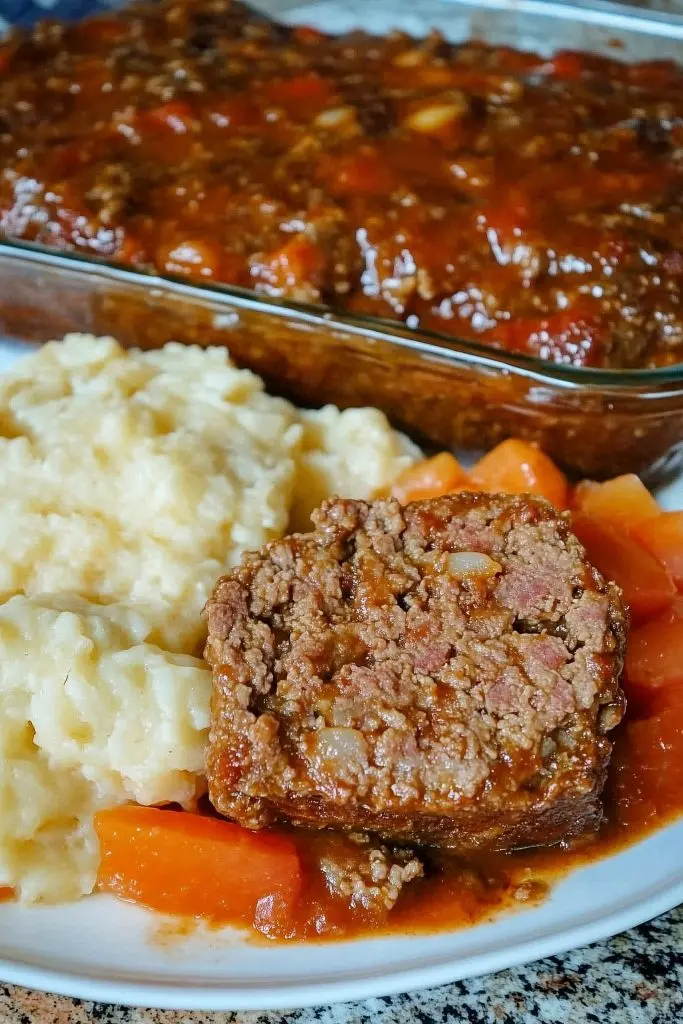
For a lighter balance, consider serving the meatloaf with roasted root vegetables or steamed green beans tossed in garlic butter. The acidity in the homemade tomato glaze also pairs wonderfully with a crisp, bright green salad dressed in a simple vinaigrette. If you have leftovers, there is nothing quite like a cold meatloaf sandwich on toasted sourdough with a swipe of mayonnaise and extra pickles.
Storage and Make-Ahead
Storing Leftovers
Leftover meatloaf should be cooled completely before being wrapped tightly in plastic wrap or stored in an airtight container. It will stay fresh in the refrigerator for up to 3 to 4 days. In fact, many people find that the flavors deepen and the texture becomes even easier to slice after a night in the fridge.
Freezing
This recipe freezes exceptionally well both cooked and uncooked. To freeze a cooked loaf, slice it first and freeze the slices individually on a tray before transferring them to a freezer bag. This allows you to pull out exactly what you need for a quick lunch. If freezing raw, shape the loaf and wrap it securely in multiple layers of foil. It can be stored for up to 3 months.
Reheating
To keep the meatloaf from drying out during reheating, place a slice in a skillet with a tablespoon of water or beef broth and cover with a lid. Alternatively, you can reheat it in the oven at 325°F, covered with foil, until warmed through. Avoid the microwave if possible, as it can result in a rubbery texture.
Final Thoughts
Mastering the best meatloaf recipe tomato sauce is a rewarding journey into the heart of American home cooking. By prioritizing moisture through a proper panade and treating the meat with a gentle hand, you elevate a simple dish into something truly special. The combination of savory beef and a glossy, caramelized glaze makes it a perennial favorite for a reason. This classic comfort food is proof that you don’t need exotic ingredients to create a memorable, soul-satisfying meal that the whole family will request again and again.
Frequently Asked Questions
Why does my meatloaf always fall apart when I slice it?
The most common reason meatloaf crumbles is a lack of proper binding or cutting it too soon. Ensure you are using enough eggs and hydrated breadcrumbs to hold the proteins together. Most importantly, allow the loaf to rest for at least 15 minutes after it comes out of the oven. This allows the internal structure to set.
Can I use ground turkey instead of beef?
Yes, but you must be careful. Ground turkey is much leaner than beef and can easily become dry. To compensate, consider adding a bit more milk to your panade or folding in some finely sautéed mushrooms to provide extra moisture and fat. You may also want to add a teaspoon of poultry seasoning to enhance the flavor profile.
Is it better to bake meatloaf in a pan or on a baking sheet?
Baking on a parchment-lined baking sheet is often preferred by enthusiasts of the best meatloaf recipe tomato sauce because it allows the fat to drain away and provides more surface area for the glaze to caramelize. A loaf pan essentially “boils” the meat in its own juices, which can result in a softer, less textured exterior.
Can I make this recipe ahead of time?
Absolutely. You can mix and shape the meatloaf up to 24 hours in advance. Keep it tightly covered in the refrigerator until you are ready to bake. This is a great strategy for an easy weeknight dinner, as you only need to pop it in the oven when you get home from work. Just be sure to add the glaze right before baking for the freshest flavor.
Do I have to use milk in the breadcrumbs?
While milk is the traditional choice for a panade, you can substitute it with beef broth or even water if you are avoiding dairy. The goal is to hydrate the starch in the breadcrumbs so they can effectively keep the meat tender. Without the liquid, the breadcrumbs will simply absorb the juices from the meat, potentially leading to a drier result.
Meatloaf With A Tomato Beef Sauce

A savory and tender meatloaf topped with a rich, tangy tomato beef sauce. This classic American comfort food is easy to prepare and perfect for a cozy family dinner.
- Meatloaf Mixture
- 1.5 lbs ground beef
- 1 cup breadcrumbs
- 1/2 cup milk
- 1 egg, beaten
- 1 small onion, finely diced
- 1 tsp garlic powder
- 1 tsp salt
- 1/2 tsp black pepper
- Tomato Beef Sauce
- 1 can (8 oz) tomato sauce
- 2 tbsp brown sugar
- 1 tbsp yellow mustard
- 1 tsp Worcestershire sauce
- 1Preheat your oven to 350°F (175°C) and lightly grease a 9x5 inch loaf pan.
- 2In a large bowl, combine the ground beef, breadcrumbs, milk, egg, onion, garlic powder, salt, and pepper. Mix until just combined.
- 3Press the mixture into the prepared loaf pan.
- 4In a small bowl, whisk together the tomato sauce, brown sugar, mustard, and Worcestershire sauce.
- 5Pour the sauce evenly over the top of the meatloaf.
- 6Bake for 60 to 70 minutes, or until the internal temperature reaches 160°F (71°C).
- 7Let the meatloaf rest for 10 minutes before slicing to ensure it stays juicy.
Keywords: meatloaf, beef recipes, tomato beef sauce, classic dinner, comfort food


