
Fried Cabbage and Potatoes with Bacon

There is something deeply satisfying about the sound of a sizzling skillet and the smoky aroma of rendering bacon filling the kitchen. This fried cabbage potatoes with bacon is the ultimate expression of rustic comfort, combining humble ingredients into a dish that is far greater than the sum of its parts. The natural sweetness of the cabbage caramelizes beautifully alongside tender, golden-brown potatoes, all tied together by the savory, salty punch of crisp bacon. It is a southern side dish staple that feels both nostalgic and timeless, offering a perfect balance of textures and flavors in every forkful.
While it might look like a simple preparation, the key to this recipe lies in the layering of flavors and the patience to let the vegetables develop a proper sear. Whether you are serving it as a hearty side or a standalone easy weeknight meal, this dish delivers a level of satisfaction that only a well-seasoned cast-iron skillet can provide. It is approachable enough for a busy Tuesday but flavorful enough to earn a spot on your holiday table.
Why You’ll Love This Recipe
- Irresistible Texture: The combination of crispy bacon bits, soft-middled potatoes with crusty edges, and tender-crisp cabbage creates a multidimensional mouthfeel that keeps you coming back for more.
- One-Pan Convenience: Everything cooks in a single large skillet, which means minimal cleanup and a skillet cabbage and potatoes experience that maximizes flavor by cooking the vegetables directly in the rendered bacon fat.
- Budget-Friendly Ingredients: This recipe relies on pantry staples like cabbage, potatoes, and onions, making it an affordable way to feed a crowd without sacrificing quality or taste.
- Versatile Flavor Profile: The smoky, savory base pairs perfectly with almost any protein, making it a reliable comfort food recipe that fits into any menu plan.
Ingredients You’ll Need
To achieve the best results with this fried cabbage potatoes with bacon, you want to focus on fresh, sturdy vegetables that can stand up to the high heat of the skillet without turning into mush. The quality of your bacon also plays a significant role, as the rendered fat serves as the primary cooking medium and flavor base for the entire dish.
- Thick-Cut Bacon: Choosing a high-quality, thick-cut bacon ensures you get substantial, meaty pieces that won’t disappear into the vegetables. The rendered fat is essential for browning the potatoes.
- Green Cabbage: A standard head of green cabbage works best here. It holds its structure well during frying and develops a lovely sweetness as it hits the hot fat and caramelizes.
- Yukon Gold or Red Potatoes: These waxy varieties are ideal because they hold their shape during the stirring and flipping process, unlike russet potatoes which tend to break apart.
- Yellow Onion: As the onion sautés, it releases sugars that help the cabbage brown, providing a savory depth that balances the saltiness of the bacon.
- Garlic: Freshly minced garlic added toward the end of the cooking process provides a fragrant punch without the risk of burning during the long potato-frying stage.
- Smoked Paprika: A small pinch of this spice enhances the natural smokiness of the bacon and gives the potatoes a beautiful golden hue.
- Salt and Cracked Black Pepper: These simple seasonings are vital for drawing out the moisture in the cabbage and highlighting the earthy flavors of the potatoes.
Variations and Smart Swaps
Protein Boost: While bacon is the traditional choice, you can easily turn this into a heartier one-pan meal by adding sliced smoked sausage or kielbasa. Simply brown the sausage with the potatoes to ensure it gets a nice snap to the casing.
Spice It Up: If you prefer a bit of heat, add a pinch of red pepper flakes or a dash of Cajun seasoning. The spice cuts through the richness of the bacon fat and adds a vibrant kick to the sweet cabbage.
Vegetarian Option: To make a meat-free version, swap the bacon for a high-quality smoked olive oil or add a drop of liquid smoke to your cooking oil. Use butter toward the end of cooking to mimic the richness that bacon fat usually provides.
Different Greens: If you don’t have a full head of cabbage, you can supplement with kale or shredded Brussels sprouts. Both offer a similar earthy flavor and stand up well to the frying technique used in this fried cabbage potatoes with bacon.
How to Make Fried Cabbage Potatoes with Bacon
Step 1: Render the Bacon to Crispy Perfection
Place your large skillet over medium heat and add the chopped bacon pieces. It is important to start with a cold or slightly warm pan to allow the fat to render out slowly before the meat browns. Stir occasionally until the bacon is deeply golden and crispy. Use a slotted spoon to remove the bacon bits and set them aside on a paper towel, leaving the liquid gold—the rendered fat—in the pan. This fat is the secret ingredient that seasons every other component of the dish.
Step 2: Sear the Potatoes for a Golden Crust
Increase the heat slightly and add the diced potatoes into the hot bacon fat. Spread them out into a single layer to ensure they have maximum contact with the pan. Let them cook undisturbed for several minutes; this “hard sear” is what creates that coveted crust. Flip them occasionally until they are about 70% cooked through and have a beautiful brown exterior. This step ensures your fried cabbage potatoes with bacon has a satisfying crunch rather than a boiled texture.
Step 3: Sauté the Aromatics and Cabbage
Once the potatoes are browning nicely, add the sliced onions to the skillet. Cook them until they begin to soften and turn translucent. Next, add the shredded cabbage in batches. It will look like a lot of cabbage at first, but it wilts down significantly as it cooks. Toss the cabbage with the potatoes and onions, allowing the leaves to coat in the remaining bacon fat. This is where the skillet cabbage and potatoes start to merge into a cohesive, fragrant meal.
Step 4: Season and Caramelize
Add your garlic, smoked paprika, salt, and pepper. Lower the heat to medium-low and cover the skillet for a few minutes. The steam trapped inside will help finish cooking the centers of the potatoes and soften the core of the cabbage. Remove the lid and continue to sauté for another 5 to 7 minutes. You are looking for the edges of the cabbage to turn dark brown and slightly crispy, which indicates the sugars have caramelized for maximum flavor.
Step 5: Reincorporate the Bacon and Finish
Turn off the heat and stir the reserved crispy bacon bits back into the pan. This keeps the bacon from getting soggy while allowing it to warm through. Taste a piece of potato and cabbage to check for seasoning, adding a final crack of black pepper if needed. The residual heat from the pan will marry the flavors together one last time before you bring the skillet to the table.
Pro Tips for Success
- Don’t Crowd the Pan: If your skillet is too small, the vegetables will steam instead of fry. Use the largest skillet you own—ideally 12 inches or more—to ensure the potatoes get that essential crispy exterior.
- Cut Size Matters: Dice your potatoes into small, uniform cubes (about half an inch). This allows them to cook at a similar rate to the cabbage so you don’t end up with raw potato centers and burnt cabbage leaves.
- Use the Right Fat: If your bacon is lean and doesn’t produce enough fat, don’t hesitate to add a tablespoon of butter or lard. The vegetables need enough fat to fry properly and develop a comfort food recipe richness.
- The “Lid Trick”: Using a lid for just 3-4 minutes mid-way through helps soften the potatoes without losing the sear you built in the beginning. It’s the best way to ensure perfect tenderness.
How to Serve Fried Cabbage Potatoes with Bacon
This fried cabbage potatoes with bacon is incredibly versatile and can adapt to many different dining scenarios. Because it contains starch, greens, and protein, it can serve as a complete light meal on its own, especially when served in wide bowls with a crusty piece of cornbread on the side.
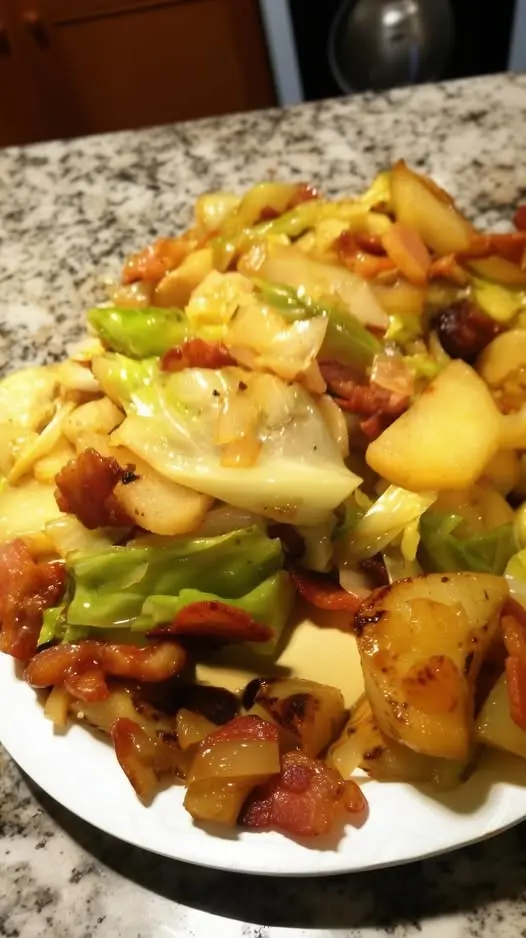
If you are serving this as a side dish, it pairs exceptionally well with roasted pork loin, grilled chicken thighs, or even pan-seared sausages. The acidity of a vinegary coleslaw or a side of pickles can help cut through the richness of the bacon fat, providing a refreshing contrast. For a breakfast twist, try serving a big scoop of this skillet mix topped with a sunny-side-up egg; the runny yolk creates a natural sauce that makes the dish feel even more indulgent.
Storage and Make-Ahead
Storing Leftovers
Leftover fried cabbage potatoes with bacon can be stored in an airtight container in the refrigerator for up to 3 to 4 days. In fact, many people find that the flavors deepen the next day as the cabbage continues to absorb the smoky bacon essence. To maintain the best texture, avoid storing it while it is still steaming hot to prevent excess moisture buildup in the container.
Reheating
While you can use a microwave, the best way to reheat this dish is in a skillet over medium heat. Add a tiny splash of water or a small pat of butter to the pan to prevent sticking. Stirring it frequently will help the potatoes regain some of their original crispness and ensure the cabbage doesn’t become overly mushy. This method preserves the easy weeknight meal quality of the dish far better than a microwave ever could.
Final Thoughts
Mastering the fried cabbage potatoes with bacon is a rite of passage for any home cook who loves hearty, traditional flavors. It is a testament to the fact that you don’t need expensive ingredients or complicated techniques to create a meal that feels special. By focusing on the rendering of the bacon and the caramelization of the vegetables, you transform basic produce into a southern side dish that family and friends will request again and again. It is warm, smoky, and satisfying—exactly what a home-cooked meal should be.
Frequently Asked Questions
What are the best potatoes to use for this recipe?
Waxy potatoes like Yukon Gold or Red Bliss are the best choices for this dish. They have a lower starch content than Russets, which means they hold their shape much better during the frying and stirring process. Russet potatoes tend to crumble and can turn the dish into a mash, whereas Yukon Golds maintain a creamy center and a crisp exterior.
Can I make this recipe ahead of time?
Yes, you can certainly prepare this dish a few hours in advance and reheat it just before serving. However, for the absolute best texture—specifically the crispness of the bacon and the sear on the potatoes—it is best enjoyed straight from the skillet. If you do make it ahead, wait to stir the crispy bacon back in until the very last moment of reheating.
Why is my cabbage soggy instead of fried?
Soggy cabbage is usually the result of one of two things: overcrowding the pan or moving the vegetables too much. When the pan is too full, moisture cannot escape as steam, causing the vegetables to boil in their own juices. Make sure your heat is high enough and give the cabbage enough space to actually “fry” against the surface of the skillet.
Is it possible to make this dish without bacon?
While bacon provides the primary flavor profile and the cooking fat, you can make a delicious vegetarian version. Substitute the bacon fat with a combination of olive oil and butter, and add a teaspoon of smoked paprika or a dash of liquid smoke to replicate that characteristic smokiness. You can also add sautéed mushrooms to provide a similar savory umami depth.
Should I peel the potatoes before frying?
Peeling is entirely a matter of personal preference. For Yukon Gold or Red potatoes, the skins are very thin and add a nice textural element and nutritional value, so many cooks choose to leave them on. If you prefer a more uniform look and a softer bite, feel free to peel them, but it is certainly not required for a successful fried cabbage potatoes with bacon.


