
My Mom’s Perfect Thanksgiving Stuffing

Nothing defines the holiday table quite like a pan of the best homemade thanksgiving stuffing recipe. While the turkey might be the centerpiece, it is the stuffing that everyone reaches for first, craving that perfect balance of savory herbs, buttery aromatics, and the contrast between a golden, crispy top and a moist, tender interior. This traditional herb stuffing avoids the common pitfalls of being either too dry or overly mushy, offering a reliable, classic flavor profile that complements everything from roasted poultry to tangy cranberry sauce.
Making stuffing from scratch is a rewarding process that far surpasses anything you can find in a box. By controlling the quality of the bread, the freshness of the herbs, and the richness of the stock, you create a holiday side dish that feels truly special. This recipe is designed to be approachable yet deeply flavorful, focusing on time-tested techniques like properly drying the bread and sautéing the aromatics to translucent perfection before they ever hit the oven.
Why You’ll Love This Recipe
- Perfect Texture: This method ensures a holiday side dish with a beautiful textural contrast, featuring a toasted, crunchy crust on top while remaining soft and savory underneath.
- Superior Flavor: By using fresh sage, rosemary, and thyme instead of dried poultry seasoning, the aromatics pop with a bright, earthy profile that tastes like a true home-cooked meal.
- Complete Customization: While this is a traditional herb stuffing, the base is sturdy enough to handle additions like browned sausage, tart apples, or toasted pecans depending on your preference.
- Make-Ahead Friendly: You can easily prep the components a day in advance, making it an easy thanksgiving recipe that reduces your stress on the big day.
Ingredients You’ll Need
The success of this dish relies on simple, high-quality ingredients that work in harmony. Using a mix of different breads and fresh-from-the-garden herbs provides a depth of flavor that defines the best homemade thanksgiving stuffing recipe.
- Stale Bread Cubes: Using stale bread stuffing is essential because dry bread absorbs the flavorful stock without becoming a soggy paste. A mix of white bread and sourdough offers great structure.
- Unsalted Butter: Butter provides the necessary fat to carry the flavors of the vegetables and keeps the stuffing rich and decadent.
- Onion and Celery: This “holy trinity” of aromatics provides the foundational savory crunch and sweetness that is characteristic of a classic American stuffing.
- Fresh Herbs: A combination of sage, rosemary, and thyme creates the iconic “Thanksgiving smell” and provides a much more vibrant flavor than powdered alternatives.
- Chicken or Turkey Stock: This is the primary liquid that rehydrates the bread. High-quality, low-sodium stock allows you to control the saltiness while adding deep poultry flavor.
- Large Eggs: Eggs act as a binder, giving the stuffing a slightly custardy, cohesive structure so it doesn’t just fall apart into a pile of dry crumbs.
- Fresh Parsley: Added at the end, parsley provides a pop of color and a fresh, peppery finish that cuts through the richness of the butter.
Variations and Smart Swaps
- Sausage and Apple: For a heartier version, fold in a pound of browned Italian or breakfast sausage and two cups of diced Granny Smith apples before baking.
- Vegetarian Option: Simply swap the chicken stock for a high-quality vegetable broth. The aromatics and herbs provide plenty of savory “umami” even without meat-based liquids.
- Nutty Crunch: Add a cup of toasted walnuts or pecans for an earthy flavor and an extra layer of texture that pairs beautifully with the traditional herb stuffing herbs.
- Fruity Twist: Stir in half a cup of dried cranberries or cherries for a burst of sweetness that balances the savory notes of the sage and onion.
How to Make the Best Homemade Thanksgiving Stuffing Recipe
Step 1: Prep and Dry the Bread Cubes
The foundation of a great stuffing starts with the bread. Cut your loaves into uniform 1-inch cubes. For the best homemade thanksgiving stuffing recipe, you want these cubes to be bone-dry. If you aren’t using bread that has been sitting out for two days, spread the cubes on baking sheets and toast them in a low oven (about 300°F) for 15-20 minutes. This creates stale bread stuffing that is ready to soak up the stock without losing its shape.
Step 2: Sauté the Aromatics in Butter
In a large skillet, melt a generous amount of butter over medium heat. Add your finely diced onions and celery. The goal here is to soften the vegetables until they are translucent and fragrant, which usually takes about 8 to 10 minutes. Do not brown them; you want a gentle sauté that coaxes out their natural sweetness to flavor the entire dish. Stir in your minced garlic and fresh herbs during the last minute to wake up their essential oils.
Step 3: Combine and Hydrate the Mixture
In a very large mixing bowl, toss your dried bread cubes with the sautéed vegetable and butter mixture. In a separate jar, whisk together your stock and eggs. Slowly drizzle the liquid over the bread, tossing gently as you go. It is important to let the bread sit for a few minutes to absorb the liquid. The cubes should be moist but not swimming in a pool of broth. This ensures your holiday side dish has the right moisture content before it hits the oven.
Step 4: Bake Until Golden and Crisp
Transfer the mixture to a buttered baking dish. To achieve the perfect texture, cover the dish with foil for the first 20 minutes of baking at 350°F; this steams the bread so the interior becomes tender. Then, remove the foil and bake for another 20 to 25 minutes. This final stage is crucial for creating those coveted crispy, browned bits on top that everyone fights over at the dinner table.
Pro Tips for Success
- Tip: Never use fresh, soft bread. If the bread is too fresh, the stuffing will turn into a mushy pudding rather than a textured side dish.
- Tip: Taste your stock before adding it. Since the stock is the main liquid, its quality directly impacts the flavor of the best homemade thanksgiving stuffing recipe.
- Tip: Don’t overmix the bread cubes once the liquid is added. Use a large spatula to fold gently so you don’t break the cubes into crumbs.
- Tip: Use more butter than you think you need. Butter is what provides that classic, rich mouthfeel associated with high-end holiday cooking.
Troubleshooting Common Problems
Why is my stuffing too dry?
If your stuffing looks parched after the initial bake, drizzle an extra half-cup of warm stock over the top and cover it back up with foil for five minutes. The steam will help redistribute the moisture. This often happens if the bread cubes were extra large or if the oven was running a bit hot.
Why is the bottom of my stuffing soggy?
Soggy stuffing is usually the result of adding too much liquid too fast or using bread that wasn’t dried out enough. To fix this, bake the stuffing uncovered for an extra 10-15 minutes on a lower rack to help the bottom moisture evaporate, or toss the mixture slightly to bring the damp cubes to the top to crisp up.
How to Serve This Recipe
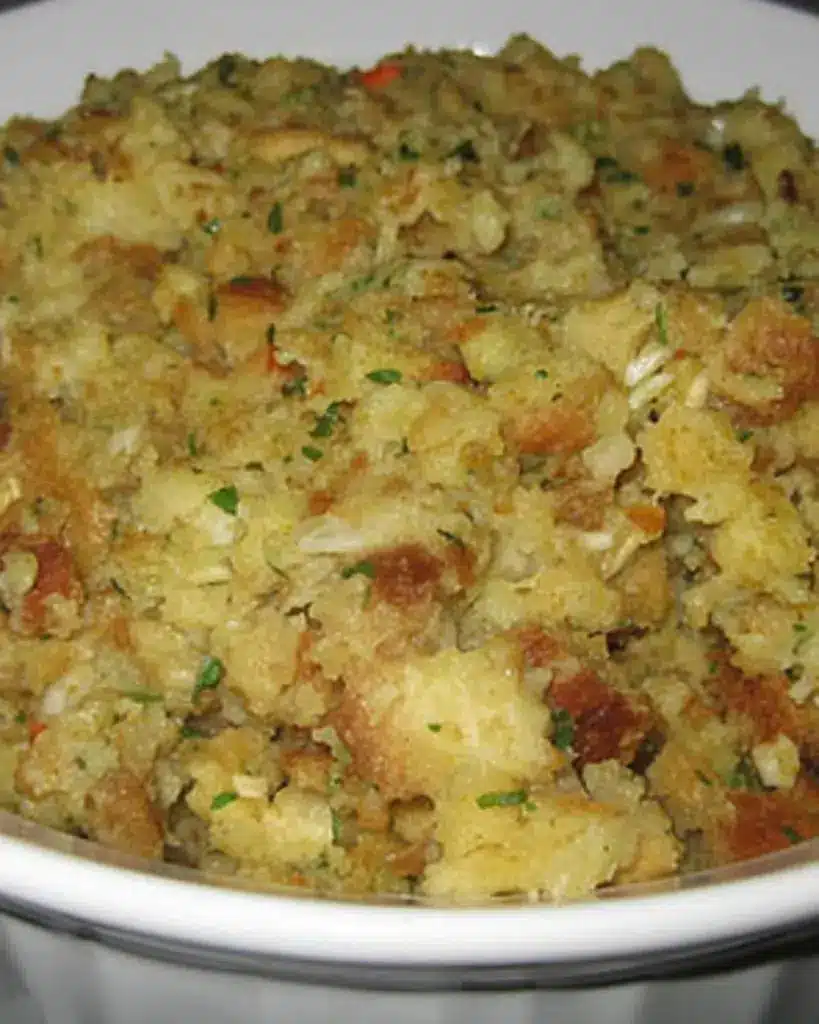
Presentation is key for a holiday side dish. Serve the stuffing directly in the baking dish to keep it warm, or transfer it to a pre-warmed ceramic bowl. Garnish with a few whole sage leaves or a sprinkle of fresh parsley to give it a professional finish. It is best served immediately while the top is still crunchy.
This stuffing is the natural partner for roasted turkey, but it also pairs beautifully with glazed ham or even a vegetarian nut roast. Be sure to have plenty of hot gravy on the table; pouring a little extra gravy over a scoop of the best homemade thanksgiving stuffing recipe is the ultimate holiday experience. If you have leftovers, they make an incredible base for a “gobbler” sandwich the next day, layered with turkey and cranberry sauce.
Storage and Make-Ahead
Storing Leftovers
Leftover stuffing should be cooled completely before being moved to an airtight container. It will stay fresh in the refrigerator for 3 to 4 days. Because it contains eggs and stock, it is important not to leave it at room temperature for more than two hours.
Reheating
To maintain the texture, reheat leftovers in the oven at 350°F. Cover the dish with foil and add a tiny splash of stock to prevent it from drying out. Bake for 15-20 minutes, then remove the foil for the last few minutes to restore the crispy top. Microwaving is faster but will result in a softer, less crispy texture.
Making It Ahead
You can prepare the traditional herb stuffing up to the point of baking a day in advance. Sauté the vegetables, dry the bread, and even mix them together (without the liquid). Store the dry mix at room temperature and the sautéed veggies in the fridge. On Thanksgiving morning, combine everything with the stock and eggs and bake as directed. This keeps the bread from getting too soggy overnight.
Final Thoughts
Mastering the best homemade thanksgiving stuffing recipe is a rite of passage for any home cook. It is a dish that relies on the harmony of simple ingredients and a bit of patience during the preparation phase. Whether you stick to this traditional herb stuffing or add your own family twist with sausage or fruit, the key is the texture. By focusing on properly dried bread and the right ratio of stock to binder, you’ll ensure that your stuffing is the most talked-about part of the Thanksgiving feast.
Frequently Asked Questions
Can I use store-bought bread cubes?
Yes, you can use store-bought “stuffing starters,” but ensure they are plain and unseasoned so you can control the herb and salt levels yourself. Many bagged cubes are quite small, so keep an eye on the liquid absorption, as they may require slightly less stock than larger, hand-cut stale bread stuffing cubes.
What is the best bread for stuffing?
A mix of textures is best. A sturdy white loaf or Pullman loaf provides a classic soft interior, while sourdough adds a pleasant tang and a firmer structure. Avoid very “holey” breads like ciabatta, which can sometimes result in an uneven texture. High-quality, dense artisan breads make the best homemade thanksgiving stuffing recipe.
Can I bake the stuffing inside the turkey?
While traditional, “in-the-bird” stuffing can be tricky because the stuffing must reach an internal temperature of 165°F to be food-safe, which often results in an overcooked, dry turkey. For this easy thanksgiving recipe, we recommend baking it in a separate dish (technically making it a “dressing”) to ensure both the bird and the stuffing are cooked to perfection.
Can I freeze cooked stuffing?
Yes, cooked stuffing freezes quite well. Store it in a freezer-safe container or a heavy-duty freezer bag for up to one month. To serve, thaw it in the refrigerator overnight and then reheat it in the oven with a little extra broth to restore the moisture. This is a great way to handle excessive holiday side dish leftovers after the celebrations are over.
How do I make the stuffing more flavorful?
The secret to the best homemade thanksgiving stuffing recipe is using fresh herbs rather than dried. If you want even more depth, try browning the butter before adding the vegetables, or use a homemade turkey stock enriched with roasted bones. These small steps add layers of savory complexity that store-bought versions simply cannot match.
My Mom’s Perfect Thanksgiving Stuffing

A classic, savory Thanksgiving stuffing made with herb-seasoned bread cubes, sautéed celery, onions, and fresh herbs, baked until golden and crisp on top. This traditional side dish is a holiday staple that brings the perfect texture and flavor to any festive table.
- 1 lb dried herb-seasoned stuffing cubes
- 1/2 cup unsalted butter
- 1 large yellow onion, finely chopped
- 2 cups celery, diced
- 1 tsp sea salt
- 1/2 tsp freshly ground black pepper
- 1 tbsp fresh sage, minced
- 1 tbsp fresh thyme, minced
- 3 cups vegetable broth
- 1Preheat your oven to 350°F (175°C). Lightly grease a 9x13 inch baking dish.
- 2In a large skillet, melt the butter over medium heat. Add the chopped onion and celery. Sauté for 8-10 minutes until the vegetables are soft and translucent.
- 3Stir in the salt, pepper, sage, and thyme. Cook for 1 more minute until fragrant.
- 4Place the herb-seasoned stuffing cubes in a large mixing bowl. Pour the buttery vegetable mixture over the cubes and toss well.
- 5Slowly drizzle the vegetable broth over the mixture, tossing gently until the bread is evenly moistened but not soggy.
- 6Transfer the stuffing to the prepared baking dish and spread it evenly. Cover tightly with aluminum foil.
- 7Bake for 20 minutes. Remove the foil and bake for an additional 20-25 minutes until the top is golden brown and slightly crispy.
Keywords: thanksgiving stuffing, classic dressing, vegetarian side dish, holiday recipe, easy stuffing


