
Fried Cabbage and Potatoes with Bacon

Few dishes capture the essence of humble, satisfying Southern comfort food quite like a skillet of fried cabbage potatoes with bacon. This dish is a masterclass in texture and flavor, bringing together the natural sweetness of sautéed cabbage, the earthy heartiness of golden-brown potatoes, and the unmistakable smoky depth of crisp bacon. It is the kind of recipe that transforms basic pantry staples into a meal that feels both indulgent and grounding, whether served as a robust side dish or a standalone easy weeknight dinner.
The beauty of this recipe lies in its simplicity and the way the ingredients interact in a single pan. By using the rendered fat from the bacon to sear the vegetables, you infuse every bite with a savory richness that oil or butter alone simply cannot replicate. It is approachable enough for a Tuesday evening but flavorful enough to earn a permanent spot on your holiday table or at a weekend family gathering. This editorial guide will walk you through the nuances of achieving the perfect sear and the ideal tender-crisp balance that makes this dish a timeless favorite.
Why This Recipe Is a Keeper
- Incredible Flavor Profile: The combination of smoky bacon, caramelized onions, and the mellow sweetness of cooked cabbage creates a complex savory base that appeals to almost everyone.
- One-Pan Convenience: As a true one-pan meal, this recipe minimizes cleanup while ensuring that all the flavors developed during the cooking process stay right in the skillet where they belong.
- Budget-Friendly Ingredients: Cabbage and potatoes are among the most affordable items in the produce aisle, making this an economical way to feed a hungry family without sacrificing quality.
- Perfect Textural Contrast: When prepared correctly, you get the crunch of the bacon, the creamy interior of the potatoes, and the soft, buttery yield of the cabbage in every forkful.
Ingredients You’ll Need
To create a truly exceptional skillet side dish, selecting the right varieties of these common ingredients is key. Each component plays a specific role in the final architecture of the dish, from the fat content of the protein to the starch level of the vegetables.
- Bacon: Thick-cut bacon is often preferred here because it provides substantial “bits” that don’t disappear into the vegetables, though standard cut works perfectly well for rendering plenty of flavorful fat.
- Potatoes: Yukon Gold potatoes are the ideal choice because they hold their shape well while offering a naturally buttery texture, though Russets can be used if you prefer a fluffier, crispier edge.
- Green Cabbage: A standard head of green cabbage provides the best structure; it softens beautifully without becoming watery or losing its characteristic bite.
- Onion and Garlic: These aromatics act as the flavor bridge between the heavy bacon and the neutral vegetables, adding a layer of savory fragrance that defines the dish.
- Seasonings: Beyond salt and pepper, a touch of smoked paprika or a pinch of red pepper flakes can elevate the smoky notes of the bacon and add a very subtle heat.
- Butter (Optional): While bacon fat does the heavy lifting, a small knob of butter added toward the end can provide a glossy finish and a rich, silky mouthfeel to the cabbage.
Variations and Smart Swaps
Protein Variations: If you want to turn this into a heartier main course, consider adding sliced smoked sausage or kielbasa along with the bacon. For a lighter version, turkey bacon can be used, though you will likely need to add a tablespoon or two of olive oil to compensate for the lack of rendered fat.
Vegetable Additions: Sliced bell peppers or shredded carrots can add a pop of color and extra vitamins to the mix. Some cooks also enjoy adding a splash of apple cider vinegar at the very end to provide a bright, acidic counterpoint to the richness of the bacon fat.
Spice Adjustments: To give the dish a different regional flair, you can swap the paprika for Cajun seasoning or even a bit of curry powder. Each of these changes the profile entirely while keeping the core satisfaction of the fried cabbage potatoes with bacon intact.
How to Make Fried Cabbage Potatoes with Bacon
Step 1: Render the Bacon and Prep the Skillet
The foundation of this dish is the bacon fat. Start by chopping your bacon into uniform pieces and placing them into a cold, large skillet. By starting with a cold pan, you allow the fat to render out slowly, resulting in much crispier bacon bits. Cook over medium heat until the bacon is golden and crunchy. Once finished, use a slotted spoon to remove the bacon and set it aside on a paper towel, leaving all that liquid gold—the rendered fat—in the pan to cook the vegetables.
Step 2: Sear the Potatoes for Maximum Texture
Increase the heat slightly and add your diced potatoes to the hot bacon fat. It is crucial not to crowd the pan here; if the potatoes are piled too high, they will steam rather than fry. Let them sit undisturbed for several minutes to develop a deep, golden-brown crust. This sear is vital because it prevents the potatoes from turning into mush once the cabbage is added later. Flip them occasionally until they are nearly tender and beautifully browned on most sides.
Step 3: Sauté the Aromatics and Soften the Cabbage
Push the potatoes to the outer edges of the skillet or remove them temporarily if the pan is small. Add the sliced onions and cook until they begin to turn translucent and pick up the brown bits from the bottom of the pan. Next, add the shredded cabbage in batches. It will look like a lot at first, but cabbage shrinks significantly as it loses moisture. Toss the cabbage in the remaining fat and seasonings, ensuring every shred is coated.
Step 4: Combine, Steam, and Finish
Once the cabbage has wilted slightly, stir the potatoes (and bacon) back into the mix. If the potatoes need a bit more softening, you can cover the skillet with a lid for 2 to 3 minutes. The steam trapped inside will finish cooking the centers of the potatoes and tenderize the cabbage. Finally, remove the lid and sauté for another minute or two to evaporate any excess moisture, ensuring the dish remains “fried” rather than “stewed.”
Pro Tips for Success
- Tip: Uniform Cutting Matters. Ensure your potato cubes are roughly the same size (about half an inch) so they cook at the same rate. If some are large and some are small, you’ll end up with a mix of raw and overcooked pieces.
- Tip: Don’t Skimp on the Fat. If your bacon is particularly lean and hasn’t produced enough fat to coat the potatoes, don’t hesitate to add a tablespoon of oil or lard. The vegetables need that fat to brown properly.
- Tip: Salt the Cabbage Late. Cabbage releases a lot of water when salted. To keep the dish from becoming soggy, add most of your salt toward the end of the cooking process once the cabbage has already started to brown.
- Tip: Use a Heavy Skillet. A cast-iron skillet is the best tool for this job. Its heat retention properties ensure a superior sear on the potatoes and a more even cook for the cabbage.
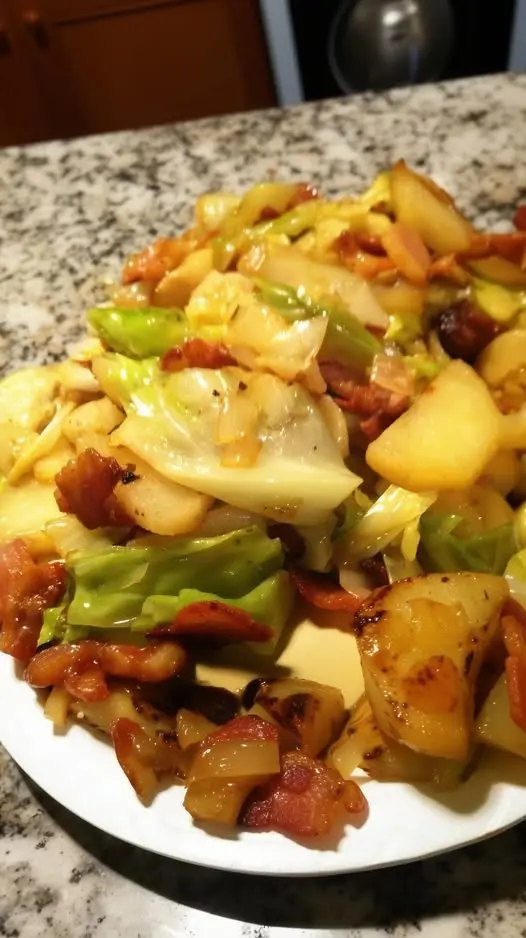
How to Serve Fried Cabbage Potatoes with Bacon
This dish is incredibly versatile and can adapt to various meal structures. For a traditional Southern comfort food experience, serve it alongside cornbread and a protein like fried chicken or pork chops. The savory, slightly sweet profile of the cabbage pairs beautifully with the richness of roasted meats.
If you are serving this as a one-pan meal, consider topping it with a couple of over-easy eggs. The runny yolk creates a natural sauce that binds the potatoes and cabbage together perfectly. For garnishes, a sprinkle of fresh chopped parsley or sliced green onions adds a necessary brightness and a fresh contrast to the deep, cooked flavors of the skillet.
Storage and Make-Ahead
Storing Leftovers
Leftover fried cabbage potatoes with bacon store remarkably well. Place them in an airtight container and refrigerate for up to 3 to 4 days. In fact, many people find that the flavors meld and improve after a night in the fridge, as the cabbage continues to absorb the smoky essence of the bacon.
Reheating
To maintain the best texture, avoid the microwave if possible. Instead, reheat the mixture in a skillet over medium heat with a tiny splash of water or oil. This helps recrisp the potatoes and bacon while preventing the cabbage from becoming rubbery. If you are in a hurry, the microwave works, but the potatoes will be softer.
Final Thoughts
Mastering fried cabbage potatoes with bacon is a rewarding experience for any home cook. It is a dish that relies on technique—rendering fat, searing, and sautéing—rather than complicated ingredients or expensive equipment. The result is a deeply flavorful, textural delight that brings a sense of warmth to any table. By following the steps of building flavors in layers, you ensure a result that is far greater than the sum of its parts. This recipe remains a staple for a reason: it is honest, delicious, and undeniably satisfying.
Frequently Asked Questions
Can I make this recipe vegetarian?
While bacon is a central flavor component, you can create a vegetarian version by using smoked paprika and a high-quality olive oil or butter for frying. To mimic the “bits,” some cooks use smoked tofu or a vegetarian bacon substitute, though the most important factor is replacing the smokiness and the fat that the bacon normally provides.
What are the best potatoes to use for frying?
Yukon Gold potatoes are generally considered the best for this specific dish because they offer a middle ground between starchy and waxy. They develop a good crust but maintain a creamy, solid interior. If you prefer a very crisp potato and don’t mind them breaking down slightly, Russets are a fine alternative.
How do I prevent the cabbage from getting soggy?
Sogginess usually happens if the pan is overcrowded or if the heat is too low. Cook the cabbage in a wide skillet over medium-high heat so that moisture can evaporate quickly. Additionally, avoid covering the pan for too long; use the lid only at the very end if the potatoes need a final nudge to reach tenderness.
Can I freeze fried cabbage and potatoes?
Freezing is not recommended for this dish. Potatoes often change texture when frozen and thawed, becoming grainy or watery. Similarly, the cabbage can lose its structural integrity. It is best enjoyed fresh or from the refrigerator within a few days of cooking.
Is this dish keto-friendly or low-carb?
Because of the potatoes, this dish is relatively high in carbohydrates. However, you can easily adapt it for a low-carb diet by omitting the potatoes and increasing the amount of cabbage, or by substituting the potatoes with roasted cauliflower florets, which pick up the bacon flavor beautifully.
Fried Cabbage and Potatoes with Bacon

A hearty and comforting Southern-style dish that combines crispy bacon, tender sautéed cabbage, and golden-brown potatoes for a perfect weeknight dinner or side.
- 6 slices thick-cut bacon, chopped
- 1 small head of green cabbage, cored and shredded
- 3 large russet potatoes, peeled and cut into 1/2-inch cubes
- 1 medium yellow onion, diced
- 1 teaspoon garlic powder
- 1/2 teaspoon smoked paprika
- Salt and freshly ground black pepper to taste
- 1In a large skillet or Dutch oven, cook the chopped bacon over medium heat until crispy. Use a slotted spoon to remove the bacon bits and set them aside on a paper towel, keeping about 3 tablespoons of bacon fat in the pan.
- 2Add the cubed potatoes to the skillet with the bacon fat. Cook for 10-12 minutes, stirring occasionally, until the potatoes are golden brown and nearly tender.
- 3Add the diced onion to the skillet and sauté for 3-4 minutes until softened.
- 4Stir in the shredded cabbage, garlic powder, and smoked paprika. Season with salt and pepper.
- 5Cover the pan and cook for 10-15 minutes, stirring once or twice, until the cabbage is tender and the potatoes are soft.
- 6Stir the cooked bacon back into the mixture and serve immediately.
Keywords: cabbage and potatoes, bacon recipe, southern side dish, skillet meal, comfort food


