
Butter Pecan Layer Cake

There is something undeniably nostalgic and deeply comforting about a classic butter pecan layer cake recipe. Often regarded as a staple of Southern hospitality, this cake moves beyond the standard vanilla or chocolate fare by offering a complex, nutty depth that is both sophisticated and homey. The combination of toasted pecans, rich butter, and a hint of molasses-heavy brown sugar creates a crumb that is remarkably moist, while the characteristic crunch of the nuts provides a satisfying textural contrast in every bite.
Whether you are preparing this for a holiday gathering, a milestone birthday, or simply because you crave that signature buttery flavor, this guide will help you master the nuances of the Southern butter pecan cake. By focusing on technique—such as properly toasting the nuts and balancing the acidity in the batter—you can achieve a bakery-quality homemade layer cake that tastes even better the next day as the flavors continue to meld together.
Why This Recipe Is a Keeper
- Incredible Depth of Flavor: Unlike cakes that rely on extract alone, this recipe uses toasted pecans and browned butter notes to create an authentic, multi-dimensional taste profile.
- Exceptional Crumb Texture: The inclusion of specific fats and leavening agents ensures a velvety, tender interior that remains moist even after several days in the refrigerator.
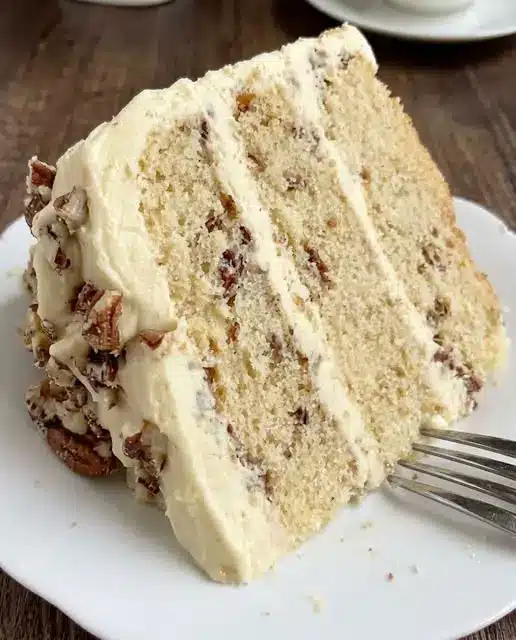
- Visual Sophistication: With its towering layers and optional nut-crusted sides, this cake makes a stunning centerpiece for any dessert table or celebratory event.
- Versatile Pairing Options: While it shines with a traditional cream cheese icing, it is equally delicious with browned butter frosting or a salted caramel drizzle, allowing for endless customization.
Ingredients You’ll Need
To produce a truly memorable cake, the quality of your ingredients matters just as much as your technique. Each component plays a specific role in building the structure, flavor, and moisture levels of the finished layers.
- Pecans: These are the star of the show. Using fresh, high-quality halves and pieces is essential. Always toast them beforehand to release their natural oils and enhance their earthy aroma.
- Unsalted Butter: This provides the foundational fat for the cake. Using unsalted allows you to control the seasoning precisely, ensuring the “butter” in butter pecan is rich rather than salty.
- Granulated and Light Brown Sugar: A blend of sugars provides both sweetness and moisture. The light brown sugar adds a subtle hint of caramelization that complements the pecans perfectly.
- Buttermilk: The acidity in buttermilk reacts with the leavening agents to create a light, airy lift while tenderizing the gluten for a softer bite.
- Cake Flour: While all-purpose works, cake flour contains less protein, resulting in a finer, tighter crumb that feels more luxurious on the palate.
- Vanilla and Almond Extracts: Pure vanilla is a must, but a tiny hint of almond extract can actually make the nuttiness of the pecans pop even more.
- Room Temperature Eggs: Large eggs provide structure. Ensuring they are at room temperature allows them to emulsify more easily into the butter and sugar mixture.
Variations and Smart Swaps
Spice-Infused Layers: For a cozy autumnal twist, add a teaspoon of ground cinnamon and a pinch of nutmeg to the dry ingredients. This transforms the butter pecan layer cake recipe into something reminiscent of a spice cake but with that signature nutty finish.
Salted Caramel Center: If you want an extra indulgent surprise, spread a thin layer of salted caramel between the cake layers before adding your frosting. This enhances the “butter” notes and adds a professional flair to the flavor profile.
Maple Pecan Variation: Swap out the vanilla extract for maple extract or add a tablespoon of pure maple syrup to the frosting. Maple and pecans are a classic pairing that gives the cake a distinctively North American forest-flavor profile.
Cupcake Conversion: If you aren’t in the mood to stack layers, this batter works beautifully for cupcakes. Simply reduce the baking time and monitor for a light golden color and a clean toothpick test.
How to Make a Butter Pecan Layer Cake
Step 1: Toast and Prep the Pecans
The first and perhaps most vital step in any butter pecan layer cake recipe is toasting the nuts. Spread your pecans on a baking sheet and roast them until they are deeply fragrant and a shade darker. Once cooled, finely chop a portion for the batter and keep some larger pieces for the garnish. Toasting removes the “raw” taste and ensures the pecans don’t disappear into the moisture of the cake, maintaining their crunch and bold flavor.
Step 2: Cream the Butter and Sugars
In a large bowl, beat the softened butter with both the granulated and light brown sugars. You want to see a noticeable change in texture—it should become pale, light, and almost fluffy. This process, known as creaming, incorporates air into the fat, which is what gives the cake its lift. Spend at least 3 to 5 minutes on this step; skipping it or rushing it often leads to a dense, oily cake rather than a light homemade layer cake.
Step 3: Incorporate the Eggs and Aromatics
Add your room-temperature eggs one at a time, ensuring each is fully incorporated before adding the next. This prevents the batter from breaking or curdling. Once the eggs are in, stir in your vanilla and almond extracts. At this stage, the batter should look smooth and voluminous, smelling strongly of sweet cream and vanilla.
Step 4: Alternate Dry and Wet Ingredients
Sift your dry ingredients together to remove any lumps from the cake flour. Begin adding the flour mixture and the buttermilk to the butter base, starting and ending with the flour. This “alternating” method is a classic baking technique that prevents the batter from becoming over-saturated or over-mixed. Mix only until the white streaks disappear to ensure a tender Southern butter pecan cake.
Step 5: Fold in the Nuts and Bake
Gently fold the toasted, chopped pecans into the batter using a spatula. Divide the batter evenly between prepared cake pans. Bake in a preheated oven until the centers spring back when lightly touched and a tester comes out clean. Avoid over-baking, as even an extra two minutes can dry out the delicate crumb. Let the cakes cool completely in the pans before attempting to remove them.
Step 6: Frost and Assemble
Once the layers are entirely cool, level them off with a serrated knife if necessary. Place the first layer on a stand, cover with a generous amount of frosting, and repeat. Use a bench scraper for a smooth finish on the sides, or leave it rustic and swirled. Press additional toasted pecans into the base or top of the cake for a professional, appetizing look.
Pro Tips for Success
Tip: Use Room Temperature Ingredients. It is crucial that your butter, eggs, and buttermilk are all at room temperature. Cold ingredients will not emulsify properly, which can lead to a “broken” batter and a greasy, flat cake.
Tip: Don’t Skimp on Sifting. Cake flour and leavening agents can often clump. Sifting ensures that the baking powder is evenly distributed, preventing large air pockets or “tunnels” from forming inside your cake layers.
Tip: Toast the Nuts Carefully. Pecans have a high oil content and can go from perfectly toasted to burnt in a matter of seconds. Stay near the oven and use your nose; as soon as they smell like cookies, they are done.
Tip: Level Your Layers. For a stable butter pecan layer cake recipe, use a serrated knife to trim the rounded “domes” off the top of your cooled cakes. Flat layers stack much more easily and prevent the cake from leaning or sliding.
Troubleshooting Common Problems
Why Is My Cake Too Dry?
Dryness is usually caused by either over-baking or using too much flour. When measuring flour, always use the “spoon and level” method rather than scooping the flour directly with the measuring cup, which packs it down. Also, check your oven temperature with an external thermometer to ensure it isn’t running too hot.
Why Did the Pecans Sink to the Bottom?
If your pecans are too large or the batter is too thin, gravity will pull them to the bottom of the pans. To fix this, ensure the pecans are finely chopped for the batter and try tossing them in a teaspoon of flour before folding them in; this helps them “grip” the batter and stay suspended.
Why Is the Frosting Sliding Off?
This almost always happens when the cake layers are still slightly warm in the center. Even a tiny bit of residual heat will melt the fat in the frosting. Ensure your cakes have cooled for at least two hours (or chill them in the fridge) before you begin the assembly process.
How to Serve This Cake
Presentation is key when serving a Southern butter pecan cake. Because the flavors are so rich, a simple slice is often enough, but you can elevate the experience with a few thoughtful additions.
Garnishes and Toppings
Consider a light dusting of powdered sugar or a few whole pecan halves dipped in chocolate. A drizzle of warm caramel sauce just before serving adds a decadent “sundae” feel to the dessert. If you want to lean into the “butter” aspect, a browned butter frosting piped in decorative rosettes around the top edge provides a high-end bakery aesthetic.
Perfect Pairings
This cake pairs exceptionally well with a strong, dark roast coffee or a cold glass of milk, which helps cut through the richness of the butter and sugar. For a festive occasion, a glass of bourbon or a nutty sherry complements the earthy tones of the pecans beautifully. If serving as a birthday cake, a side of high-quality vanilla bean ice cream is a classic choice that never fails.
Storage and Make-Ahead
Storing Leftovers
Because of the moisture in this cake, it stores quite well. Keep it in an airtight cake carrier at room temperature for up to two days. If you live in a humid environment or your frosting contains cream cheese, it is best to store it in the refrigerator for up to five days. Always bring slices to room temperature before eating to ensure the butter in the crumb softens for the best texture.
Freezing Instructions
You can freeze the individual cake layers (unfrosted) very successfully. Wrap them tightly in plastic wrap and then a layer of aluminum foil. They will stay fresh for up to three months. Thaw them overnight in the refrigerator before frosting. You can also freeze the fully assembled cake; just flash-freeze it for an hour to set the frosting before wrapping it.
Making It Ahead
If you are planning for a party, you can bake the layers a day in advance. In fact, many bakers find that the flavor of a butter pecan layer cake recipe improves after 24 hours as the moisture redistributes. Simply wrap the cooled layers and store them on the counter until you are ready to assemble the following day.
Final Thoughts
Mastering a butter pecan layer cake recipe is a rewarding endeavor for any home baker. It is a dessert that feels substantial, luxurious, and deeply rooted in tradition. By taking the time to toast your toasted pecans and carefully creaming your butter and sugars, you create a symphony of flavors that far exceeds a standard boxed mix. This cake isn’t just a treat; it’s a celebration of classic flavors that have stood the test of time. Whether it’s for a holiday or a quiet Sunday afternoon, this homemade layer cake is sure to become a requested favorite in your kitchen.
Frequently Asked Questions
Can I use walnuts instead of pecans?
While you certainly can use walnuts, the flavor profile will shift significantly. Walnuts have a slightly more bitter, tannic skin compared to the sweet, buttery flavor of pecans. If you make the switch, the cake will still be delicious, but it will no longer be a traditional Southern butter pecan cake. Ensure you still toast the walnuts to improve their flavor and texture.
Why do I need to use buttermilk?
Buttermilk is essential in this recipe because its acidity reacts with the baking soda to create carbon dioxide bubbles, which help the cake rise. Furthermore, the acid breaks down long gluten strands, resulting in a much more tender and “short” crumb. If you don’t have buttermilk, you can make a quick substitute by adding a tablespoon of lemon juice or white vinegar to a cup of whole milk and letting it sit for five minutes.
Can I make this as a 9×13 sheet cake?
Yes, this butter pecan layer cake recipe can easily be adapted into a sheet cake. Simply pour the batter into a greased 9×13-inch pan and increase the baking time. It is a great option for potlucks or casual gatherings where slicing and serving layers might be too cumbersome. The flavor remains exactly the same, but the effort required for assembly is greatly reduced.
Is it necessary to use cake flour?
While all-purpose flour will work in a pinch, cake flour is highly recommended for the best results. Cake flour is milled more finely and has a lower protein content, which prevents the cake from becoming tough. If you only have all-purpose flour, you can mimic cake flour by removing two tablespoons of flour from every cup and replacing them with two tablespoons of cornstarch, sifting them together several times.
Can I make the frosting ahead of time?
Absolutely. Most frostings, especially buttercream or cream cheese variants, can be made up to a week in advance and stored in the refrigerator. Just be sure to bring the frosting back to room temperature and give it a quick whip with a mixer to restore its fluffy consistency before spreading it onto your homemade layer cake layers.
Butter Pecan Layer Cake

This decadent Butter Pecan Layer Cake features three layers of moist, buttery sponge filled with toasted pecans and finished with a rich brown butter cream cheese frosting. A true Southern classic that is perfect for any celebration.
- 1 cup unsalted butter, softened
- 2 cups granulated sugar
- 1 cup light brown sugar, packed
- 4 large eggs, room temperature
- 1 tablespoon vanilla extract
- 3 cups all-purpose flour
- 1 tablespoon baking powder
- 1/2 teaspoon salt
- 1 cup buttermilk
- 2 cups chopped pecans, toasted
- For the Frosting:
- 1 cup butter, browned and solidified
- 8 oz cream cheese, softened
- 4 cups powdered sugar
- 2 tablespoons heavy cream
- 1Preheat your oven to 350°F (175°C). Grease and flour three 9-inch round cake pans.
- 2In a large stand mixer bowl, cream the softened butter and sugars together until light and fluffy, about 5 minutes.
- 3Add eggs one at a time, beating well after each addition. Mix in the vanilla extract.
- 4In a separate bowl, whisk together flour, baking powder, and salt.
- 5Add the flour mixture to the creamed butter alternately with the buttermilk, beginning and ending with the dry ingredients.
- 6Fold in 1 1/2 cups of the toasted chopped pecans.
- 7Divide the batter evenly among the three prepared pans. Bake for 30-35 minutes, or until a toothpick inserted into the center comes out clean.
- 8Allow cakes to cool in the pans for 10 minutes, then transfer to wire racks to cool completely.
- 9For the frosting, beat the browned butter and cream cheese until smooth. Gradually add powdered sugar and heavy cream until light and airy.
- 10Frost the cooled cake layers and garnish with the remaining toasted pecans.
Keywords: butter pecan cake, layer cake, southern dessert, toasted pecans, brown butter frosting, homemade cake


