
Spaghetti and Meatballs

There is a profound sense of nostalgia that comes with a steaming bowl of pasta topped with tender, savory meatballs and a rich, simmering red sauce. Finding the best spaghetti and meatballs recipe is often a culinary rite of passage for home cooks, as it represents the ultimate comfort food that appeals to every generation at the table. This version focuses on achieving a specific balance: meatballs that are incredibly moist and flavorful without being heavy, paired with a bright yet deeply savory tomato sauce that clings perfectly to every strand of pasta.
The secret to a truly memorable version of this dish lies in the details of the technique, from the way the aromatics are sautéed to the gentle simmering process that allows the meat to infuse the sauce with its juices. While many versions can feel rushed or one-dimensional, this approach ensures a multi-layered flavor profile that tastes like it spent all day on the stove, even if it’s an easy weeknight dinner for your busy schedule. It is a meal designed to be shared, offering a hearty, satisfying experience that turns a simple dinner into a special occasion.
Why This Recipe Is a Keeper
- Perfect Meatball Texture: By using a traditional panade and a blend of meats, these homemade meatballs remain incredibly tender and juicy even after simmering in the sauce.
- Deeply Flavorful Sauce: The sauce isn’t just a topping; it builds flavor by utilizing the browned bits from the seared meat, creating a cohesive and rich classic marinara sauce.
- Family-Friendly Appeal: This is a true crowd-pleaser that balances sophisticated flavor with the simple, approachable joy of pasta and red sauce.
- Excellent for Meal Prep: Like many stews and sauces, the flavors actually improve the next day, making the leftovers just as delicious as the first serving.
Ingredients You’ll Need
To create the best spaghetti and meatballs recipe, you need a combination of fresh aromatics, high-quality proteins, and pantry staples that provide structure and acidity. Each component plays a vital role in the final texture and taste of the dish.
- Ground Beef and Pork: A 50/50 blend provides the perfect balance of beefy flavor and the fat content needed from pork to keep the meatballs moist during the cooking process.
- Breadcrumbs and Milk: Mixing these creates a panade, which is the secret weapon for preventing meat proteins from tightening up, ensuring a soft, melt-in-your-mouth texture.
- Parmesan Cheese: Freshly grated cheese adds a salty, nutty depth of flavor directly into the meat mixture, acting as a built-in seasoning.
- Fresh Garlic and Onion: These aromatics form the flavor base for both the meatballs and the sauce, providing a savory foundation that carries the other ingredients.
- Crushed Tomatoes: Opt for high-quality canned tomatoes to create a classic marinara sauce that is thick, smooth, and naturally sweet.
- Fresh Basil and Parsley: Herbs add a necessary brightness and a pop of green that cuts through the richness of the meat and cheese.
- Dried Oregano: This classic Italian herb provides an earthy, floral note that is synonymous with authentic red sauces.
- Spaghetti: A high-quality dried pasta made from durum wheat semolina will hold its shape and provide the ideal “al dente” bite to complement the sauce.
Variations and Smart Swaps
Protein Alternatives: If you prefer to skip the pork, you can use all beef, though you may want to ensure the beef has at least a 20% fat content. For a lighter version, ground turkey or chicken works well, though you should add a splash of olive oil to the mix to prevent dryness.
Spice Levels: For those who enjoy a bit of heat, adding a teaspoon of crushed red pepper flakes to the sauce while the garlic is sautéing will infuse the entire dish with a gentle, warming glow.
Gluten-Free Option: You can easily adapt this into a gluten-free easy weeknight dinner by substituting the breadcrumbs for gluten-free crumbs or even almond meal, and serving the meatballs over gluten-free pasta or zucchini noodles.
Vegetable Boost: To add more nutrition, finely grated carrots or zucchini can be mixed into the meatballs. They disappear into the texture while adding moisture and vitamins.
How to Make the Best Spaghetti and Meatballs
Step 1: Prepare the Panade and Meat Mixture
Start by soaking your breadcrumbs in milk in a small bowl until it forms a thick paste. This panade is what separates the best spaghetti and meatballs recipe from average ones. In a large mixing bowl, combine the ground beef, ground pork, eggs, parmesan, garlic, parsley, and the prepared panade. Mix these together gently with your hands or a fork just until combined. It is crucial not to overwork the meat, as over-mixing leads to tough, rubbery meatballs. Once combined, roll the mixture into spheres roughly the size of a golf ball.
Step 2: Sear the Meatballs for Maximum Flavor
In a large heavy-bottomed pot or Dutch oven, heat a swirl of olive oil over medium-high heat. Add the meatballs in batches, making sure not to crowd the pan. Sear them until they are deeply browned on all sides. You aren’t looking to cook them all the way through at this stage; you are developing the Maillard reaction, which creates a complex, savory crust. Once browned, remove the meatballs to a plate and set them aside, leaving the flavorful rendered fat and browned bits in the pot.
Step 3: Build the Aromatic Sauce Base
Reduce the heat to medium and add finely diced onions to the pot. Sauté them until they become translucent and soft, using a wooden spoon to scrape up the browned bits from the bottom of the pan. Add minced garlic and dried oregano, cooking for just about a minute until the fragrance fills the kitchen. This step ensures that your classic marinara sauce has a deep, built-in flavor that tastes like it has been simmering for hours.
Step 4: Simmer the Sauce and Meatballs
Pour in the crushed tomatoes and a pinch of salt and pepper. Stir the sauce well, then gently nestle the seared meatballs back into the pot. Lower the heat to a gentle simmer and cover the pot partially. Let everything cook together for at least 30 to 45 minutes. During this time, the meatballs will finish cooking through while releasing their juices into the sauce, and the sauce will thicken into a rich, glossy consistency that is perfect for coating pasta.
Step 5: Boil the Pasta and Combine
While the sauce is finishing, bring a large pot of heavily salted water to a boil. Cook the spaghetti according to the package directions, but aim for a minute or two less than the “al dente” suggestion. Before draining, reserve a cup of the starchy pasta water. Drain the pasta and toss it directly with a few ladles of the sauce, adding a splash of pasta water if needed to help the sauce emulsify and stick to the noodles. This technique ensures every bite of your comfort food is perfectly seasoned.
Pro Tips for Success
- Use Wet Hands: When rolling your homemade meatballs, keep a small bowl of water nearby to dampen your hands. This prevents the meat from sticking to your skin and helps create a perfectly smooth surface.
- Don’t Skip the Sear: It might be tempting to drop raw meatballs into the sauce to save time, but the searing process adds an essential layer of savory flavor that cannot be replicated by simmering alone.
- Choose the Right Pot: A heavy-duty Dutch oven is ideal for this recipe because it distributes heat evenly and prevents the tomato sauce from scorching during the long simmer.
- Rest the Meat: If you have time, let the meat mixture rest in the refrigerator for 30 minutes before rolling. This allows the flavors to meld and makes the mixture easier to handle.
- Salt the Pasta Water: Your pasta water should be “salty like the sea.” This is your only chance to season the pasta itself, which provides a better balance to the rich sauce.
How to Serve Spaghetti and Meatballs
Presentation is key for a dish as iconic as this. Rather than simply plopping the sauce on top of plain noodles, tossing the pasta with a bit of sauce beforehand ensures a professional, restaurant-quality finish. Transfer the coated pasta to a large serving platter and nestle the meatballs on top, drizzling with any remaining sauce from the pot.
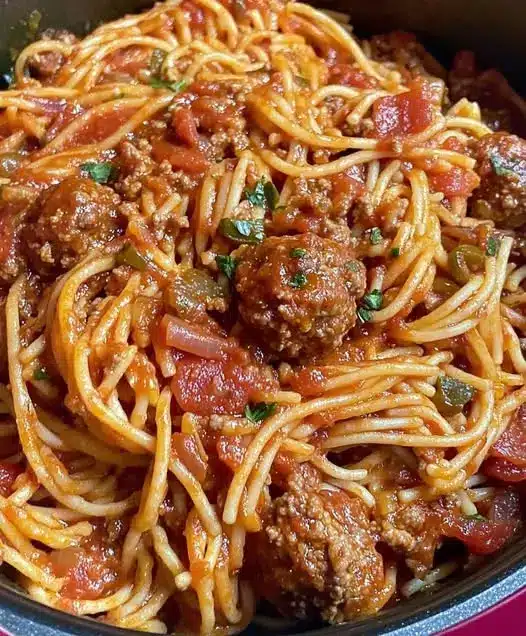
Finish the dish with a generous dusting of freshly grated Parmesan or Pecorino Romano cheese. A handful of torn fresh basil leaves adds a vibrant aroma and a fresh element that balances the cooked flavors. For a complete easy weeknight dinner, serve this with a side of crispy garlic bread to mop up the extra sauce and a simple green salad with a sharp vinaigrette to cleanse the palate between hearty bites.
Storage and Make-Ahead
Storing Leftovers
Spaghetti and meatballs store exceptionally well. Place any leftovers in an airtight container in the refrigerator for up to 4 days. If possible, store the sauce and meatballs separately from the pasta to prevent the noodles from soaking up too much liquid and becoming mushy.
Freezing
This is a fantastic freezer-friendly meal. You can freeze the cooked meatballs in the sauce for up to 3 months. To serve, thaw overnight in the refrigerator and reheat gently on the stovetop. We recommend cooking fresh pasta when you are ready to eat the frozen sauce for the best texture.
Reheating
To reheat on the stove, add a small splash of water or extra tomato sauce to the pot to loosen the consistency. Heat over medium-low until the meatballs are warmed through to the center. If using a microwave, cover the dish to prevent splattering and heat in 1-minute intervals.
Final Thoughts
Mastering the best spaghetti and meatballs recipe is less about finding a secret ingredient and more about respecting the process of building flavor. From the gentle handling of the meat to the patience required during the simmer, these small steps culminate in a dish that is far greater than the sum of its parts. Whether you are serving this for a Sunday family gathering or as a reliable comfort food fix on a Tuesday night, it remains one of the most satisfying meals in the culinary canon. Take your time, enjoy the process, and get ready for everyone to ask for seconds.
Frequently Asked Questions
Why do my meatballs fall apart in the sauce?
Meatballs usually fall apart because they lack enough binder or weren’t seared properly. Ensure you are using enough eggs and breadcrumbs as directed, and don’t skip the browning step. The crust formed during searing acts as a structural shell that helps the meatball hold its shape while it simmers in the liquid.
Can I bake the meatballs instead of frying them?
Yes, you can bake them at 400°F (200°C) for about 15-20 minutes until browned. While this is a bit easier and uses less oil, you will miss out on the “fond” (the browned bits) in the pot, which adds significant depth to your classic marinara sauce. If you bake them, try to deglaze the baking sheet and add those juices to your sauce pot.
What is the best type of tomato to use for the sauce?
For a smooth, traditional sauce, canned crushed tomatoes are the standard. If you prefer a more rustic, chunky texture, you can use diced tomatoes or whole peeled tomatoes that you crush by hand. San Marzano tomatoes are often cited as the gold standard because of their low acidity and sweet flavor profile.
Can I make the meatballs ahead of time?
Absolutely. You can mix and roll the meatballs a day in advance and keep them covered in the fridge. Alternatively, you can cook the entire sauce and meatball portion a day ahead, as the flavors develop and deepen overnight. Just reheat and boil fresh pasta when you are ready to serve this easy weeknight dinner.
How do I know when the meatballs are fully cooked?
Since the meatballs simmer in the sauce, they are very forgiving. However, to be certain, you can use an instant-read thermometer to check that the internal temperature has reached 165°F (74°C). After 30-45 minutes of simmering, they are almost always perfectly cooked and tender.
Classic Vegetarian Spaghetti and Meatballs

A hearty, comforting plate of spaghetti topped with savory meatless meatballs and a rich marinara sauce. This plant-based twist on a classic favorite uses lentils and mushrooms for a satisfying, protein-packed meal that the whole family will love.
- 8 oz spaghetti or linguine
- 1.5 cups cooked brown lentils, drained
- 1/2 cup finely chopped cremini mushrooms
- 1/2 cup panko breadcrumbs
- 1/4 cup shredded parmesan cheese
- 1 large egg, lightly beaten
- 2 cloves garlic, minced
- 1 tablespoon tomato paste
- 1 teaspoon dried basil
- 1 teaspoon dried oregano
- 1/2 teaspoon salt
- 1/4 teaspoon black pepper
- 24 oz marinara sauce
- Fresh parsley for garnish
- 1Preheat your oven to 375°F (190°C) and line a large baking sheet with parchment paper or a silicone mat.
- 2In a food processor, pulse the cooked lentils and mushrooms until roughly chopped but not pureed.
- 3Transfer the mixture to a bowl and stir in the breadcrumbs, parmesan, egg, garlic, tomato paste, basil, oregano, salt, and pepper until well combined.
- 4Scoop about 1.5 tablespoons of the mixture at a time and roll into balls. Place them on the prepared baking sheet.
- 5Bake the meatballs for 20-25 minutes, turning halfway through, until they are firm and golden brown.
- 6While the meatballs bake, cook the spaghetti in a large pot of boiling salted water according to package directions.
- 7Heat the marinara sauce in a large skillet over medium heat. Once the meatballs are done, gently toss them in the sauce to coat.
- 8Serve the saucy meatballs over the cooked spaghetti and garnish with fresh parsley and extra parmesan if desired.
Keywords: vegetarian meatballs, meatless spaghetti, lentil meatballs, healthy pasta dinner, plant-based italian


