
Potato Pancakes

Finding the best crispy potato pancake recipe is often a journey of trial and error, but the secret to that elusive, shatteringly crisp exterior lies in the balance of moisture and starch. A truly great potato pancake should offer a distinct contrast: a golden-brown, lacy edge that crunches with every bite, giving way to a tender, savory center. Whether you know them as homemade latkes or simply the ultimate comfort food, these golden discs are a testament to how humble ingredients can be transformed through the right technique.
This approach focuses on maximizing texture by removing as much liquid as possible and utilizing the natural starches found in russet potatoes. By following a few specific editorial cues—like proper oil temperature and the double-squeeze method—you can move away from soggy, oil-laden cakes and toward a professional-grade result. This guide will walk you through the essential steps to ensure your shredded potato pancakes are the highlight of any breakfast, brunch, or holiday spread.
Why You’ll Love This Recipe
- Unmatched Texture: By focusing on moisture removal, this method produces pan-fried potato cakes with a superior crunch that holds up even after they leave the pan.
- Simple Ingredients: You likely already have everything you need in your pantry, making this an accessible dish for impulsive weekend mornings or last-minute side dishes.
- Versatile Flavor Profile: The mild, savory base acts as a canvas for everything from traditional applesauce to modern toppings like smoked salmon or spicy aioli.
- Make-Ahead Friendly: Unlike many fried foods, these pancakes can be partially prepared or even frozen and reheated without losing their signature crispiness.
Ingredients You’ll Need
The success of the best crispy potato pancake recipe depends less on the number of ingredients and more on the quality and preparation of the few items required. Each component plays a structural or flavor-enhancing role.
- Russet Potatoes: These are non-negotiable for the best results. Their high starch content helps the pancakes bind together while providing the dry, fluffy interior necessary for a crisp fry.
- Yellow Onion: Beyond adding a sweet and savory aromatic depth, the juices from the onion help season the potato strands from the inside out.
- Large Eggs: The eggs act as the primary binder, ensuring the shredded potato pancakes don’t fall apart when they hit the hot oil.
- All-Purpose Flour: A small amount of flour (or starch) absorbs any residual moisture and creates a light batter that coats the potato shreds for extra reinforcement.
- Kosher Salt and Black Pepper: Potatoes are notorious for absorbing salt, so generous seasoning is required to prevent the final dish from tasting bland.
- High-Smoke Point Oil: Use vegetable, canola, or grapeseed oil. These allow you to reach the high temperatures needed for frying without the oil breaking down or smoking.
Variations and Smart Swaps
Herbed Potato Cakes: Add two tablespoons of freshly chopped chives, parsley, or dill to the batter. This adds a bright, fresh element that cuts through the richness of the fried potato.
Cheesy Version: Stir in a half cup of finely shredded sharp cheddar or parmesan cheese. The cheese will melt and create “lace” edges that are incredibly savory and extra crunchy.
Gluten-Free Option: Replace the all-purpose flour with a 1-to-1 gluten-free baking blend or even potato starch. Potato starch actually enhances the crispiness of these homemade latkes even further.
Spiced Variation: For a hint of warmth, add a pinch of garlic powder or smoked paprika to the flour mixture. This gives the pan-fried potato cakes a deeper color and a subtle smoky finish.
How to Make the Best Crispy Potato Pancakes
Step 1: Shred and Extract Moisture
The most critical phase of the best crispy potato pancake recipe is the extraction of liquid. Using a box grater or a food processor with a shredding disc, grate your russet potatoes and onions. Immediately transfer the mixture to a clean kitchen towel or cheesecloth. Twist the cloth tightly over the sink and squeeze with as much force as possible. You want the potato shreds to feel almost dry to the touch. This prevents the potatoes from steaming in the pan, which is the primary cause of sogginess.
Step 2: Combine the Bind and Aromatics
In a large mixing bowl, whisk your eggs until the yolks and whites are fully integrated, then stir in your flour, salt, and pepper. Add the squeezed-dry potato and onion mixture into the bowl. Use your hands or a large fork to toss the ingredients together. Ensure every strand of potato is lightly coated in the egg and flour mixture. This thin coating is what will eventually fry into a golden, protective shell for the shredded potato pancakes.
Step 3: Prepare the Pan and Heat the Oil
Place a large, heavy-bottomed skillet over medium-high heat. Add enough oil to coat the bottom of the pan with about an eighth of an inch of fat. Wait until the oil is shimmering but not smoking. You can test the heat by dropping a single shred of potato into the pan; if it sizzles immediately and vigorously, the oil is ready. Using the right heat level ensures the pan-fried potato cakes brown perfectly without soaking up excess grease.
Step 4: Fry to a Deep Golden Brown
Carefully drop large spoonfuls of the potato mixture into the hot oil, pressing them down slightly with the back of the spoon to flatten. Do not overcrowd the pan, as this drops the oil temperature. Fry the pancakes for 3 to 5 minutes per side. You are looking for a deep, even golden brown and lacy, crispy edges. Flip them only once to ensure they develop a solid structural crust before being disturbed.
Step 5: Drain and Final Seasoning
Once the pancakes are finished, transfer them to a wire rack set over a baking sheet or a plate lined with paper towels. Draining on a rack is preferred because it allows air to circulate, preventing the bottom of the pancake from becoming soft. While they are still hot and glistening with oil, hit them with one final pinch of salt. This allows the salt to stick to the surface, maximizing the flavor of your homemade latkes.
Pro Tips for Success
- Tip: Don’t Peel Unless Necessary. If using organic russet potatoes, you can leave the skins on for extra texture and a more rustic, “shredded” look. Just be sure to scrub them thoroughly first.
- Tip: Use Cold Water for Brightness. If you aren’t frying immediately after grating, submerge the shredded potatoes in ice-cold water to prevent oxidation (turning grey). Just remember to squeeze them extra hard afterward!
- Tip: Save the Starch. When you squeeze the potato juice into a bowl, let it sit for a minute. Discard the liquid but keep the white paste at the bottom—that’s pure potato starch. Mix it back into your batter for maximum binding.
- Tip: Maintain Oil Depth. As you fry in batches, the potatoes will absorb some oil. Add a tablespoon or two between batches and wait for it to come back up to temperature before adding more batter.
Troubleshooting Common Problems
Why are my potato pancakes falling apart?
This usually happens if there isn’t enough binder or if the potatoes were too wet. Ensure you are using the correct egg-to-potato ratio and that you’ve squeezed the liquid out aggressively. If the batter still feels too loose, you can stir in an extra tablespoon of flour to help the homemade latkes hold their shape.
Why are they brown on the outside but raw in the middle?
This is a classic sign that your heat is too high. The outside is scorching before the heat can penetrate the center. Lower the flame to medium and give the pancakes a bit more time. If they are already very dark, you can finish them in a 350°F oven for 5 minutes to cook the centers through.
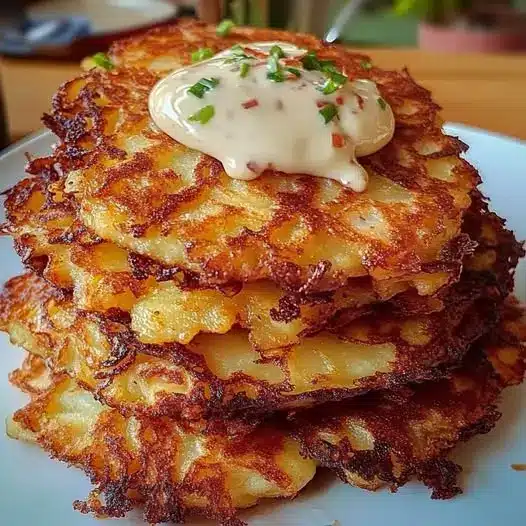
How to Serve Potato Pancakes
The beauty of shredded potato pancakes is that they can be adapted for any time of day. For a traditional approach, serve them warm with a side of cold sour cream and chunky applesauce. The cool, tart notes of the toppings perfectly balance the salty, fatty crunch of the fried potato.
Traditional Garnishes
Freshness is key when serving a fried dish. A sprinkle of chopped scallions, fresh chives, or even a squeeze of lemon juice can brighten the flavor profile. If you want to elevate the dish for a brunch, top each pancake with a dollop of crème fraîche and a sprig of fresh dill.
Main Dish Pairings
While often served as a side, these pan-fried potato cakes can easily anchor a meal. Serve them alongside a crisp green salad with a mustard vinaigrette, or use them as a base for poached eggs and hollandaise sauce for a unique take on Eggs Benedict. They also pair exceptionally well with roasted meats or hearty stews, acting as a vessel for savory gravies.
Storage and Make-Ahead
Storing Leftovers
If you have leftover homemade latkes, let them cool completely before placing them in an airtight container. They will stay fresh in the refrigerator for up to 3 days. Note that they will lose their crispness in the fridge, but this can be easily restored.
Freezing and Reheating
These pancakes freeze beautifully. Place them in a single layer on a baking sheet to freeze solid, then transfer them to a freezer-safe bag for up to 3 months. To reheat, do not use a microwave! Instead, place the frozen or refrigerated pancakes on a wire rack in a 400°F oven for 8–10 minutes. This high heat recrisps the edges and warms the center without making them tough.
Final Thoughts
Mastering the best crispy potato pancake recipe is a rewarding culinary skill that brings a touch of nostalgic warmth to any table. By focusing on the mechanics of moisture removal and heat control, you can create a dish that is far superior to any store-bought or restaurant version. These shredded potato pancakes are more than just a side dish; they are a celebration of texture and simple, honest flavors. Whether you are making them for a special holiday or a quiet Sunday morning, the effort you put into the preparation will be evident in every crunchy, golden bite.
Frequently Asked Questions
Which potatoes are best for potato pancakes?
For the best results, you should always use russet potatoes. They have the highest starch content and the lowest moisture compared to waxier varieties like Yukon Gold or Red Bliss. This high starch ensures that the shredded potato pancakes hold together while frying and develop that iconic, fluffy-yet-crisp texture that defines a perfect pancake.
Can I make the batter in advance?
It is best to fry the batter immediately after mixing. Potatoes oxidize quickly once they are shredded and exposed to air, turning a brownish-grey color. While this doesn’t usually affect the safety of the food, it can make the pancakes look unappealing. If you must prepare ahead, shred the potatoes into water, then squeeze and mix with the other ingredients just before you are ready to fry.
Do I have to peel the potatoes?
Peeling is a matter of personal preference. Leaving the skins on can add a bit of extra fiber and a rustic look to your homemade latkes. However, for the most uniform, golden-white interior, peeling is recommended. If you choose to leave the skins on, make sure you are using thin-skinned potatoes and that they have been cleaned very well.
How do I keep the pancakes warm while frying in batches?
The best way to keep your pan-fried potato cakes warm is to place a wire rack over a baking sheet and keep it in a 200°F oven. As you finish each batch, transfer the pancakes to the rack. The warm air will circulate around the pancakes, keeping them hot and preventing them from getting soggy while you finish the rest of the batter.
Can I use a food processor to grate the potatoes?
Yes, a food processor with the shredding disc attachment is an excellent way to save time. It produces uniform shreds that cook evenly. Just be careful not to use the standard “S” blade, as this will turn the potatoes into a purée rather than the distinct shreds needed for the best crispy potato pancake recipe.
Crispy Classic Potato Pancakes

These traditional Potato Pancakes are incredibly crispy on the outside and tender on the inside. Made with shredded Russet potatoes and onions, they are a timeless comfort food that pairs perfectly with a side of sour cream or sweet applesauce.
- 2 lbs Russet potatoes, peeled and grated
- 1 medium yellow onion, finely grated
- 2 large eggs, lightly beaten
- 1/4 cup all-purpose flour
- 1 teaspoon salt
- 1/2 teaspoon black pepper
- Vegetable oil for frying
- 1Place the grated potatoes and onion in the center of a clean kitchen towel. Twist and squeeze firmly to remove as much liquid as possible.
- 2In a large mixing bowl, combine the squeezed potato and onion mixture with the beaten eggs, flour, salt, and black pepper. Stir until well incorporated.
- 3Heat about 1/4 inch of vegetable oil in a large skillet over medium-high heat until shimmering.
- 4Carefully drop large spoonfuls of the potato mixture into the hot oil, flattening them slightly with the back of the spoon to form pancakes.
- 5Cook for 3 to 5 minutes per side, or until they are deeply golden brown and crispy.
- 6Transfer the finished pancakes to a plate lined with paper towels to drain any excess oil.
- 7Serve immediately while hot and crispy.
Keywords: potato pancakes, latkes, crispy potatoes, breakfast recipes, side dish, traditional recipes


