
Yorkshire Puddings

Finding the best authentic yorkshire pudding recipe is a rite of passage for anyone who loves a traditional Sunday roast. There is something truly magical about watching simple pantry staples transform into golden, towering sculptures of airy dough. A perfect Yorkshire pudding should have a dramatic, crisp exterior that shatters slightly when bitten, leading to a soft, slightly custardy base that is specifically designed to act as a vessel for rich, savory gravy. Whether you are serving them alongside a prime rib or as part of a classic British feast, the secret lies in the marriage of high heat and a well-rested batter.
While many home cooks feel intimidated by the “the rise,” achieving that iconic toby carvery style height is much easier than you might think. This guide focuses on the specific techniques—like the temperature of the fat and the consistency of the batter—that ensure your puddings never come out flat or heavy. By understanding the science of how eggs and steam work together, you can master this classic British side dish and produce consistent, impressive results every single time you turn on your oven.
Why You’ll Love This Recipe
- Dramatic Rise: This method focuses on maximizing the steam reaction, ensuring your puddings reach impressive heights that will wow your dinner guests.
- Pantry Staples: You likely already have everything you need in your kitchen, making this an accessible addition to any weekend meal without a trip to the store.
- Perfect Texture: We prioritize a crispy texture on the outer walls while maintaining that signature tender, slightly chewy bottom that soaks up sauces perfectly.
- Make-Ahead Friendly: The batter actually performs better when made in advance, allowing you to focus on your main course while the puddings rest.
Ingredients You’ll Need
To achieve the best authentic yorkshire pudding recipe, the quality and proportion of your ingredients are more important than a long list of seasonings. Each component plays a vital role in the structural integrity of the pudding.
- All-Purpose Flour: This provides the necessary gluten structure. Avoid cake flour, as it is too weak to support the massive rise required for a popover technique style pudding.
- Large Eggs: Eggs are the primary leavening agent here. They provide the protein structure that traps steam, allowing the batter to expand rapidly in the hot oven.
- Whole Milk: Using full-fat milk creates a richer flavor and a more tender interior. Some chefs use a mix of milk and water for a crispier finish, but whole milk offers the best flavor balance.
- High-Smoke Point Oil or Beef Drippings: This is crucial. You need a fat that can get screaming hot without burning. Beef drippings are traditional for flavor, but vegetable or sunflower oil works perfectly for a clean finish.
- Kosher Salt: A simple pinch of salt is essential to sharpen the flavors of the flour and eggs, ensuring the puddings don’t taste bland against savory meats.
Variations and Smart Swaps
Traditional Beef Drippings: If you are roasting a joint of beef, use the rendered fat from the pan. This is the most authentic way to flavor your puddings, adding a deep, savory note that vegetable oil cannot replicate.
Herb-Infused Batter: For a modern twist, whisk in finely chopped fresh thyme or rosemary into the batter after it has rested. This creates a fragrant savory side dish that pairs beautifully with lamb or roasted chicken.
Toad in the Hole: You can use this exact batter to create a full meal. Simply brown some high-quality sausages in a large baking dish with the hot oil, pour the batter over them, and bake until the entire dish has risen around the meat.
How to Make the Best Authentic Yorkshire Pudding Recipe
Step 1: Whisk the Batter Until Smooth
Begin by combining your eggs and flour in a large mixing bowl. The goal is to create a smooth paste before gradually incorporating the milk. This technique prevents lumps from forming. Whisking vigorously also introduces a small amount of air, though the real lift comes from the steam created by the liquid content. Ensure there are no dry pockets of flour remaining, as these will weigh down the pudding and prevent an even rise higher during the baking process.
Step 2: Let the Batter Rest
This is perhaps the most important editorial secret for success. Allow your batter to rest at room temperature for at least 30 to 60 minutes. During this time, the starch granules in the flour expand and the gluten relaxes. A rested batter results in a much taller, more uniform Sunday roast side dish. If you are in a rush, you can skip this, but your puddings will likely be shorter and tougher.
Step 3: Get the Oil Screaming Hot
Preheat your oven with the muffin tin or Yorkshire pudding tin inside. Add about a teaspoon of oil or beef drippings to each well. You must wait until the oil is literally shimmering or just starting to reach its smoke point. When the cold batter hits the hot oil, it should sizzle immediately. This instant heat creates the “oven spring” that pushes the batter up the sides of the tin before the structure sets.
Step 4: Pour and Bake Without Peeking
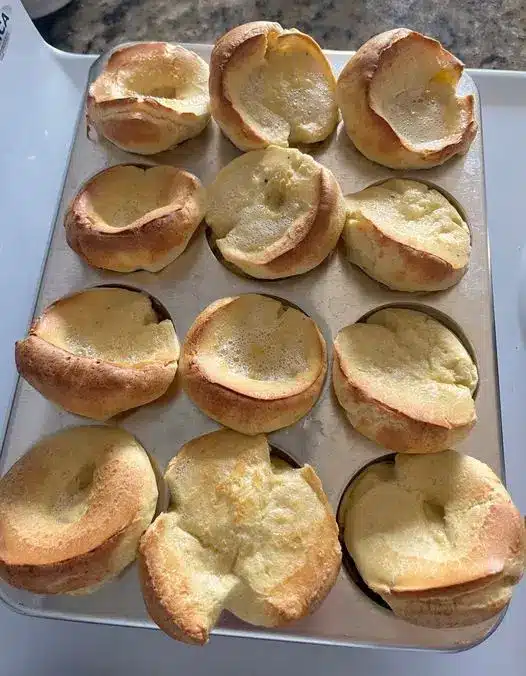
Work quickly to pour the batter into the hot tin, filling each well about half to two-thirds full. Immediately slide the tray back into the oven. The most critical rule here is: do not open the oven door. Opening the door causes a sudden drop in temperature, which can lead to your puddings collapsing. Watch through the glass as they puff up and turn a deep, golden mahogany color.
Pro Tips for Success
- Tip: Use equal volumes of eggs, milk, and flour. A common trick among British cooks is to crack the eggs into a measuring cup, then measure out the exact same volume of flour and milk for a perfectly balanced authentic recipe.
- Tip: Ensure your eggs and milk are at room temperature. Cold ingredients can shock the hot oil and slightly slow down the initial steam reaction.
- Tip: Use a metal tin rather than silicone. Metal conducts heat much more efficiently, which is necessary to get that crispy texture on the bottom and sides.
- Tip: Transfer your batter to a liquid measuring cup or a pitcher with a spout. This allows you to pour quickly and accurately into the hot oil, minimizing the time the oven door is open.
Troubleshooting Common Problems
Why Did My Yorkshire Puddings Not Rise?
The most common culprit is oil that wasn’t hot enough. If the batter doesn’t sizzle the moment it hits the fat, it won’t have the momentum to climb the walls of the tin. Additionally, ensure you aren’t using self-rising flour; the best authentic yorkshire pudding recipe relies entirely on steam and egg protein for its lift.
Why Are My Puddings Greasy?
If you use too much oil, the batter will effectively fry rather than bake and rise. You only need enough fat to coat the bottom of the well and create that initial sizzle. Also, make sure the oven temperature is high enough; a low temperature allows the batter to soak up the oil before it sets.
How to Serve Your Yorkshire Puddings
While most people associate these with a Sunday roast side dish, they are surprisingly versatile. The traditional way to serve them is alongside roast beef, horseradish cream, and a mountain of roasted potatoes. However, in some parts of England, they are served as a first course with a large amount of onion gravy to “dull the appetite” before the expensive meat arrives.
Classic Pairings
Pair your puddings with a rich red wine gravy or a traditional onion gravy. The hollow center of the pudding is the perfect vessel for holding extra sauce. They also pair excellently with roasted root vegetables like parsnips and carrots, providing a textural contrast to the soft, roasted veggies.
Creative Ideas
Leftover Yorkshire puddings (if there are any!) can actually be served sweet. In some traditional households, they are eaten with jam, golden syrup, or a dusting of sugar and a squeeze of lemon, much like a popover technique dessert or a Dutch baby pancake.
Storage and Make-Ahead
Storing Leftovers
If you have leftovers, store them in an airtight container at room temperature for up to two days. However, they will lose their crispy texture over time as they absorb moisture from the air. You can also store them in the refrigerator for up to four days.
Freezing
Yorkshire puddings freeze exceptionally well. Place the cooled puddings in a freezer bag and keep them for up to three months. This is a great way to prep for a large holiday meal in advance.
Reheating
Avoid the microwave, as it will make the puddings rubbery. To restore the crunch, place them in a 350°F oven for 3–5 minutes until they are warmed through and the edges have crisped up again. If reheating from frozen, they usually take about 6–8 minutes.
Final Thoughts
Mastering the best authentic yorkshire pudding recipe is a rewarding culinary skill that elevates any roast dinner from ordinary to extraordinary. By focusing on the temperature of your oil and allowing your batter the time it needs to rest, you can produce consistent, high-rising results that embody the heart of British comfort food. Remember to keep that oven door closed and let the steam do the heavy lifting. Once you see those golden peaks emerging from your oven, you’ll never go back to store-bought versions again.
Frequently Asked Questions
Can I make the batter the night before?
Yes, you absolutely can. In fact, many professional chefs prefer to make the batter 24 hours in advance. Keep it covered in the refrigerator and just give it a gentle whisk before pouring it into your hot tins. This long rest allows the gluten to fully relax, often resulting in a more even rise higher and a better flavor profile.
What is the best oil to use for Yorkshire puddings?
You need an oil with a high smoke point, such as vegetable, sunflower, or canola oil. Avoid extra virgin olive oil or butter, as they will burn at the high temperatures required for this recipe. If you want the most classic British side dish flavor, use rendered beef drippings, which provide an unmatched depth of savory taste.
Why did my puddings collapse after I took them out?
A slight deflation is normal, but a total collapse usually means they were taken out of the oven too early. The structure needs time to “set” and become firm. If they look golden but feel soft, they likely need another minute or two. Ensure they have a deep golden-brown color before removing them to ensure the walls are strong enough to hold their shape.
Can I make this recipe gluten-free?
While the best authentic yorkshire pudding recipe traditionally uses wheat flour for gluten structure, you can use a high-quality 1-to-1 gluten-free flour blend. Look for blends that contain xanthan gum, which helps mimic the protein structure of gluten. Note that the rise may not be quite as dramatic, but the flavor will still be excellent.
Do I have to use a special Yorkshire pudding tin?
Not at all! A standard 12-hole muffin tin works perfectly for individual puddings. If you prefer one large, family-style pudding, you can use a cast-iron skillet or a metal roasting tin. The key is simply ensuring that whatever vessel you use is made of metal to conduct the necessary heat for the popover technique to work.
Perfect Golden Yorkshire Puddings

Light, airy, and crisp, these traditional Yorkshire puddings are the perfect side dish for any roast dinner. They rise beautifully with a deep well for plenty of gravy.
- 1 cup all-purpose flour
- 2 large eggs
- 1 cup whole milk, room temperature
- 1/2 teaspoon salt
- 2 tablespoons vegetable oil or beef drippings
- 1In a large bowl, whisk together the flour, eggs, and salt until a thick paste forms.
- 2Slowly pour in the milk while whisking continuously to ensure there are no lumps. The batter should be smooth and the consistency of heavy cream.
- 3Let the batter rest at room temperature for at least 30 to 60 minutes. This is crucial for the rise.
- 4Preheat your oven to 425°F (220°C). Divide the oil or drippings equally among the 12 wells of a standard muffin tin.
- 5Place the tin in the oven for 10 minutes until the oil is smoking hot.
- 6Carefully and quickly pour the batter into the hot wells, filling them about halfway.
- 7Bake for 20-25 minutes without opening the oven door until the puddings are tall, crisp, and golden brown.
Keywords: Yorkshire pudding, roast side dish, popovers, British sides, fluffy batter, roast beef side


