
Chocolate Cake with Peanut Butter Frosting

There is perhaps no duo in the dessert world more iconic or satisfying than the marriage of deep, dark chocolate and salty-sweet peanut butter. This chocolate cake peanut butter frosting masterpiece brings those two elements together in a way that feels both nostalgic and sophisticated. The cake itself is incredibly tender with a tight crumb that manages to stay moist for days, providing the perfect foundation for a cloud-like layer of peanut butter goodness. It is the kind of dessert that commands attention at a birthday party but feels just as right for a cozy Sunday afternoon treat.
What sets this specific rich chocolate dessert apart is the balance of textures. By focusing on a high-quality cocoa base and a stabilized peanut butter buttercream, you avoid the common pitfall of a cake that is too cloying or a frosting that feels heavy. Instead, you get a homemade chocolate cake experience that highlights the nuance of the roasted peanuts against the bitterness of the chocolate, ensuring every bite is as balanced as it is indulgent.
Why You’ll Love This Recipe
- Perfect Flavor Balance: The saltiness of the peanut butter cuts directly through the sweetness of the sugar, creating a moist chocolate cake that isn’t overwhelmingly sugary but deeply flavorful.
- Incredible Texture: Using a combination of buttermilk and hot liquid ensures the cake has a velvet-like crumb that melts in your mouth without feeling greasy.
- Crowd-Pleasing Appeal: Whether you are serving picky kids or discerning adults, the classic “Reese’s” flavor profile is a guaranteed hit at any gathering or celebration.
- Make-Ahead Friendly: Both the cake layers and the frosting hold up beautifully over time, making this an excellent choice for busy hosts who want to prep in advance.
Ingredients You’ll Need
To achieve the best results, selecting the right components for your chocolate cake peanut butter frosting is essential. Each ingredient serves a specific technical purpose, from providing structural integrity to enhancing the aromatic profile of the cocoa and nuts.
- Unsweetened Cocoa Powder: This provides the primary chocolate punch. Using a high-quality Dutch-processed cocoa will result in a darker color and a smoother, less acidic flavor profile in the cake.
- Buttermilk: The acidity in buttermilk reacts with the leavening agents to create a light, airy rise while also breaking down gluten for a more tender, moist chocolate cake.
- Boiling Water or Hot Coffee: Adding a hot liquid at the end of the batter process “blooms” the cocoa powder, releasing trapped flavor molecules and ensuring a deep, intense chocolate taste.
- Creamy Peanut Butter: For the creamy peanut butter buttercream, standard commercial peanut butter works best. Avoid natural varieties that separate, as the excess oil can cause the frosting to break or become runny.
- Unsalted Butter: Softened to room temperature, butter provides the fatty base for the frosting, allowing it to whip into a light, spreadable consistency that holds its shape.
- Powdered Sugar: Also known as confectioners’ sugar, this sweetens the frosting and provides the necessary structure to keep the peanut butter from feeling too heavy or sticky.
- Heavy Cream: A small splash added to the frosting helps achieve that signature silkiness, making it easy to swirl onto the cake without tearing the delicate crumb.
Variations and Smart Swaps
- The Mocha Twist: Swap the boiling water in the cake batter for hot brewed coffee. The caffeine intensifies the chocolate notes without making the cake taste like coffee, resulting in a more complex rich chocolate dessert.
- Crunchy Texture: If you prefer a bit of texture, you can use crunchy peanut butter for the frosting, though you may need to use a wider piping tip or simply offset-spatula the frosting onto the cake.
- Salted Caramel Layer: For an extra layer of decadence, drizzle a thin layer of salted caramel between the cake layers before adding the creamy peanut butter buttercream.
- Dairy-Free Option: You can substitute the buttermilk with a mixture of almond milk and apple cider vinegar, and use a high-quality vegan butter and peanut butter for the frosting.
How to Make Chocolate Cake with Peanut Butter Frosting
Step 1: Prep the Dry Ingredients and Aerate
Start by whisking together your flour, sugar, cocoa powder, baking powder, baking soda, and salt in a large bowl. It is vital to ensure there are no large clumps of cocoa or leavening agents, as this ensures an even rise and prevents bitter pockets in the finished homemade chocolate cake. Sifting these ingredients is a great extra step if your cocoa powder is particularly lumpy, as it incorporates air and leads to a lighter cake texture.
Step 2: Combine the Wet Ingredients and Emulsify
In a separate vessel, whisk together the eggs, buttermilk, oil, and vanilla extract. The oil is responsible for the long-lasting moisture of the cake, while the eggs provide the necessary structure. Slowly pour the wet mixture into the dry ingredients, whisking until just combined. Be careful not to overmix at this stage, as overworking the flour can lead to a tough, bready texture rather than a delicate crumb.
Step 3: Bloom the Cocoa with Hot Liquid
The final step for the batter is adding the boiling water or hot coffee. Carefully stir the hot liquid into the thick batter. It will become very thin, which is exactly what you want. This heat “blooms” the cocoa, ensuring the moist chocolate cake has a professional-level depth of flavor. Once smooth, pour the batter into prepared pans and bake until a tester comes out clean, then allow them to cool completely before frosting.
Step 4: Whip the Creamy Peanut Butter Frosting
While the cake cools, prepare the frosting by beating the softened butter and peanut butter together until completely smooth and pale in color. Gradually add the powdered sugar one cup at a time, mixing on low to avoid a sugar cloud, then increasing the speed to whip in air. Finish with a splash of heavy cream and a pinch of salt, whipping for another two minutes until the creamy peanut butter buttercream is light, fluffy, and perfectly spreadable.
Step 5: Assemble and Frost the Cake
Once the cake layers are entirely cool to the touch, place the first layer on your serving plate. Spread a generous amount of frosting over the top, extending it to the edges. Top with the second layer and use the remaining frosting to cover the top and sides. For a rustic look, use the back of a spoon to create deep swirls in the frosting, which catch the light and make the chocolate cake peanut butter frosting look irresistible.
Pro Tips for Success
- Room Temperature Ingredients: Always ensure your eggs, buttermilk, and butter are at room temperature. This allows the fats and liquids to emulsify properly, resulting in a smoother batter and a more stable frosting.
- Don’t Rush the Cooling: Never attempt to frost a warm cake. Even a slightly warm layer will melt the butter in your creamy peanut butter buttercream, causing it to slide off the sides or become a greasy mess.
- Check the Expiration of Leavening: Since this cake relies on the reaction between buttermilk and baking soda/powder, make sure your leavening agents are fresh. If they are expired, your cake will be dense and flat.
- Use an Offset Spatula: For the smoothest frosting application, an offset spatula is your best friend. It gives you better leverage and keeps your knuckles out of the icing as you work.
- Measure Flour Correctly: Use the “spoon and level” method for your flour. Packing the flour into the measuring cup will result in too much dry matter, making the moist chocolate cake dry and crumbly.
Troubleshooting Common Problems
Why is my frosting too soft or runny?
This usually happens if the butter was too warm to begin with or if you used a natural peanut butter that had too much oil. To fix this, try adding an extra half-cup of powdered sugar or chilling the frosting in the refrigerator for 15–20 minutes before whipping it again to restore its structure.
Why did my cake layers sink in the middle?
Cakes often sink if the oven door was opened too early in the baking process, causing a sudden temperature drop. It can also happen if the leavening agents were old or if the batter was overmixed. Ensure your oven is fully preheated and wait until at least 80% of the cook time has passed before checking for doneness.
My frosting is grainy; how can I fix it?
Grainy frosting is usually the result of unsifted powdered sugar or not whipping the butter long enough. If the frosting is already made, try adding a tiny bit more heavy cream and whipping it on high speed for several minutes. The extra liquid and aeration should help dissolve the remaining sugar crystals.
How to Serve Chocolate Cake with Peanut Butter Frosting
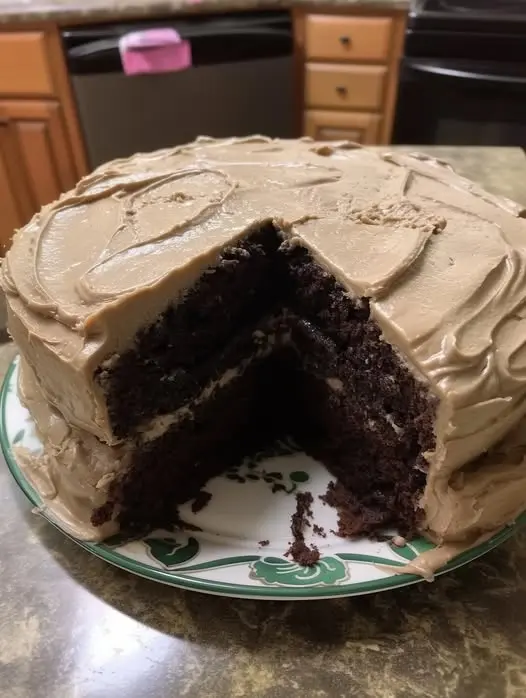
When it comes to presenting this rich chocolate dessert, simple is often best. The contrast between the dark cake and the tan frosting is visually striking on its own, but a few garnishes can elevate the look for special occasions. Consider topping the cake with chopped peanut butter cups, a drizzle of chocolate ganache, or a sprinkle of flaky sea salt to emphasize those savory notes.
Presentation Tips
For the cleanest slices, use a sharp thin-bladed knife dipped in hot water and wiped dry between every cut. This prevents the frosting from dragging into the cake layers, keeping the internal “stripe” of peanut butter looking sharp. Serve each slice at room temperature to ensure the frosting has its signature melt-in-the-mouth quality.
Perfect Pairings
This cake is incredibly rich, so it pairs beautifully with a cold glass of milk or a strong cup of black coffee. If you are serving it as a plated dessert, a small scoop of vanilla bean ice cream or a handful of fresh raspberries can provide a refreshing contrast to the dense chocolate and salty peanut butter flavors.
Storage and Make-Ahead
Storing Leftovers
Because of the butter content in the frosting, this cake should be stored in an airtight container. It will stay fresh at room temperature for up to two days. If your kitchen is particularly warm, store it in the refrigerator for up to five days, but be sure to bring it back to room temperature before serving for the best texture.
Freezing Instructions
You can freeze the un-frosted cake layers by wrapping them tightly in plastic wrap and then foil for up to three months. The frosting can also be frozen in an airtight container. Thaw both in the refrigerator overnight. Re-whip the frosting briefly before applying it to the thawed cake layers to restore its fluffiness.
Making It Ahead
You can bake the cake layers a day in advance and keep them wrapped at room temperature. The creamy peanut butter buttercream can also be made a few days ahead and kept in the fridge. This makes the assembly process quick and stress-free on the day of your event.
Final Thoughts
Mastering a homemade chocolate cake is a rite of passage for any home baker, and pairing it with a creamy peanut butter buttercream takes it to a whole new level of indulgence. This recipe relies on simple techniques like blooming the cocoa and properly aerating the frosting to achieve professional results in your own kitchen. Whether it is for a birthday, a holiday, or just a Tuesday craving, this chocolate cake peanut butter frosting combination is sure to become a staple in your dessert rotation. It is rich, comforting, and perfectly balanced—everything a great cake should be.
Frequently Asked Questions
Can I use natural peanut butter for the frosting?
It is generally not recommended for this specific creamy peanut butter buttercream. Natural peanut butter tends to be very oily and can separate, which makes the frosting unstable and prone to breaking. For a smooth, fluffy finish that stays on the cake, traditional creamy peanut butter (like Jif or Skippy) is the much better technical choice.
Do I have to use buttermilk in the cake?
Buttermilk is a key component for making a moist chocolate cake because its acidity reacts with baking soda to create lift and tenderness. If you don’t have any on hand, you can make a quick substitute by adding one tablespoon of lemon juice or white vinegar to a cup of regular milk and letting it sit for five minutes before using.
Can I make this into cupcakes instead?
Yes, this batter works beautifully for cupcakes. Simply fill your cupcake liners about two-thirds full and reduce the baking time to approximately 18–22 minutes. The chocolate cake peanut butter frosting is sturdy enough to be piped into high swirls on top of the cupcakes once they are fully cooled.
How do I stop my cake from sticking to the pan?
To ensure your homemade chocolate cake releases perfectly, grease the pans thoroughly with butter or non-stick spray, then line the bottoms with parchment paper circles. This provides a physical barrier that prevents sticking, even with the most moist and tender cake recipes.
Why is hot liquid used in the chocolate batter?
The hot liquid—whether it is water or coffee—serves to “bloom” the cocoa powder. This process dissolves the cocoa solids more effectively than cold liquid, intensifying the chocolate flavor and ensuring a smooth, lump-free batter. It is the secret step to achieving a truly rich chocolate dessert profile.


