
Stuffed Cabbage Rolls

There is something inherently comforting about a platter of steaming traditional stuffed cabbage rolls recipe sitting in the center of the table on a chilly evening. Often referred to as “comfort in a roll,” this dish combines the earthy sweetness of tender cabbage leaves with a hearty, savory filling that has been a staple in kitchens across Europe and America for generations. Whether you know them as Golabki, Holishkes, or simply stuffed cabbage, the appeal remains the same: a perfect balance of textures and a rich, savory tomato sauce that ties every component together into a comfort food classic.
While the process of parboiling leaves and rolling individual bundles might seem intimidating to a beginner, it is actually a therapeutic and rewarding kitchen project that yields impressive results. This guide will walk you through the essential techniques to ensure your rolls are tender, flavorful, and perfectly intact from the pot to the plate, making this traditional stuffed cabbage rolls recipe a success every time.
Why This Recipe Is a Keeper
- Nostalgic Comfort: This dish evokes the feeling of a home-cooked Sunday dinner, offering a deep sense of culinary heritage and warmth that modern quick-fix meals often lack.
- Budget-Friendly Ingredients: By utilizing humble staples like cabbage, ground beef and rice, and canned tomato products, you can feed a large family without a massive grocery bill.
- Excellent for Meal Prep: Like many braised dishes, these cabbage rolls actually taste better the next day after the flavors have had a chance to meld and intensify in the refrigerator.
- Nutritionally Balanced: This comfort food classic provides a complete meal in a single roll, offering protein, complex carbohydrates, and plenty of fiber from the leafy greens.
Ingredients You’ll Need
To achieve the best results with this traditional stuffed cabbage rolls recipe, it is important to select the right components. Each ingredient plays a specific role in balancing the acidity of the sauce with the richness of the meat filling, ensuring a cohesive and satisfying bite.
- Green Cabbage: A large, heavy head of standard green cabbage is best. Look for one with smooth, unblemished outer leaves that aren’t too tightly packed, as this makes peeling easier.
- Ground Beef: Lean ground beef (80/20 or 90/10) provides the necessary structure and flavor for the filling without making the dish overly greasy.
- Long-Grain Rice: The rice acts as a binder and absorbs the savory juices from the meat. Using parboiled or slightly undercooked rice prevents the rolls from becoming mushy.
- Tomato Sauce and Crushed Tomatoes: A combination of these two provides a smooth base with just enough texture to coat the tender cabbage leaves beautifully.
- Onion and Garlic: These aromatics are essential for building a deep flavor profile within the meat mixture and the surrounding sauce.
- Brown Sugar and Vinegar: This classic duo creates the signature sweet-and-sour profile that defines many traditional versions of this dish, balancing the savory meat.
- Egg: A single egg acts as a crucial binding agent, ensuring the ground beef and rice mixture stays together inside the cabbage leaf during the long simmering process.
- Fresh Herbs: Parsley or dill added to the filling provides a bright, fresh contrast to the rich, slow-cooked flavors of the beef and tomato.
Simple Swaps and Variations
While this traditional stuffed cabbage rolls recipe is wonderful in its original form, there are many ways to adapt it to your personal preferences or what you have available in your pantry.
- Meat Blends: For a more complex flavor, try a 50/50 mix of ground beef and ground pork. The pork adds moisture and a subtle sweetness that complements the savory tomato sauce.
- Grain Alternatives: If you prefer to skip the white rice, you can use cooked quinoa, brown rice, or even cauliflower rice for a lower-carb version, though the texture will vary slightly.
- Vegetarian Version: Replace the meat with a mixture of cooked lentils, chopped mushrooms, and walnuts to create a hearty plant-based filling that still feels substantial.
- Spicy Kick: If you enjoy a bit of heat, add a pinch of red pepper flakes to the tomato sauce or incorporate diced green chilies into the meat filling.
How to Make This Traditional Stuffed Cabbage Rolls Recipe
Step 1: Prepare and Soften the Cabbage Leaves
The first step to a successful roll is ensuring your tender cabbage leaves are pliable enough to bend without snapping. Core the cabbage by cutting a deep square around the stem and carefully lower the whole head into a large pot of boiling salted water. As the outer leaves soften, use tongs to gently peel them away one by one. This process usually takes about 10 to 15 minutes for the entire head. Once removed, use a paring knife to shave down the thick center vein on the back of each leaf, making it flat and easy to roll.
Step 2: Mix the Hearty Filling
In a large mixing bowl, combine your ground beef and rice with finely diced onions, minced garlic, the egg, and your chosen seasonings. It is important not to overwork the meat, as this can lead to a dense, tough filling. Use your hands to gently fold the ingredients together until they are just combined. The rice should be evenly distributed so that it can properly bind the meat juices as the rolls simmer in the savory tomato sauce.
Step 3: Assembly and Rolling Technique
Place one prepared cabbage leaf on a flat surface with the stem end facing you. Spoon about two to three tablespoons of the meat mixture onto the bottom third of the leaf. Fold the bottom edge over the meat, tuck in the sides like a burrito, and roll it up tightly toward the top edge. This “tuck and roll” method ensures that the filling is completely encased, preventing it from leaking out into the sauce during the cooking process.
Step 4: Layering and Simmering to Perfection
Spread a thin layer of tomato sauce on the bottom of a large heavy-bottomed pot or Dutch oven. Arrange the cabbage rolls in tight layers, seam-side down, to keep them from unfurling. Pour the remaining savory tomato sauce over the top, ensuring all rolls are well-covered. Cover the pot with a tight-fitting lid and simmer over low heat for about 60 to 90 minutes. You are looking for the cabbage to be translucent and fork-tender, and the meat filling to be fully cooked through and juicy.
Pro Tips for the Best Results
- Tip: Don’t throw away the small, unusable inner leaves of the cabbage. Shred them and place them at the bottom of the pot to act as a “cushion” that prevents the rolls from scorching.
- Tip: If you find peeling the boiled cabbage difficult, you can freeze the whole head of cabbage 24 hours in advance. Once thawed, the leaves will be naturally soft and easy to remove without boiling.
- Tip: Always place the rolls in the pot with the seam-side down. This uses gravity to keep the rolls closed, eliminating the need for toothpicks or string.
- Tip: For the most flavorful savory tomato sauce, sauté your onions and garlic in a bit of butter before adding the tomato base and sugar.
- Tip: Allow the finished rolls to rest in the pot for at least 15 minutes after turning off the heat. This allows the sauce to thicken slightly and the rolls to firm up for easier serving.
Troubleshooting Common Problems
Why are my cabbage rolls tough?
Toughness is usually caused by either undercooking the rolls or not properly softening the leaves before assembly. If the cabbage is still crunchy after an hour, continue simmering on low heat. Ensure your pot has enough liquid; if the sauce has reduced too much, add a splash of water or beef broth to help steam the leaves into tenderness.
Why did my rolls fall apart in the pot?
This usually happens if the rolls were packed too loosely or if the sauce was at a hard boil rather than a gentle simmer. The movement of boiling liquid can knock the rolls around. Always aim for a “lazy” bubble and ensure the rolls are snugly touching one another in the pot so they support each other’s structure.
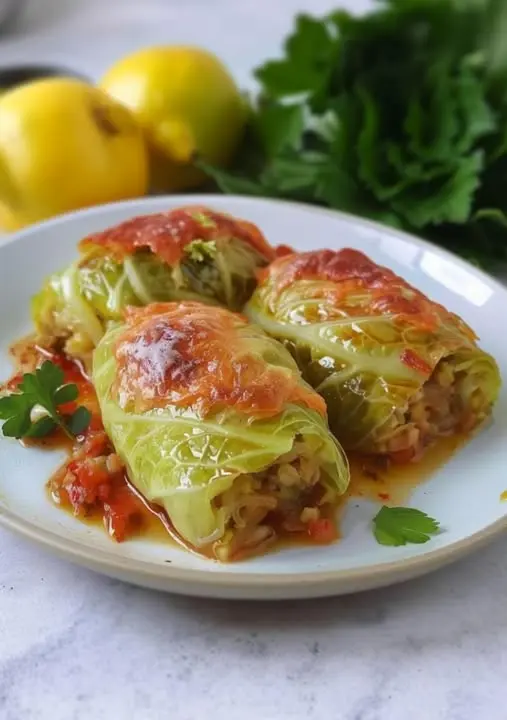
How to Serve Stuffed Cabbage
The beauty of this traditional stuffed cabbage rolls recipe is that it carries its own sauce, making it a very self-contained meal. However, a few traditional accompaniments can elevate the experience. A dollop of cool sour cream on top of each roll is a classic addition that cuts through the acidity of the savory tomato sauce and adds a luxurious creaminess to every bite.
For side dishes, consider something that can soak up the extra sauce. Creamy mashed potatoes or a thick slice of crusty rye bread are the most popular choices. If you want something lighter, a simple cucumber salad with dill and vinegar provides a refreshing contrast to the rich, warm flavors of the comfort food classic. For a truly authentic European presentation, serve the rolls in a shallow bowl with plenty of sauce and a sprinkle of fresh chopped parsley.
Storage and Make-Ahead
Leftovers of this traditional stuffed cabbage rolls recipe are a gift to your future self. Store any remaining rolls in an airtight container in the refrigerator for up to four days. As they sit, the tender cabbage leaves absorb even more of the sauce’s flavor, often making the leftovers taste even more robust than the original meal. To reheat, simply place the rolls and sauce in a covered skillet over low heat until warmed through, or use a microwave for a quick lunch.
If you want to make these ahead of time, you can assemble the rolls and store them uncooked in the refrigerator for up to 24 hours before simmering. They also freeze exceptionally well. To freeze, place the cooked and cooled rolls in a freezer-safe container, covered in sauce, for up to three months. Thaw them overnight in the refrigerator before reheating gently on the stovetop.
Final Thoughts
Mastering this traditional stuffed cabbage rolls recipe is a rite of passage for any home cook who loves the deep, soulful flavors of heritage cooking. While it requires a bit of patience and a little bit of practice with the rolling technique, the result is a comfort food classic that feels special every time it hits the table. By focusing on the quality of your ground beef and rice filling and taking the time to simmer the rolls slowly in a savory tomato sauce, you create a meal that is much more than the sum of its humble parts. Enjoy the process, and soon enough, these will become a requested favorite in your own household.
Frequently Asked Questions
Can I use a slow cooker for this recipe?
Yes, the slow cooker is an excellent tool for this dish. After assembling the rolls, layer them in the crockpot with the sauce and cook on low for 6 to 8 hours. The gentle, consistent heat of the slow cooker is perfect for producing incredibly tender cabbage leaves and a rich, concentrated sauce without the risk of scorching on the stovetop.
What is the best type of rice to use?
Long-grain white rice is the standard choice. However, many cooks swear by using parboiled rice (like Uncle Ben’s) because it maintains its individual grain structure better during the long cooking time. If you use standard raw white rice, ensure you add a little extra moisture to your meat mixture, as the rice will absorb liquid as it cooks inside the cabbage.
Can I use red cabbage instead of green?
While you can technically use red cabbage, it is not recommended for this specific recipe. Red cabbage is much tougher and takes significantly longer to soften than green cabbage. Additionally, the color of red cabbage will bleed into the filling and the sauce, resulting in a purplish tint that may not be visually appealing compared to the classic look of this comfort food classic.
How do I stop the cabbage rolls from being watery?
Watery rolls are often the result of not draining the parboiled cabbage leaves well enough or using a sauce that is too thin. After boiling the leaves, pat them dry with a paper towel before stuffing. Additionally, make sure your tomato sauce is thick enough; if it seems thin, you can stir in a tablespoon of tomato paste to increase the body of the savory tomato sauce.
Is it possible to make these without the sugar?
The brown sugar is used to create a “sweet and sour” balance typical of Polish and Jewish variations. If you prefer a strictly savory profile, you can omit the sugar and vinegar entirely. In this case, consider adding more sautéed aromatics like carrots or celery to the sauce to provide a natural, subtle sweetness that complements the ground beef and rice filling.
Vegetarian Stuffed Cabbage Rolls

A hearty and comforting vegetarian version of the classic Eastern European comfort food. These cabbage leaves are stuffed with a savory mixture of rice, mushrooms, and herbs, then slow-baked in a sweet and tangy tomato sauce.
- 1 large head green cabbage
- 1 cup uncooked white rice (cooked to yield 3 cups)
- 2 cups finely chopped mushrooms
- 1 large onion, finely diced
- 3 cloves garlic, minced
- 1 tbsp olive oil
- 1 tsp dried thyme
- 1 tsp smoked paprika
- 1 can (15 oz) tomato sauce
- 2 tbsp brown sugar
- 1 tbsp lemon juice
- Salt and black pepper to taste
- 1Preheat your oven to 350°F (175°C).
- 2Bring a large pot of salted water to a boil. Remove the core from the cabbage and place the whole head in the water. Boil for 5-8 minutes, peeling off the outer leaves with tongs as they become soft and pliable. Drain and set aside 12 large leaves.
- 3In a large skillet, heat olive oil over medium heat. Sauté the onions, garlic, and mushrooms until the moisture has evaporated and they are golden brown.
- 4In a large mixing bowl, combine the cooked rice, mushroom mixture, thyme, paprika, salt, and pepper. Mix well.
- 5In a separate bowl, whisk together the tomato sauce, brown sugar, and lemon juice to create the topping.
- 6To assemble, lay a cabbage leaf flat, trim the thick center vein, and place 1/3 cup of filling near the stem end. Fold in the sides and roll up tightly.
- 7Spread a thin layer of the sauce at the bottom of a 9x13 inch baking dish. Place rolls seam-side down in the dish.
- 8Pour the remaining sauce over the rolls. Cover the dish tightly with foil.
- 9Bake for 50-60 minutes until the cabbage is tender and the sauce is bubbling.
Keywords: stuffed cabbage, vegetarian dinner, meatless rolls, cabbage recipe, plant-based comfort food


