
Smoked Beef Brisket

There is a specific kind of magic that happens when a tough, marbeled slab of meat is transformed over hours of gentle heat into something so tender it practically melts on the tongue. Achieving the best smoked beef brisket recipe is often considered the “Holy Grail” of outdoor cooking, requiring patience, precision, and a deep respect for the low and slow smoking process. A perfectly executed brisket features a deeply caramelized, savory crust known as the brisket bark, a vibrant pink smoke ring just beneath the surface, and a succulent interior that yields to the slightest pressure. It is the centerpiece of American barbecue, celebrated for its rich, beefy flavor and the communal experience of sharing a labor of love with friends and family.
While the process can seem intimidating to beginners, mastering this recipe is more about understanding the “why” behind each step than following a rigid set of rules. By focusing on quality meat, a simple yet effective rub, and consistent temperature management, you can produce professional-grade barbecue in your own backyard. This guide will walk you through the essential techniques for trimming, seasoning, and resting, ensuring that your next cookout features a brisket that is juicy, smoky, and absolutely unforgettable. Whether you are using a traditional offset smoker or a modern pellet grill brisket setup, these principles will help you reach BBQ excellence.
Why You’ll Love This Recipe
- Unmatched Flavor Depth: The combination of hardwood smoke and a simple salt-and-pepper rub creates a complex, savory profile that highlights the natural richness of the beef.
- Superior Texture: Following the low and slow method ensures that the tough connective tissues break down completely, resulting in a buttery, “pull-apart” tenderness.
- Crowd-Pleasing Potential: A full packer brisket is designed to feed a large group, making it the ultimate choice for summer holidays, reunions, or neighborhood gatherings.
- Rewarding Craft: There is immense satisfaction in managing a fire and monitoring a cook for several hours, ending with a final product that looks and tastes like a masterpiece.
Ingredients You’ll Need
To achieve the best smoked beef brisket recipe, you do not need a long list of exotic ingredients. Instead, you need high-quality staples that allow the beef and the smoke to remain the stars of the show. Focus on the texture of your spices and the grade of your meat for the most consistent results.
- Whole Packer Brisket: Look for a “packer” cut that includes both the point (the fatty part) and the flat (the leaner part). Prime or Choice grades offer the best marbling for a juicy result.
- Coarse Kosher Salt: The large grains of kosher salt help build a beautiful brisket bark while seasoning the meat deeply without making it overly salty.
- Coarse Ground Black Pepper: Using 16-mesh or “butcher grind” pepper is essential for creating the classic Texas-style brisket appearance and a bold, spicy crust.
- Yellow Mustard (Optional Binder): A thin layer of mustard helps the rub adhere to the meat. Don’t worry—the mustard flavor disappears completely during the long smoking process.
- Garlic Powder: A small amount of garlic powder adds a subtle savory undertone that complements the beefy flavor without distracting from the smoke.
- Distilled Water or Apple Juice (for Spritzing): Keeping the surface of the meat moist during the mid-stages of cooking helps the smoke stick and prevents the edges from drying out.
Variations and Smart Swaps
The Sweet and Savory Rub: While a traditional Texas-style brisket uses only salt and pepper, you can add a tablespoon of brown sugar and paprika to your rub for a touch of sweetness and a more vibrant reddish hue.
The Coffee Rub: For a deeply earthy and dark bark, try adding finely ground coffee beans to your seasoning mix. The acidity of the coffee helps tenderize the meat while adding a unique roasted flavor.
Binder Alternatives: If you prefer not to use mustard, you can use a light coating of olive oil or even just a splash of Worcestershire sauce to help your spices stick to the brisket surface.
The Butcher Paper vs. Foil Wrap: For a crunchier bark, use peach butcher paper to wrap the meat during the “stall.” If you want the softest, most tender meat possible, heavy-duty aluminum foil will trap more moisture and speed up the cook.
How to Make the Best Smoked Beef Brisket
Step 1: Trim the Brisket for Airflow
Trimming is perhaps the most underrated part of the best smoked beef brisket recipe. You want to remove any “hard” fat that won’t render, while leaving about a quarter-inch of the fat cap to protect the meat. Aerodynamics matter here; trim the brisket into a smooth, aerodynamic shape so that smoke can flow over it evenly without hitting “shelves” or pockets. Removing the silver skin from the top of the flat also ensures the rub can penetrate the meat directly, leading to a better flavor profile.
Step 2: Apply the Rub and Pre-Heat
Apply your binder of choice, then generously coat the entire brisket with your salt and pepper mixture. Do not be afraid to use a lot of seasoning; this is a large, thick piece of meat that needs a heavy rub to form a proper crust. Once seasoned, let the brisket sit at room temperature for about 30 to 45 minutes while you pre-heat your smoker. Set your smoker to a consistent 225°F or 250°F using oak, hickory, or post oak wood for that authentic Texas-style brisket aroma.
Step 3: The Initial Smoke Phase
Place the brisket on the smoker, usually with the fat cap facing the heat source (often fat-side up in most backyard smokers). This phase is all about the low and slow smoking technique. During the first few hours, the meat will take on the most smoke flavor and begin to develop its color. Avoid opening the lid frequently, as heat fluctuations can extend the cooking time significantly. If the surface looks dry after 3 or 4 hours, give it a light spritz with water or apple juice to keep it tacky.
Step 4: Navigating the Stall and Wrapping
Around an internal temperature of 160°F to 165°F, you will hit “the stall.” This is where the internal temperature stops rising as moisture evaporates from the surface. To push through this, wrap the brisket tightly in butcher paper or aluminum foil. This “Texas Crutch” traps heat and moisture, gently braising the meat and ensuring it stays juicy. Wrapping at this stage protects the brisket bark from becoming too dark or bitter from over-exposure to smoke.
Step 5: Finishing and Checking for Tenderness
Continue cooking the wrapped brisket until the internal temperature reaches approximately 203°F. However, temperature is just a guide; the real test is “probe tenderness.” Insert your thermometer probe into the thickest part of the flat; it should feel like sliding a hot knife through room-temperature butter. If there is any resistance, let it cook for another 15 to 30 minutes. The point (the fattier end) will usually be even more tender than the flat.
Step 6: The Essential Long Rest
This is the most critical step for the best smoked beef brisket recipe. Once the brisket is done, do not slice it immediately. Place the wrapped brisket in an empty room-temperature cooler for at least two hours (up to four). This allows the muscle fibers to relax and reabsorb the juices. If you slice it too early, the moisture will pour out onto the cutting board, leaving you with dry meat. A well-rested brisket will be noticeably more succulent and easier to slice cleanly.
Pro Tips for Success
- Tip: Always slice against the grain. Look at the direction of the muscle fibers before you season the meat and make a small notch to remember which way to cut once it is covered in bark.
- Tip: Maintain a clean fire. You want “thin blue smoke” coming from your chimney, not thick white smoke, which can leave a creosote, bitter taste on your Texas-style brisket.
- Tip: Don’t trim the fat too thin. The fat cap acts as a thermal buffer and bastes the meat as it renders, preventing the flat from drying out during the 12-plus hour cook.
- Tip: Use a water pan in your smoker. This adds humidity to the cooking chamber, which helps the pink smoke ring develop and prevents the exterior of the meat from becoming leathery.
- Tip: Be patient with the stall. It can last for hours, but trying to “crank up the heat” too high can result in a scorched exterior and a tough interior.
Troubleshooting Common Problems
Why is my brisket bark soft instead of crunchy?
A soft bark is usually the result of wrapping the meat too early or using aluminum foil instead of butcher paper. Foil traps 100% of the moisture, which can “steam” the crust. If you prefer a crunchier exterior, wait until the bark is fully set and dark before wrapping, or try using peach butcher paper, which allows some steam to escape while still protecting the meat.
Why is my brisket dry even though it reached 203°F?
Dryness often occurs if the meat wasn’t rested long enough or if it was a lower grade of beef with very little internal marbling (intramuscular fat). Additionally, if the smoker temperature was too high, the moisture may have been forced out of the meat too quickly. Always opt for Prime or high-Choice meat and ensure a minimum 2-hour rest period in a cooler.
Why is my meat tough and rubbery?
If the meat is difficult to chew, it is likely undercooked. Even if you reached 200°F, the connective tissue (collagen) might not have had enough time to fully liquefy. Always rely on the “probe test” rather than just the thermometer. If it doesn’t feel like butter, it’s not ready to come off the heat.
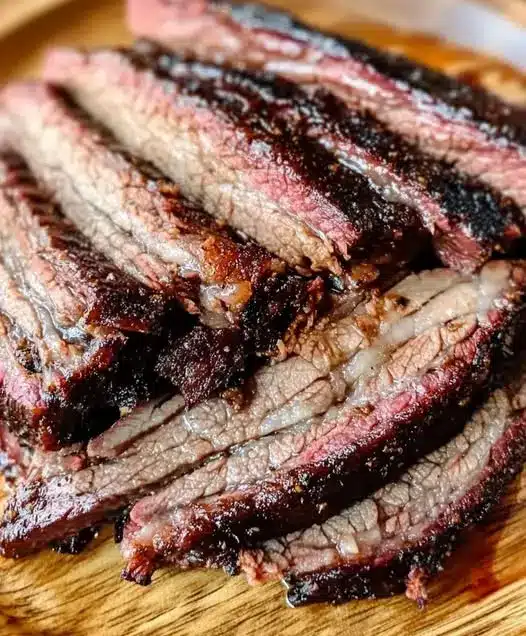
How to Serve Smoked Beef Brisket
Presentation is key when serving the best smoked beef brisket recipe. Use a long, scalloped slicing knife to cut the flat into pencil-thick slices. For the point, you can slice it similarly or cube it to make “burnt ends,” which are highly sought-after flavor bombs. Arrange the slices on a large platter, slightly overlapping them to retain heat, and pour any accumulated juices from the resting wrap over the top for extra shine and moisture.
Garnishes and Sides
Traditional Texas-style brisket is often served simply with white bread, sliced white onions, and dill pickles to provide a sharp, acidic contrast to the rich fat of the beef. If you want a more complete meal, classic BBQ sides like creamy coleslaw, pit-style baked beans, and jalapeño cheddar cornbread are excellent choices that complement the smoky profile without overwhelming it.
Creative Ways to Serve Leftovers
If you find yourself with leftovers, brisket is incredibly versatile. It makes for world-class breakfast tacos when paired with scrambled eggs and salsa, or a decadent grilled cheese sandwich. You can also chop the cold brisket and toss it into a hearty chili or use it as a topping for loaded baked potatoes. The high fat content ensures it stays delicious even after being repurposed in secondary dishes.
Storage and Make-Ahead
Storing Leftovers
To keep your brisket moist, store leftovers in large chunks rather than pre-slicing everything. Wrap the meat tightly in plastic wrap and then foil, or place it in an airtight container. It will stay fresh in the refrigerator for up to 4 days. If you have a vacuum sealer, that is the gold standard for preserving the texture and flavor of smoked meats.
Reheating
The best way to reheat brisket without drying it out is to use a low-temperature oven or a sous-vide machine. If using an oven, place the meat in a pan with a splash of beef broth, cover tightly with foil, and heat at 250°F until the internal temperature reaches 165°F. This “steaming” effect helps restore the original juiciness of the best smoked beef brisket recipe.
Final Thoughts
Mastering the best smoked beef brisket recipe is a journey that rewards those who value technique and patience. While it takes nearly a full day to complete, the result is a culinary achievement that stands far above any other form of barbecue. By focusing on a clean fire, a bold rub, and a dedicated resting period, you can create a brisket that rivals the famous smokehouses of Central Texas. Remember that every cook is a learning experience; take notes on your timing and temperatures, and soon you will be the pitmaster your neighborhood raves about. Enjoy the process as much as the meal itself!
Frequently Asked Questions
What is the best wood for smoking brisket?
For a traditional Texas-style brisket, post oak is the preferred choice because it provides a medium smoke flavor that isn’t too overpowering. Hickory is another popular option for a bolder, more classic BBQ taste. If you prefer something milder and slightly sweet, fruitwoods like apple or cherry can be used, though they are often mixed with oak to ensure a steady burn and deep color.
Should I smoke my brisket fat-side up or fat-side down?
This depends largely on where your heat source is located. In an offset smoker, where heat comes from the top and sides, fat-side up is traditional to allow the rendering fat to protect the meat. In many pellet grills or vertical smokers where the heat comes from directly below, smoking fat-side down acts as a shield to prevent the meat from drying out. Ultimately, the goal is to protect the meat from the most intense direct heat.
How long does it take to smoke a full brisket?
On average, you should plan for about 60 to 90 minutes per pound when smoking at 225°F. For a 12-pound packer brisket, this means a total cook time of 12 to 18 hours. However, factors like wind, humidity, and the specific fat content of the beef can change this. Always start your cook earlier than you think you need to; it is much better to let a finished brisket rest longer in a cooler than to have hungry guests waiting for the meat to finish.
What is a smoke ring and is it necessary?
The pink smoke ring is a chemical reaction between the nitrogen dioxide in the smoke and the myoglobin in the meat. While it is a hallmark of great barbecue and visually stunning, it does not actually affect the flavor of the meat. You can achieve the best smoked beef brisket recipe without a prominent ring if your smoker is very efficient, but most enthusiasts strive for it as a sign of a well-managed wood fire.
Can I smoke a brisket on a pellet grill?
Yes, you can absolutely make a high-quality pellet grill brisket. Because pellet grills are very efficient, they sometimes produce less smoke flavor than an offset smoker. To compensate, many pitmasters use a “smoke setting” for the first few hours or add a smoke tube filled with pellets to the cooking chamber to enhance the bark development and smoky aroma.
Smoked Beef Brisket

This classic Smoked Beef Brisket is prepared with a simple but flavorful dry rub and slow-smoked over oak wood until it is incredibly tender and juicy with a perfect bark.
- 1 (12-15 lb) whole packer beef brisket
- 1/4 cup coarse kosher salt
- 1/4 cup coarse black pepper
- 2 tablespoons garlic powder
- 1 tablespoon onion powder
- 1 tablespoon smoked paprika
- 1/2 cup beef broth (for spritzing)
- 1Trim the brisket fat cap to approximately 1/4 inch thickness and remove any hard silver skin.
- 2In a small bowl, combine the salt, pepper, garlic powder, onion powder, and paprika to create the "Texas-style" rub.
- 3Season the meat generously on all sides, pressing the rub into the surface.
- 4Preheat your smoker to 225°F (107°C) using oak or hickory wood for the best flavor profile.
- 5Place the brisket on the smoker fat-side up. Close the lid and smoke until the internal temperature reaches 165°F (about 6-8 hours).
- 6Spritz the brisket with beef broth every hour after the first 3 hours to maintain moisture.
- 7Once the brisket hits 165°F and the bark is set, wrap it tightly in peach butcher paper or heavy-duty foil.
- 8Return the brisket to the smoker and continue cooking until the internal temperature reaches 203°F in the thickest part of the flat.
- 9Remove the brisket and let it rest in an insulated cooler for at least 2 hours before slicing against the grain.
Keywords: beef brisket, smoked brisket, bbq brisket, smoked beef, low and slow

