
Mom’s Famous Cream Puffs

Mastering the best homemade cream puff recipe is a rite of passage for any home baker looking to elevate their dessert game. These golden, airy vessels—scientifically known as pâte à choux—are the foundation of legendary French pastries, yet they rely on a surprisingly short list of pantry staples. When executed correctly, the exterior forms a crisp, light-as-air shell that gives way to a hollow center just waiting to be piped full of rich, velvety cream. There is a specific kind of magic that happens in the oven as the high moisture content in the dough turns to steam, forcing the pastry to puff up into beautiful, craggy mounds without a single grain of baking powder or yeast.
While the process might seem intimidating, it is actually quite approachable once you understand the technical nuances of the dough. This guide focuses on the “why” behind every step, ensuring you achieve that perfect golden hue and sturdy structure every single time you bake. Whether you are preparing these for a sophisticated dinner party or a simple family treat, French cream puffs from scratch are guaranteed to impress everyone at the table.
Why This Recipe Is a Keeper
- Textural Contrast: The combination of a crisp, buttery shell and a cool, creamy interior creates a sensory experience that store-bought versions simply cannot replicate.
- Versatile Foundation: Once you master this base, you can use it for eclairs, profiteroles, or even savory appetizers like gougères by simply swapping the filling.
- Simple Ingredients: You likely already have everything you need in your kitchen—butter, flour, eggs, and water—making this an excellent last-minute dessert option.
- Impressive Presentation: Despite their humble ingredient list, these pastries look like they came straight from a high-end Parisian boulangerie, offering a high reward for your effort.
Ingredients You’ll Need
The beauty of the best homemade cream puff recipe lies in the transformation of basic ingredients into something extraordinary. Each component plays a specific structural or flavorful role in the final pastry.
- Unsalted Butter: This provides the necessary fat for a tender crumb and a rich, golden flavor. Using unsalted butter allows you to control the seasoning precisely.
- All-Purpose Flour: The proteins in the flour provide the structure needed to hold the steam. It is essential to use a flour that can absorb the moisture while maintaining its shape.
- Large Eggs: Eggs are the “soul” of the choux. They provide leavening, color, and the final structural set. Adding them one by one ensures they emulsify properly into the cooked dough.
- Water or Milk: Water creates a crispier, lighter shell, while milk adds more color and a softer, richer bite. Many bakers use a combination of both for the perfect balance.
- Granulated Sugar and Salt: Even in a sweet pastry, a pinch of salt is vital to balance the flavors, while a touch of sugar aids in the caramelization and browning of the shells.
- Heavy Cream or Pastry Cream: For the classic experience, classic pastry cream offers a dense, custard-like center, while sweetened whipped cream provides a lighter, more ethereal finish.
Variations and Smart Swaps
- Chocolate Dipped: After filling the puffs, dip the tops into a warm chocolate ganache. This adds a layer of decadence and helps seal the pastry.
- Craquelin Topping: For extra crunch, place a thin disc of sweet cookie dough (craquelin) on top of the piped dough before baking. It creates a beautiful cracked appearance and a sugary snap.
- Savory Gougères: Omit the sugar and vanilla, and fold in finely grated Gruyère or Parmesan cheese and a pinch of black pepper before piping.
- Ice Cream Profiteroles: Instead of cream, slice the shells in half and fill them with a small scoop of vanilla or coffee ice cream, then drizzle with hot fudge just before serving.
How to Make the Best Homemade Cream Puff Recipe
Step 1: Melt the Butter and Boil the Liquids
Begin by combining your water (or milk), butter, sugar, and salt in a medium saucepan over medium heat. It is crucial to bring the mixture to a full rolling boil. The butter must be completely melted before the liquid reaches a boil to ensure the ratios remain correct. This step is about creating a hot, emulsified base that will immediately begin to hydrate the flour as soon as it hits the pan.
Step 2: Hydrate the Flour and Cook the Panade
Once the liquid is boiling, remove the pan from the heat and dump in all the flour at once. Stir vigorously with a wooden spoon until a thick dough forms. Return the pan to low heat and continue stirring for about two minutes. You are looking for a thin film to form on the bottom of the pan and for the dough to pull away into a smooth ball. This “cooking out” process is vital because it evaporates excess moisture and gelatinizes the starches, which allows the dough to expand significantly in the oven.
Step 3: Cool the Dough and Incorporate Eggs
Transfer the warm dough to a stand mixer or a large bowl. Let it cool for a few minutes so you don’t accidentally scramble the eggs. With the mixer on medium, add the eggs one at a time, ensuring each is fully incorporated before adding the next. This is where choux pastry tips become essential: you might not need the final egg. Stop adding when the dough is glossy and forms a “V” shape when you lift the beater. The dough should be thick enough to hold its shape but soft enough to pipe easily.
Step 4: Pipe and Prepare for the Oven
Transfer the dough to a piping bag fitted with a large round tip. Pipe mounds onto a parchment-lined baking sheet, leaving plenty of space between them as they will triple in size. If you have little “tails” on top of your mounds, dip your finger in water and gently press them down to prevent them from burning. A light misting of water on the baking sheet can also help create more steam in the early stages of baking, which encourages a higher rise.
Step 5: The Two-Stage Baking Process
Baking is the most critical stage of the best homemade cream puff recipe. Start at a high temperature to create an immediate burst of steam that forces the puffs upward. After the initial rise, lower the temperature without opening the oven door. This second stage dries out the interior and firms up the walls of the pastry so they don’t collapse when removed from the heat. The shells are done when they are deeply golden brown and feel very light and hollow when tapped.
Step 6: Cool, Vent, and Fill
Once the shells are out of the oven, use a small paring knife or a toothpick to poke a tiny hole in the side or bottom of each puff. This allows any remaining steam to escape, preventing the interior from becoming soggy. Let them cool completely on a wire rack. When you are ready to serve, pipe your classic pastry cream or whipped cream into the hole you created until the puff feels heavy and full.
Pro Tips for Success
- Tip: Always use room temperature eggs. Cold eggs can shock the warm dough and prevent it from emulsifying properly, leading to a lumpy consistency.
- Tip: Do not open the oven door during the first 20 minutes of baking. A sudden drop in temperature or a draft can cause the delicate steam-filled shells to deflate instantly.
- Tip: Weigh your ingredients. Because the ratio of liquid to flour to eggs is so precise in pâte à choux troubleshooting, using a kitchen scale provides much more consistent results than measuring cups.
- Tip: If the dough is too runny, you cannot simply add more flour. You must make a small half-batch of the cooked flour/butter “panade” and stir it into the runny dough to fix the consistency.
- Tip: For the crispest shells, bake them until they are a shade darker than you think they should be. Pale puffs often have too much moisture left in the walls and will soften quickly.
Troubleshooting Common Problems
Why Did My Cream Puffs Flatten?
Flat cream puffs are usually caused by one of two things: either the dough was too wet (too many eggs added) or the oven door was opened too early. If the structure hasn’t had time to “set” through the evaporation of moisture, the weight of the dough will cause the puff to collapse. Ensure you cook the dough on the stovetop until a film forms to guarantee the right starting moisture level.
Why Is the Inside Still Doughy?
If the exterior is dark but the inside is raw, your oven temperature might be too high, or you didn’t bake them long enough at the lower temperature setting. The goal of the second half of baking is to “cure” the interior. Always poke a vent hole immediately after baking to let the internal steam escape; otherwise, that steam will turn back into water and make the inside mushy.
Why Is My Dough Lumpy?
Lumps usually occur if the flour wasn’t added all at once to the boiling liquid, or if it wasn’t stirred vigorously enough. If you see lumps after adding eggs, you can try to press them out against the side of the bowl, but it’s best to ensure the initial “panade” is completely smooth before the cooling stage begins.
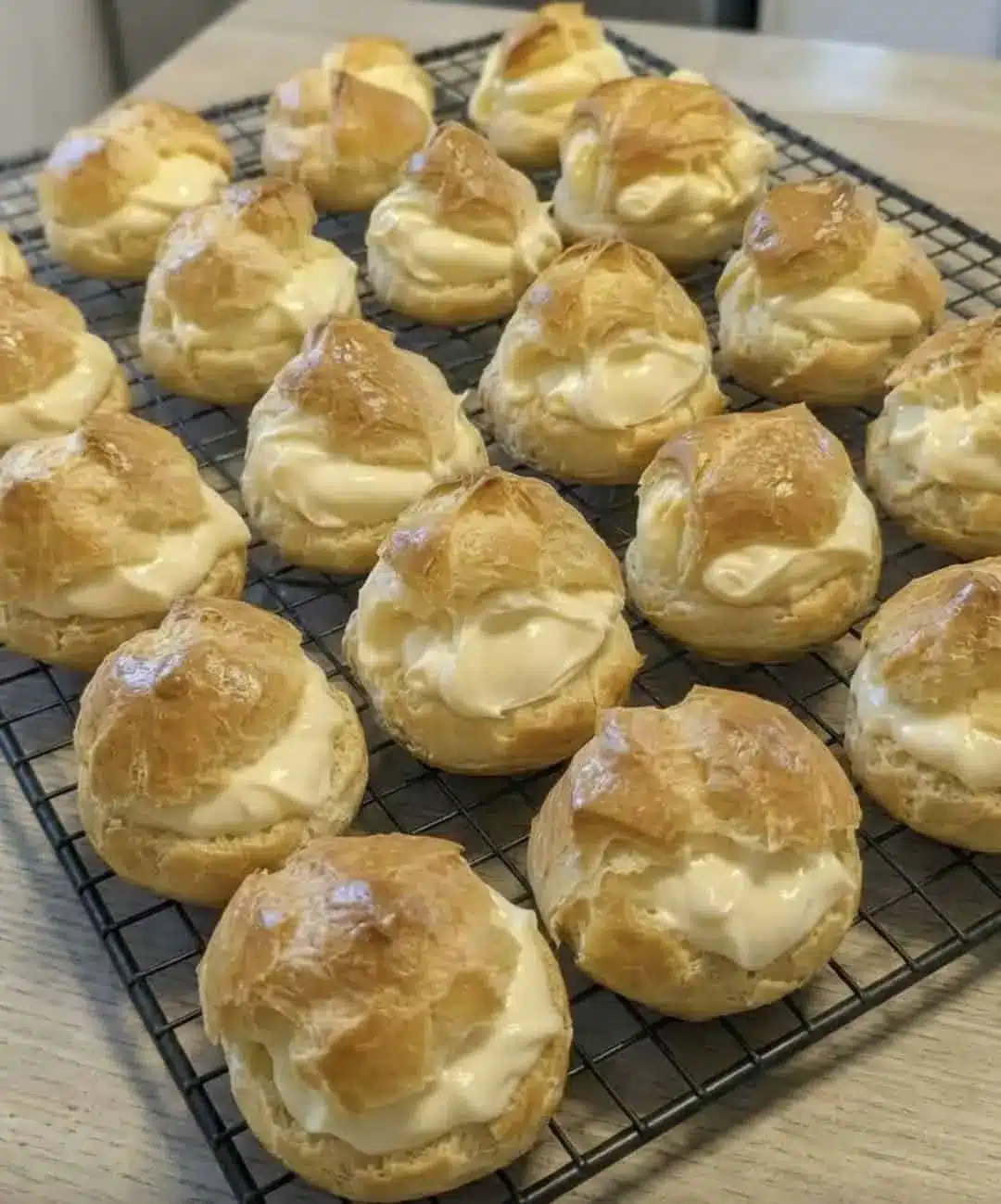
How to Serve Cream Puffs
Presentation is half the fun when it comes to the best homemade cream puff recipe. While they are beautiful on their own, a few simple additions can make them look like professional patisserie items.
Traditional Garnishes
A simple dusting of powdered sugar is the most classic way to finish these treats. It highlights the craggy, golden texture of the shells. If you want something more indulgent, a warm chocolate ganache can be drizzled over a stack of puffs (known as a croquembouche if built into a tower) or used as a dipping sauce.
Creative Serving Ideas
Consider serving three small puffs in a bowl with different fillings—one with vanilla bean pastry cream, one with chocolate mousse, and one with a tart lemon curd. You can also serve them “profiterole style” by cutting them in half, filling them with a scoop of vanilla ice cream, and placing the “hat” back on top before drizzling with warm caramel or fudge sauce.
Storage and Make-Ahead
Storing Leftovers
Filled cream puffs are best enjoyed within a few hours of assembly, as the moisture from the cream will eventually soften the shell. If you have leftovers, store them in an airtight container in the refrigerator for up to 24 hours. Note that the shell will lose its crispness, but it will still taste delicious.
Freezing and Reheating
The unfilled shells freeze beautifully. Place the completely cooled, empty shells in a freezer-safe bag for up to two months. When ready to use, crisp them up in a 350°F oven for 5 minutes, let them cool, and then fill. This is a fantastic way to prep for a party well in advance.
Making It Ahead
You can make the pastry cream up to two days in advance and keep it chilled in the fridge. The shells can be baked the morning of your event and kept at room temperature in a dry place. Assemble the puffs as close to serving time as possible for the best textural contrast.
Final Thoughts
Baking the best homemade cream puff recipe is a rewarding experience that demystifies one of the most famous techniques in pastry arts. While the process requires focus—especially during the stovetop cooking and the egg incorporation—the result is a light, elegant dessert that far surpasses anything you can buy at a store. By paying attention to sensory cues like the “V” shape of the dough and the hollow sound of the baked shells, you can consistently produce professional-grade pastries in your own kitchen. Grab your whisk and piping bag, and enjoy the process of creating these airy, golden delights.
Frequently Asked Questions
Can I make the dough by hand without a mixer?
Yes, you absolutely can. While a stand mixer makes the process easier, generations of French bakers have incorporated eggs by hand using a sturdy wooden spoon. It requires some significant muscle to beat the eggs into the thick dough, but it gives you excellent control over the final consistency. Just be sure to beat vigorously after each egg until the dough is completely smooth again.
Why do I need to add eggs one at a time?
The dough is a high-fat, high-moisture emulsion. Adding too much liquid (eggs) at once can cause the dough to “break,” making it slippery and lumpy rather than smooth and cohesive. By adding them individually, you allow the flour and butter to slowly absorb the moisture and protein from the eggs, resulting in a stable dough that will rise properly in the oven.
Can I use bread flour instead of all-purpose?
You can use bread flour for a sturdier, crunchier shell. Because bread flour has a higher protein content, it creates a stronger gluten network that can hold even more steam. This often results in a larger puff with a slightly thicker wall. However, all-purpose flour is the traditional choice for a more delicate, melt-in-your-mouth texture.
My cream puffs are soft after cooling, how do I fix them?
If your shells softened as they cooled, they likely still had too much moisture inside. You can easily fix this by placing the unfilled shells back into a 300°F oven for 5 to 8 minutes. This will “re-crisp” the exterior. To prevent this in the future, ensure you are poking a vent hole in the puffs immediately after they come out of the oven to let the internal steam escape.
What is the difference between a cream puff and a profiterole?
In most culinary circles, the terms are used interchangeably as they both use the same choux pastry base. However, “cream puff” usually refers to a shell filled with whipped cream or pastry cream and served at room temperature or chilled. “Profiterole” often refers to the same shell filled with ice cream and served with a warm sauce, like chocolate ganache.
Mom’s Famous Cream Puffs

Light, airy pastry shells filled with a rich, sweetened whipped cream. This classic family recipe has been a staple at every gathering for decades, beloved for its delicate texture and decadent filling.
- 1/2 cup butter, unsalted
- 1 cup water
- 1/4 teaspoon salt
- 1 cup all-purpose flour
- 4 large eggs
- 2 cups heavy whipping cream, chilled
- 1/4 cup powdered sugar
- 1 teaspoon vanilla extract
- 1Preheat your oven to 400°F (200°C) and line a baking sheet with parchment paper.
- 2In a medium saucepan, combine the water, butter, and salt. Bring to a rolling boil over medium-high heat.
- 3Add the flour all at once and stir vigorously with a wooden spoon until the mixture forms a smooth ball and pulls away from the sides of the pan.
- 4Remove from heat and let the dough cool for about 5 minutes.
- 5Add the eggs one at a time, beating thoroughly after each addition until the dough is smooth, glossy, and completely incorporates the egg.
- 6Drop rounded tablespoons of dough onto the prepared baking sheet, spaced 2 inches apart.
- 7Bake for 30 to 35 minutes or until the puffs are golden brown and firm to the touch.
- 8Immediately remove from the oven and prick each puff with a toothpick to release steam; let cool completely on a wire rack.
- 9In a chilled bowl, beat the heavy cream, powdered sugar, and vanilla until stiff peaks form.
- 10Slice the tops off the cooled puffs, fill generously with the cream mixture, and replace the tops.
Keywords: cream puffs, choux pastry, dessert, whipped cream, classic dessert, baking


