
Chicken Pot Pie

There is nothing quite like the aroma of a golden, buttery crust emerging from the oven to signal that dinner is served. For many, a best homemade chicken pot pie represents the pinnacle of American comfort food, offering a soul-warming combination of tender poultry, vibrant vegetables, and a velvety sauce that ties it all together. Unlike store-bought versions that often rely on excessive salt and thin fillings, a scratch-made pie allows you to control the depth of flavor and the quality of every ingredient, resulting in a meal that feels both rustic and incredibly luxurious.
While the prospect of making a savory pie from scratch might seem daunting, this guide simplifies the process into manageable stages that ensure success even for novice bakers. By focusing on a few comfort food classics—like a properly developed roux and a perfectly chilled dough—you can create a centerpiece dish that far exceeds the frozen alternatives in both texture and taste. This recipe is designed to be approachable yet impressive, providing the ultimate blueprint for a family favorite that you will find yourself returning to season after season.
Why This Recipe Is a Keeper
- Unbeatable Texture: By using a flaky pie crust and a properly thickened sauce, you achieve a satisfying contrast between the crisp, shattered layers of pastry and the creamy chicken filling inside.
- Deeply Savory Flavor: Building a base with fresh aromatics and high-quality stock ensures a complex, “cooked-all-day” taste that highlights the natural sweetness of the vegetables.
- Customizable Ingredients: This recipe acts as a versatile canvas, allowing you to easily swap proteins or use up seasonal produce without compromising the structural integrity of the pie.
- Perfect for Meal Prep: Because it holds up exceptionally well to freezing and reheating, it is one of the most reliable savory dinner recipes to have in your rotation for busy weeknights.
Ingredients You’ll Need
The secret to a truly exceptional pot pie lies in the balance of its components. Selecting fresh aromatics and a high-quality fat source for the crust will transform this dish from a standard meal into a memorable culinary experience.
- Chicken Breast or Thighs: Using tender, cooked chicken is essential. While poached breasts are traditional, roasted thighs offer a richer flavor that stands up well to the long baking time.
- Butter and Flour: These two ingredients form the roux, which is the thickening engine of your sauce. Using unsalted butter allows you to control the final seasoning perfectly.
- Chicken Stock: Look for a low-sodium, high-quality stock or bone broth. This provides the foundational liquid for the gravy, adding body and savory depth to the interior.
- Heavy Cream: A small splash of cream added at the end of the filling preparation creates a silky mouthfeel and a luxurious finish that water or milk alone cannot replicate.
- Onion, Carrots, and Celery: Often called the “holy trinity” of cooking, these vegetables provide the essential aromatic base and a natural sweetness that balances the rich sauce.
- Fresh Herbs: Thyme and parsley are the classic choices here. Fresh herbs offer a bright, earthy top note that cuts through the richness of the pastry and cream.
- Frozen Peas: Adding these at the very end ensures they maintain their bright green color and “pop” texture, rather than becoming mushy during the cooking process.
- Double Pie Crust: Whether you choose to make a traditional lard-based dough or an all-butter pastry, the goal is a flaky pie crust that can support the weight of the filling.
Variations and Smart Swaps
- The Turkey Twist: This recipe is the absolute best way to utilize leftover holiday turkey. Simply swap the chicken for an equal amount of shredded turkey for a festive easy pot pie recipe variation.
- Puff Pastry Topping: If you are short on time or prefer a lighter, more airy texture, you can replace the traditional pie dough with a sheet of store-bought puff pastry for a sophisticated “pot pie” look.
- Vegetarian Mushroom Pot Pie: For a meatless version, replace the chicken with a pound of sautéed cremini or shiitake mushrooms and use a rich vegetable bouillon in place of the chicken stock.
- Biscuit Top: Instead of a bottom and top crust, you can pour the filling into a deep baking dish and top it with dropped or cut buttermilk biscuits for a more rustic, cobbler-style presentation.
How to Make the Best Homemade Chicken Pot Pie
Step 1: Sauté the Aromatics and Vegetables
Begin by melting a generous portion of butter in a large skillet or Dutch oven over medium heat. Add your diced onions, carrots, and celery, cooking them until they are softened and the onions are translucent. This stage is vital because it coaxes the natural sugars out of the vegetables, which provides the primary flavor profile for your creamy chicken filling. Avoid browning them too deeply; you want them tender and fragrant rather than caramelized, as this preserves the light, classic color of the final sauce.
Step 2: Create the Roux and Build the Gravy
Once the vegetables are tender, sprinkle the flour over the mixture and stir constantly for about two minutes. This “toasts” the flour, removing the raw taste and ensuring a smooth thickening process. Slowly whisk in your chicken stock, adding it in small increments at first to prevent lumps. Continue to simmer the mixture until it thickens enough to coat the back of a spoon. This patience ensures that your best homemade chicken pot pie won’t be runny when you slice into it later.
Step 3: Combine the Filling Components
Turn the heat to low and fold in your cooked chicken, frozen peas, and fresh herbs. This is the moment to stir in the heavy cream, which will instantly transform the sauce into a glossy, ivory gravy. Taste the filling and adjust your salt and pepper levels now. It is important to remember that the flavors will concentrate slightly in the oven, so aim for a seasoning that feels balanced but robust. Let the filling cool slightly before proceeding to the assembly stage.
Step 4: Assemble the Pie and Prepare the Crust
Roll out your bottom crust and fit it into a standard pie dish, leaving a small overhang. Pour the slightly cooled filling into the center, spreading it evenly. Top with the second layer of dough, then trim and crimp the edges to seal the filling inside. Why it matters: Creating a tight seal prevents the gravy from bubbling out and making the bottom crust soggy. Be sure to cut 3-4 small slits in the top of the dough to allow steam to escape during the baking process.
Step 5: Bake Until Golden and Bubbly
Place the pie on a baking sheet to catch any potential drips and slide it into a preheated oven. Bake until the crust is a deep golden brown and the internal filling is visibly bubbling through the steam vents. If the edges of the crust begin to brown too quickly, you can loosely cover them with a ring of aluminum foil. This step requires a bit of visual intuition; you are looking for a matte, crisp finish on the pastry which indicates that the layers have fully puffed and dried out into a flaky pie crust.
Pro Tips for Success
- Tip: Always use cold fats when working with pie dough. Chilled butter or lard creates small steam pockets as it melts in the oven, which is the secret to achieving those coveted flaky layers.
- Tip: Do not overfill the pie. Leaving a small amount of headspace allows the steam to circulate and prevents the filling from boiling over and compromising the seal of your crust.
- Tip: Brush the top of the crust with a simple egg wash (one egg beaten with a teaspoon of water). This provides a professional, glossy sheen and a beautiful mahogany color to the finished dish.
- Tip: Let the pie rest for at least 15 to 20 minutes after taking it out of the oven. This allows the sauce to set up, making it much easier to serve clean, beautiful slices.
- Tip: If using frozen peas or corn, do not thaw them beforehand. Adding them frozen keeps them from overcooking during the initial filling preparation.
Troubleshooting Common Problems
Why is my bottom crust soggy?
A soggy bottom is usually caused by pouring boiling-hot filling directly onto raw dough. To prevent this, allow your filling to cool to room temperature before assembling the pie. Additionally, baking the pie on the lowest rack of the oven can help the bottom crust crisp up more effectively by being closer to the heat source.
Why did my filling turn out too thin?
If your gravy looks more like soup than sauce, the roux likely didn’t cook long enough or the ratio of liquid to flour was off. Ensure you simmer the sauce until it is quite thick before adding the chicken and vegetables. Remember that the vegetables will release a small amount of moisture as they bake, so a thick starting sauce is your best insurance policy.
How to Serve Your Pot Pie
The best homemade chicken pot pie is a complete meal in itself, but a few well-chosen accompaniments can elevate the dining experience. Because the pie is rich and savory, it pairs beautifully with bright, acidic side dishes that cleanse the palate between bites.
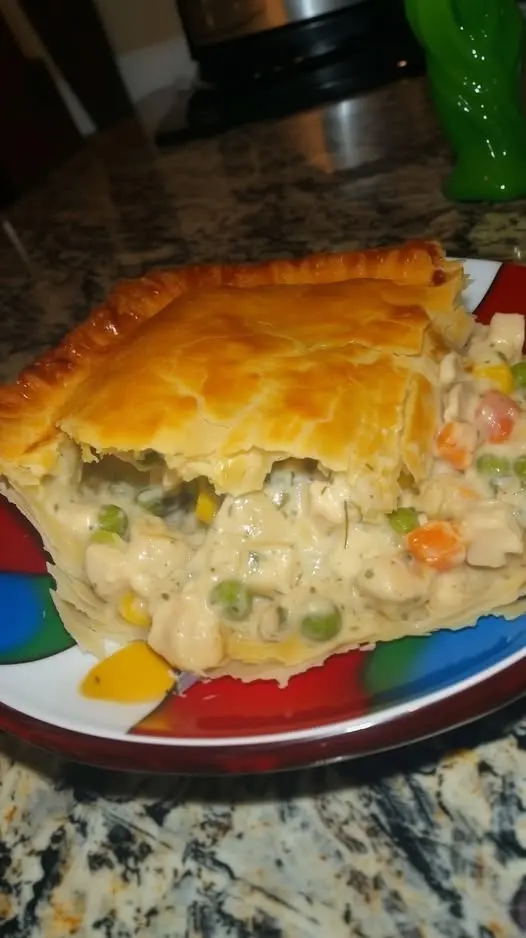
Suggested Side Dishes
A simple green salad with a sharp lemon vinaigrette or a balsamic dressing is the traditional choice. The acidity of the dressing cuts through the buttery pastry perfectly. Alternatively, roasted asparagus or steamed green beans with a touch of garlic provide a nice textural contrast without adding too much weight to the meal.
Garnishes and Presentation
For a beautiful presentation, sprinkle a few extra leaves of fresh parsley or a pinch of cracked black pepper over the top of the pie just before serving. If you are hosting a dinner party, consider making individual pot pies in ramekins; this ensures everyone gets a perfect ratio of crust to filling and makes for an elegant, personalized serving style.
Storage and Make-Ahead
Storing Leftovers
Leftover pot pie can be stored in the refrigerator for up to three to four days. To maintain the integrity of the crust, cover the pie dish tightly with plastic wrap or aluminum foil. When reheating, the oven is your best friend—microwaving will often make the pastry chewy and soft.
Freezing Instructions
Chicken pot pie is an excellent candidate for freezing. You can freeze the pie unbaked by wrapping it tightly in several layers of plastic wrap and foil. It will stay fresh for up to three months. To bake from frozen, simply add 15-20 minutes to the original baking time. You do not need to thaw it first, which helps keep the crust from becoming gummy.
Reheating
To reheat a slice, place it in a 350°F oven for about 10-15 minutes. This will help recrisp the flaky pie crust while ensuring the creamy chicken filling is heated through to the center. If you are worried about the crust over-browning during the reheat, cover it loosely with foil.
Final Thoughts
Mastering the best homemade chicken pot pie is a rewarding journey that yields one of the most beloved dishes in the American culinary repertoire. By focusing on high-quality ingredients and the fundamental techniques of sauce-making and pastry care, you can create a meal that offers true comfort and satisfaction. Whether you are serving this for a quiet Sunday dinner or preparing it as a thoughtful gift for a friend, the effort put into a scratch-made pie is always evident in every flaky, savory bite. Enjoy the process, and soon this recipe will become a staple in your own kitchen’s hall of fame.
Frequently Asked Questions
Can I use a store-bought rotisserie chicken for this recipe?
Absolutely! Using a rotisserie chicken is one of the best ways to turn this into an easy pot pie recipe. Simply shred the meat while it is still warm and fold it into your sauce. The pre-seasoned nature of rotisserie chicken adds even more flavor to the final dish, just be mindful of your salt additions when seasoning the gravy.
Can I make the filling ahead of time?
Yes, you can prepare the filling up to 24 hours in advance. Store it in an airtight container in the refrigerator. In fact, using a cold filling is a great way to ensure your bottom crust stays crisp. When you are ready to bake, just assemble the pie and pop it into the oven as directed.
What is the best way to prevent the crust from burning?
The edges of the pie crust are thinner than the rest and tend to brown faster. Keep an eye on the pie after the first 25 minutes. If the edges look dark but the center is still pale, use a pie shield or a simple ring of tinfoil to cover the outer edges. This allows the middle of the pie and the filling to continue cooking without burning the perimeter.
Can I use frozen vegetables instead of fresh?
Yes, a bag of frozen mixed vegetables (carrots, peas, corn, and green beans) works very well in this recipe. Since they are usually blanched before freezing, you can skip the initial sautéing step for the veggies and simply stir them into the thickened gravy at the same time you add the chicken. This is a fantastic time-saver for busy nights.
Is it necessary to use heavy cream in the filling?
While not strictly necessary, heavy cream provides the signature richness associated with the best homemade chicken pot pie. If you need a substitute, whole milk or half-and-half will work, but the sauce will be slightly thinner and less velvety. If using milk, you may want to increase the flour in your roux by a tablespoon to compensate for the lower fat content.
Classic Homemade Chicken Pot Pie

This classic chicken pot pie is the ultimate comfort food. It features a flaky, buttery crust filled with a rich, creamy sauce, tender pieces of chicken, and a medley of garden-fresh vegetables. Perfect for a cozy weeknight dinner that the whole family will love.
- 1 lb skinless, boneless chicken breast, cubed
- 1 cup sliced carrots
- 1 cup frozen green peas
- 1/2 cup sliced celery
- 1/3 cup butter
- 1/3 cup chopped onion
- 1/3 cup all-purpose flour
- 1/2 tsp salt
- 1/4 tsp black pepper
- 1/4 tsp celery seed
- 1 3/4 cups chicken broth
- 2/3 cup milk
- 2 (9 inch) unbaked pie crusts
- 1Preheat your oven to 425°F (220°C).
- 2In a large saucepan, combine the cubed chicken, carrots, peas, and celery. Add enough water to cover and bring to a boil. Simmer for 15 minutes, then drain and set aside.
- 3In the same saucepan, cook the onions in butter over medium heat until soft and translucent. Stir in the flour, salt, black pepper, and celery seed.
- 4Slowly whisk in the chicken broth and milk. Continue to simmer over medium-low heat, stirring constantly, until the sauce has thickened. Remove from heat.
- 5Place the chicken and vegetable mixture into the bottom pie crust. Pour the creamy sauce over the top.
- 6Cover with the top pie crust, seal the edges, and cut small slits in the top to allow steam to escape.
- 7Bake in the preheated oven for 30 to 35 minutes, or until the pastry is golden brown and the filling is bubbling. Let rest for 10 minutes before serving.
Keywords: chicken pot pie, comfort food, homemade pie, savory baking, family dinner, classic american


