
German Chocolate Cheesecake

There is something undeniably majestic about a best german chocolate cheesecake recipe that combines the deep, soulful notes of cocoa with the tropical, nutty crunch of a classic custard topping. While a traditional cake is light and airy, this cheesecake version takes the indulgence to an entirely new level, offering a dense, velvety crumb that melts on the tongue. It captures everything we love about the mid-century classic—the homemade German chocolate cake—but reimagines it as a sophisticated, creamy masterpiece that anchors any dessert table with authority and grace.
Creating this showstopping dessert doesn’t require professional pastry skills, but it does reward patience and attention to detail. By layering a crisp chocolate base with a rich, chocolate-infused cream cheese filling and finishing it with a buttery coconut-pecan glaze, you achieve a balance of textures that is rarely found in simpler bakes. This recipe is designed to be approachable for the home cook while delivering a result that looks and tastes like it came from a high-end boutique bakery.
Why You’ll Love This Recipe
- Textural Harmony: The contrast between the smooth, decadent chocolate cheesecake and the chewy, toasted coconut topping provides a sensory experience that keeps every bite interesting and satisfying.
- Better Than the Original: By using a cheesecake base, you eliminate the risk of a dry sponge cake, ensuring every mouthful is moist, rich, and intensely flavored with premium cocoa.
- Holiday Ready: This is a sophisticated “project” dessert that can be made well in advance, making it the perfect centerpiece for Thanksgiving, Christmas, or high-stakes birthday celebrations.
- Make-Ahead Convenience: Because cheesecakes actually improve after a long chill in the refrigerator, you can finish the bulk of the work 24 to 48 hours before you plan to serve it.
Ingredients You’ll Need
To achieve the perfect best german chocolate cheesecake recipe, you need ingredients that provide both structural integrity and deep flavor. We focus on high-fat dairy and quality chocolate to ensure the filling is luxurious rather than airy or chalky.
- Cream Cheese: It is essential to use full-fat bricks of cream cheese; avoid the spreadable tubs, as they contain extra air and moisture that will ruin the cheesecake’s density.
- Dutch-Processed Cocoa Powder: This provides a darker color and a smoother, more mellow chocolate flavor compared to natural cocoa powder, which can be overly acidic in a cheesecake.
- Sweetened Shredded Coconut: This is the heart of the coconut pecan frosting, providing the characteristic chew and sweetness that defines the German chocolate profile.
- Chopped Pecans: Toasting these before adding them to the topping is a non-negotiable step that unlocks their oils and provides a much-needed earthy crunch.
- Evaporated Milk: This forms the base of the custard topping, offering a concentrated creaminess that holds the coconut and pecans together without making the sauce too thin.
- Chocolate Graham Crackers: Using a chocolate graham cracker crust provides a sturdy, slightly salty foundation that complements the sweetness of the filling.
- Egg Yolks: Adding extra yolks to the topping custard ensures it thickens into a rich, spoonable glaze that won’t run off the sides of the cake.
- Semi-Sweet Chocolate: Melting a bit of solid chocolate into the batter adds a layer of fudginess that cocoa powder alone cannot achieve.
Variations and Smart Swaps
- The Crust Alternative: If you cannot find chocolate graham crackers, you can easily substitute crushed Oreo cookies (with the cream removed) or even a shortbread crust for a more buttery, pale contrast.
- Nut Substitutions: While pecans are traditional, toasted walnuts or even slivered almonds provide a delicious alternative for those who prefer a different nutty profile.
- Dark Chocolate Twist: For a less sweet, more “adult” version of this decadent chocolate cheesecake, swap the semi-sweet chocolate and Dutch cocoa for 70% dark chocolate.
- Dairy-Free Adjustments: While challenging for a cheesecake, you can use plant-based cream cheese and coconut cream in the topping, though the texture will be significantly softer.
How to Make the Best German Chocolate Cheesecake
Step 1: Construct the Chocolate Graham Cracker Crust
The foundation of any great cheesecake is a well-compressed crust. Combine your finely ground chocolate graham cracker crumbs with melted butter and a pinch of sugar. Press the mixture firmly into the bottom and slightly up the sides of a springform pan. Baking the crust for about 10 minutes before adding the filling is a critical step; it sets the butter and prevents the crust from becoming soggy once the wet batter is added. This ensures a distinct, snappy layer of chocolate graham cracker crust in every slice.
Step 2: Cream the Base for a Velvety Texture
In a large bowl, beat the room-temperature cream cheese and sugar until completely smooth. The “room temperature” part is vital—cold cream cheese will create small lumps that are nearly impossible to remove later. Once smooth, sift in your Dutch-processed cocoa powder. Sifting prevents cocoa “bombs” (unmixed dry pockets) from ruining the interior of your decadent chocolate cheesecake. Mix on low speed to avoid incorporating too much air, which causes the cake to puff up and then crack as it cools.
Step 3: Incorporate Eggs and Melted Chocolate
Gently fold in the melted and slightly cooled semi-sweet chocolate, followed by the eggs one at a time. Mixing eggs at a low speed is a pro technique; you want them fully incorporated into the fats without whipping in air. Air bubbles are the primary enemy of a flat, professional-looking cheesecake top. The batter should look glossy, thick, and deeply brown, smelling intensely of cocoa and vanilla.
Step 4: The Water Bath Method
To achieve the best german chocolate cheesecake recipe results, you must use a water bath (bain-marie). Wrap the outside of your springform pan in several layers of heavy-duty aluminum foil to prevent leaks. Place it in a larger roasting pan and fill the roasting pan with hot water halfway up the sides of the cheesecake. This creates a humid environment and ensures the edges don’t overcook before the center is set. The steam keeps the top supple, drastically reducing the chance of unsightly surface cracks.
Step 5: Master the Slow Cooling Process
Once the cheesecake has just a slight wobble in the center, turn off the oven and prop the door open with a wooden spoon. Letting the cake sit in the cooling oven for an hour allows the temperature to drop gradually. Drastic temperature changes cause the protein structures in the cheese to contract quickly, which leads to cracking. After the oven rest, let it cool completely on the counter before transferring it to the refrigerator for at least six hours, though overnight is much better for flavor development.
Step 6: Prepare the Signature Coconut Pecan Topping
While the cake chills, create the coconut pecan frosting on the stovetop. Combine evaporated milk, sugar, butter, and egg yolks in a saucepan over medium heat. Stir constantly until the mixture thickens into a golden custard that coats the back of a spoon. Remove from heat and fold in the toasted pecans and shredded coconut. As this mixture cools, it will thicken into a spreadable, jam-like consistency that is the hallmark of the homemade German chocolate cake experience.
Pro Tips for Success
- Tip: Always toast your pecans in a dry skillet for 3-5 minutes until fragrant. This simple step adds a depth of flavor that raw nuts simply cannot provide.
- Tip: Use a warm, wet knife to slice the cheesecake. Wipe the knife clean between every single cut to ensure those perfectly sharp, professional-looking edges.
- Tip: If you notice your topping is too thick to spread, stir in a teaspoon of warm evaporated milk to loosen it back to a spreadable consistency.
- Tip: Do not overbake. The cheesecake is done when the edges are firm but the 2-inch circle in the very center still jiggles like Jello. It will firm up completely as it chills.
- Tip: For the most decadent chocolate cheesecake, use high-quality chocolate bars rather than chocolate chips, as bars melt more smoothly and contain fewer stabilizers.
Troubleshooting Common Problems
Why Did My Cheesecake Crack?
Cracks are usually caused by overmixing the eggs (incorporating too much air) or a sudden change in temperature. Even if you followed the water bath method, check your oven calibration; if the oven is too hot, the cake will rise too fast. If a crack does appear, don’t panic! The beauty of this recipe is that the generous layer of coconut pecan frosting will perfectly hide any surface imperfections.
Why Is My Topping Too Runny?
The custard topping needs to reach a specific temperature to thicken properly. If it’s runny, you likely didn’t cook the egg yolk and evaporated milk mixture long enough. It should be thick enough to leave a trail when you run your finger across the back of the stirring spoon. You can return it to the heat for a few more minutes, stirring constantly, to reach the desired thickness.
My Crust Is Rock Hard
This usually happens if the crust is pressed too firmly into the pan or if too much sugar was used, which caramelizes into a candy-like state. Press the crumbs until they are just compacted enough to hold together. If you find it’s still too hard, try using slightly more butter and slightly less sugar next time to keep the base more crumbly and tender.
How to Serve This Recipe
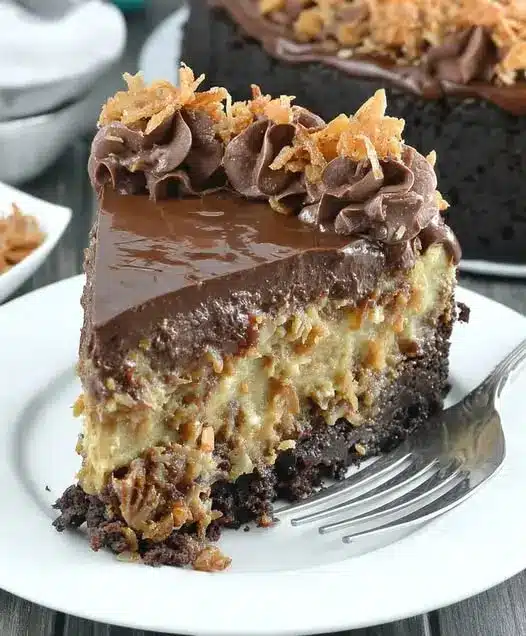
When it comes to presenting this showstopping dessert, less is often more. The thick, golden layer of pecans and coconut is naturally beautiful, but you can elevate the look by adding a few decorative flourishes. A drizzle of melted dark chocolate across the top or a ring of whipped cream rosettes around the edge can frame the topping beautifully.
Garnishes and Presentation
For an extra touch of elegance, shave a dark chocolate bar over the center of the cake just before serving. The fine curls of chocolate provide a delicate contrast to the chunky texture of the pecans. If you want to lean into the “German” aspect, a few Maraschino cherries or fresh raspberries on the side can provide a bright, tart pop of color and flavor that cuts through the intense richness of the decadent chocolate cheesecake.
Ideal Side Dishes
Because this cheesecake is so rich, it pairs best with simple accompaniments. A dollop of unsweetened whipped cream or a small scoop of high-quality vanilla bean ice cream is all you need. For beverages, a strong cup of black coffee or a glass of cold milk provides the perfect bitter or neutral balance to the sweet, buttery coconut and deep cocoa notes.
Storage and Make-Ahead
Storing Leftovers
Keep any leftover cheesecake in an airtight container in the refrigerator. Due to the dairy content and the custard topping, it should not sit at room temperature for more than two hours. In the fridge, the best german chocolate cheesecake recipe will stay fresh and delicious for up to 5 days. Note that the crust may soften slightly over time as it absorbs moisture from the filling.
Freezing Instructions
You can freeze the cheesecake, but it is best to do so before adding the coconut-pecan topping, as the custard can change texture when thawed. Wrap the chilled cheesecake tightly in plastic wrap and then foil. It will keep for up to 2 months. Thaw it overnight in the refrigerator before adding a fresh batch of topping and serving.
Final Thoughts
The best german chocolate cheesecake recipe is more than just a dessert; it’s a celebration of classic flavors brought together in a modern, luxurious format. By taking the time to use a water bath and allowing for a slow cool-down, you ensure a texture that is second to none. Whether you are making this for a special birthday or simply to satisfy a deep chocolate craving, the combination of velvety cheesecake and crunchy, buttery topping is guaranteed to impress. It’s a rewarding bake that reminds us why some flavor combinations truly are timeless.
Frequently Asked Questions
Can I make this cheesecake without a water bath?
While it is possible, I highly recommend against it. A water bath provides the gentle, even heat necessary for the decadent chocolate cheesecake to bake without drying out or cracking. If you absolutely must skip it, place a pan of water on the rack below the cheesecake to create some steam, but the results will not be as consistently creamy as a true bain-marie.
Why do I need to use evaporated milk for the topping?
Evaporated milk has about 60% of its water removed, making it much richer than regular milk but thinner than heavy cream. This allows it to create a sturdy custard that binds the coconut and pecans together without becoming overly greasy. It provides that specific “fudge-like” quality that is essential for a proper coconut pecan frosting.
Can I use chocolate chips instead of cocoa powder in the batter?
This recipe actually uses both for the best result! Cocoa powder provides the structural “dry” chocolate flavor, while melted chocolate adds fat and a fudgy mouthfeel. If you only use chips, the cheesecake may be too soft; if you only use cocoa, it may be too dry. For the best german chocolate cheesecake recipe, stick to the combination of both for the perfect balance.
How do I know when the pecans are toasted enough?
Pecans go from toasted to burnt very quickly. You’ll know they are ready when they become aromatic and turn one shade darker. Always remove them from the hot pan immediately after toasting, as the residual heat will continue to cook them. Toasted pecans are the secret weapon for adding a professional, nutty depth to your homemade German chocolate cake inspired topping.
Can I make the topping in advance?
Yes, you can make the coconut pecan frosting up to three days in advance. Store it in a sealed container in the fridge. Before spreading it on the cheesecake, you may need to let it sit at room temperature for 30 minutes or give it a very quick pulse in the microwave (about 10 seconds) just to make it spreadable again without melting the cheesecake below.
German Chocolate Cheesecake

Indulge in this decadent German Chocolate Cheesecake featuring a rich cocoa base, creamy chocolate filling, and a classic coconut-pecan topping.
- Crust
- 1 1/2 cups chocolate graham cracker crumbs
- 1/4 cup granulated sugar
- 6 tbsp unsalted butter, melted
- Filling
- 32 oz cream cheese, softened
- 1 cup granulated sugar
- 1/2 cup unsweetened cocoa powder
- 4 large eggs
- 1/4 cup sour cream
- 1 tsp vanilla extract
- Topping
- 1/2 cup evaporated milk
- 1/2 cup granulated sugar
- 2 large egg yolks
- 1/4 cup unsalted butter
- 1 cup shredded coconut
- 1 cup chopped pecans
- 1Preheat oven to 325°F (163°C). Combine crust ingredients and press into a 9-inch springform pan. Bake for 10 minutes.
- 2In a large bowl, beat cream cheese, sugar, and cocoa powder until smooth. Add eggs one at a time, then mix in sour cream and vanilla.
- 3Pour filling over crust and bake for 60 minutes until the edges are set. Cool to room temperature, then refrigerate for at least 6 hours.
- 4For the topping, combine evaporated milk, sugar, egg yolks, and butter in a saucepan. Cook over medium heat until thickened.
- 5Stir in coconut and pecans. Let cool slightly, then spread over the chilled cheesecake before serving.
Keywords: German Chocolate, Cheesecake, Chocolate Dessert, Coconut Pecan, Gourmet Dessert


