
Beef and Shells Skillet

Finding a dinner that satisfies every member of the family while keeping the cleanup to a minimum is the holy grail of weeknight cooking. This cheesy beef and shells skillet delivers on that promise with a rich, savory meat sauce and tender pasta shells, all smothered in a velvety cheese sauce that feels like a warm hug in a bowl. It strikes that perfect balance between nostalgic comfort food and a high-quality home-cooked meal, offering a depth of flavor that far surpasses anything you might find in a cardboard box from the grocery store. Whether you are navigating a hectic school night or simply craving something hearty and soul-warming, this one-pot pasta dinner is the ultimate solution.
The beauty of this dish lies in its simplicity and the clever use of a single pan. By simmering the pasta directly in the beef-infused broth, the shells absorb every bit of savory flavor rather than just being boiled in plain water. This technique also releases the pasta’s natural starches into the sauce, creating a built-in thickener that results in a luxurious, glossy finish. The result is a family-friendly weeknight dinner that looks like it took hours to simmer but actually comes together in about thirty minutes. It is a reliable, crowd-pleasing staple that proves you don’t need a sink full of dishes to create a truly memorable meal.
Why This Recipe Is a Keeper
- One-Pan Convenience: Cleanup is a breeze because every stage of the process, from browning the meat to boiling the pasta and melting the cheese, happens in the same large skillet.
- Superior Texture: Using small or medium shells is strategic; the hollow interior of the pasta acts like a tiny scoop, capturing the cheesy beef and shells skillet sauce so every bite is perfectly balanced.
- Customizable Comfort: This recipe serves as an excellent base for experimentation, allowing you to easily adjust the spice level, swap the protein, or sneak in extra vegetables depending on your preferences.
- Budget-Friendly Ingredients: By utilizing pantry staples like dried pasta, canned tomato sauce, and ground beef, you can feed a hungry crowd without a massive grocery bill.
Ingredients You’ll Need
The success of this cheesy beef and shells skillet depends on layering simple ingredients to build a complex, savory profile. Each component serves a specific purpose, from providing the structural base of the dish to adding that final hit of creamy richness that makes it so addictive.
- Ground Beef: Use a lean ground beef (like 85/15 or 90/10) to ensure there is enough fat for flavor without leaving the final sauce overly greasy after browning.
- Pasta Shells: Medium shells are the classic choice here because their shape is designed to hold onto the thick, cheesy sauce and bits of savory beef.
- Yellow Onion and Garlic: These aromatics provide the essential flavor foundation, offering a subtle sweetness and pungent depth that balances the richness of the meat and dairy.
- Beef Broth: This acts as the cooking liquid for the pasta, infusing the shells with more flavor than water ever could while forming the bulk of the savory sauce.
- Tomato Sauce: This provides a necessary acidic bright note to the dish, cutting through the heavy flavors of the beef and cheese to keep the palate refreshed.
- Sharp Cheddar Cheese: Freshly shredded cheddar melts much more smoothly than the pre-packaged kind, providing that signature gooey texture and a sharp, salty punch.
- Heavy Cream: A small splash at the end transforms the tomato-beef base into a silky, orange-hued cream sauce that coats every single shell beautifully.
- Dried Herbs and Spices: A blend of paprika, onion powder, and Italian seasoning adds warmth and complexity without requiring a long list of fresh ingredients.
Variations and Smart Swaps
Protein Alternatives: If you want to lighten up this ground beef skillet recipe, you can easily substitute the beef with ground turkey or ground chicken. Just keep in mind that these leaner meats may require an extra tablespoon of olive oil during the browning stage to prevent sticking.
Spice It Up: For those who enjoy a bit of heat, consider adding a teaspoon of red pepper flakes when sautéing the garlic, or stir in a small can of diced green chilies. A dash of hot sauce right before serving can also elevate the flavors for the adults at the table.
Vegetable Boost: This is a great one-pot pasta dinner for hiding vegetables. Finely diced bell peppers or carrots can be sautéed with the onions, or you can stir in a handful of fresh baby spinach at the very end until it just wilts into the hot sauce.
Pasta Shapes: While shells are traditional, other short-cut pastas like elbow macaroni, penne, or rotini work just as well. The key is using a shape with plenty of surface area or nooks and crannies to catch the cheese sauce.
How to Make This Cheesy Beef and Shells Skillet
Step 1: Brown and Season the Beef
Start by heating your large skillet over medium-high heat. Add the ground beef and break it apart with a wooden spoon or spatula into small, uniform crumbles. As the meat browns, add your diced onions. The goal here is to develop a deep brown crust on the beef, which provides the “umami” base for the entire dish. Once the beef is fully cooked and the onions are translucent and soft, drain off any excess grease. This is a crucial step to ensure your cheesy beef and shells skillet doesn’t end up oily or heavy.
Step 2: Bloom the Aromatics and Spices
Move the beef to one side of the pan and add the minced garlic and your dry spices, including the paprika and Italian seasoning. Sauté for just about 60 seconds until the garlic is fragrant but not browned. “Blooming” the spices in the residual heat and fat of the pan wakes up the essential oils in the dried herbs, making them much more potent and flavorful than if you simply stirred them into the liquid later.
Step 3: Simmer the Pasta and Liquids
Pour in the beef broth, tomato sauce, and the dry pasta shells. Give everything a good stir, making sure to scrape up any browned bits from the bottom of the pan—that is where the concentrated flavor lives. Bring the liquid to a gentle boil, then immediately reduce the heat to low. Cover the skillet with a tight-fitting lid and let it simmer. The shells will slowly absorb the broth, becoming perfectly al dente while the liquid transforms into a thickened, savory gravy. Make sure to stir occasionally to prevent the pasta from sticking to the bottom.
Step 4: Create the Creamy Cheese Sauce
Once the pasta is tender and most of the liquid has been absorbed, remove the lid. You should still have a bit of sauce in the pan; don’t let it cook until dry. Stir in the heavy cream and the shredded cheddar cheese. Continue to stir over low heat until the cheese is completely melted and the sauce is glossy and thick. The transformation at this stage is magic—the cheesy beef and shells skillet goes from a simple pasta dish to a decadent, restaurant-quality meal in seconds.
Pro Tips for Success
Tip: Shred your own cheese. Pre-shredded cheese is coated in cellulose (an anti-caking agent) which prevents it from melting into a perfectly smooth sauce. For the creamiest results, buy a block of sharp cheddar and grate it yourself.
Tip: Don’t overcook the pasta. Since the shells will continue to cook slightly in the residual heat after you add the cream and cheese, aim for a “firm al dente” during the simmering stage. This prevents the pasta from becoming mushy as it sits.
Tip: Manage your liquid. If you notice the liquid is disappearing too fast before the pasta is tender, add a splash more broth or water. Conversely, if it looks too soupy at the end, let it simmer uncovered for two minutes before adding the cheese.
Tip: Deglaze the pan. When you add the broth, use your spatula to really scrub the bottom of the skillet. Those tiny browned bits (called the fond) are essential for a professional-tasting homemade hamburger helper style sauce.
Troubleshooting Common Problems
Why is my sauce too thin?
A thin sauce usually happens if there was too much broth or if the cheese hasn’t fully emulsified. First, make sure you used the correct amount of pasta, as the starch from the shells is what thickens the liquid. If it’s still thin, let it sit for 5 minutes after cooking; the sauce will naturally thicken significantly as it cools slightly. You can also add an extra handful of cheese to help bind the sauce together.
Why is my pasta sticking together?
Pasta often sticks if it isn’t stirred occasionally during the simmering process or if there isn’t enough liquid in the pan. Ensure the shells are mostly submerged in the broth and tomato sauce. Giving the pot a good stir every 3-4 minutes helps redistribute the starches and prevents the shells from clumping into a ball.
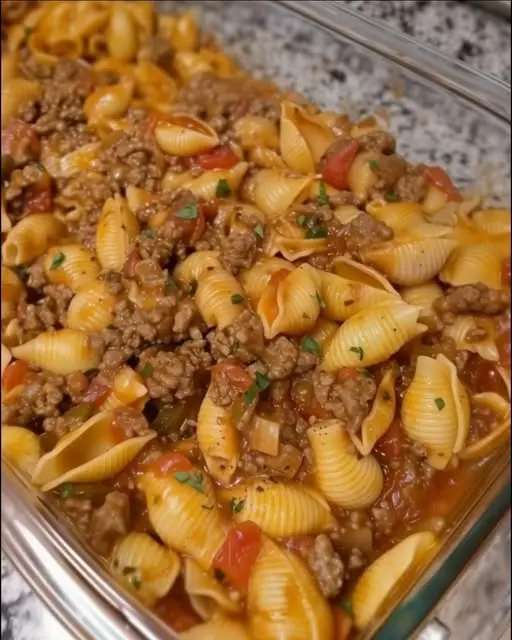
How to Serve This Skillet Meal
Presentation for a cheesy beef and shells skillet should be as simple and comforting as the cooking process. Serving it directly from the skillet in the center of the table emphasizes the “one-pot” nature of the meal and keeps the food piping hot for second helpings.
Garnishes
A sprinkle of fresh chopped parsley or sliced chives adds a much-needed pop of color and a fresh, herbaceous note that balances the richness of the beef and cheddar. For a little extra texture, you could even top individual bowls with a few crushed butter crackers or a dusting of grated Parmesan.
Side Dishes
Since this is a heavy, carb-rich meal, it pairs beautifully with something light and crisp. A simple green salad with a sharp vinaigrette or a side of steamed broccoli or roasted green beans works wonders. Garlic bread is always a popular choice for soaking up any extra cheese sauce left at the bottom of the bowl.
Storage and Make-Ahead
Storing Leftovers
This cheesy beef and shells skillet makes fantastic leftovers. Store any remaining portions in an airtight container in the refrigerator for up to 3 to 4 days. As the dish sits, the pasta will continue to absorb the sauce, so the texture may become a bit thicker and softer over time.
Reheating
To reheat, it is best to use the stovetop or the microwave. Because the pasta absorbs the sauce in the fridge, you will likely need to add a splash of milk, water, or beef broth before heating to loosen the sauce back up to its original creamy consistency. Heat gently on low power to prevent the cheese from separating or the meat from becoming tough.
Freezing
While you can freeze this dish, dairy-based sauces can sometimes change texture or “break” when thawed. If you choose to freeze it, let the meal cool completely before placing it in a freezer-safe bag or container. It will keep for up to 2 months. Thaw overnight in the refrigerator before reheating.
Final Thoughts
The cheesy beef and shells skillet is a testament to the fact that you don’t need fancy ingredients or complex techniques to put a spectacular dinner on the table. It provides all the comfort of a classic homemade hamburger helper but with the fresh, vibrant flavors that only come from scratch-made cooking. This recipe is reliable, incredibly satisfying, and destined to become a regular part of your dinner rotation. Once you taste the combination of seasoned beef, tender pasta, and that silky cheddar sauce, you’ll understand why it’s a favorite for busy families everywhere.
Frequently Asked Questions
Can I use a different type of cheese?
Absolutely! While sharp cheddar provides the classic flavor most people associate with this dish, you can use Monterey Jack for a milder, stretchier melt, or even a Pepper Jack if you want a little kick. A blend of cheddar and mozzarella also works beautifully to achieve that perfect balance of flavor and gooey texture.
Can I make this recipe dairy-free?
You can adapt this into a dairy-free one-pot pasta dinner by using a high-quality vegan butter or oil for sautéing, a dairy-free heavy cream alternative (like cashew cream or silken tofu blend), and your favorite vegan cheddar shreds. Just ensure the vegan cheese you choose is one known for melting well, as some brands can remain slightly grainy when heated.
Is it necessary to use heavy cream?
While the heavy cream provides the most luxurious and velvety texture, you can substitute it with whole milk or half-and-half if that is what you have on hand. Keep in mind that the sauce will be slightly thinner and less rich, but it will still be delicious. If using a lower-fat milk, be careful not to let the sauce boil after adding it, or it may curdle.
What is the best way to prevent the beef from being greasy?
Choosing a leaner cut of meat is the first step. However, even with lean beef, it is essential to drain the fat thoroughly after browning. You can even tilt the pan and use a spoon to scoop the fat out, or carefully dab the meat with a paper towel. This ensures that the cheesy beef and shells skillet sauce remains creamy and flavorful rather than oily.
Can I use gluten-free pasta for this recipe?
Yes, you can use gluten-free shells, but you will need to monitor the liquid levels and cooking time closely. Gluten-free pasta tends to release more starch and can sometimes fall apart if overcooked. I recommend checking the pasta for doneness a few minutes earlier than the package suggests and adding a bit of extra broth if the sauce thickens too quickly.
Cheesy Beef and Shells Skillet

This Cheesy Beef and Shells Skillet is a classic family favorite made in just one pan. It combines savory ground beef with tender pasta in a rich, creamy tomato-cheese sauce that is perfect for busy weeknights.
- 1 lb lean ground beef
- 1 small yellow onion, diced
- 2 cloves garlic, minced
- 2 cups medium pasta shells
- 2 cups beef broth
- 15 oz tomato sauce
- 1 tsp Italian seasoning
- 2 cups shredded cheddar cheese
- Salt and black pepper to taste
- 1In a large skillet over medium-high heat, cook the ground beef and onion until the meat is browned and the onion is translucent. Drain any excess grease.
- 2Add the minced garlic and cook for 1 minute until fragrant.
- 3Stir in the uncooked pasta shells, beef broth, tomato sauce, and Italian seasoning.
- 4Bring the mixture to a boil, then reduce the heat to low. Cover and simmer for 12-15 minutes, or until the pasta is tender.
- 5Remove from the heat and stir in the shredded cheddar cheese until completely melted and creamy.
- 6Season with salt and pepper to taste and serve immediately.
Keywords: beef and shells, skillet dinner, one pan meal, cheesy pasta, ground beef recipes, easy dinner


