
Amish Potato Pancakes

There is a specific kind of comfort that only comes from traditional, farmhouse-style cooking, and this authentic amish potato pancakes recipe is the gold standard for rustic simplicity. These pancakes are a staple in many Pennsylvania Dutch households, known for their incredibly crispy exterior and tender, savory centers. Unlike a fluffy breakfast pancake made from batter, these are closer to a fritter, relying on the natural starches of the potato to create a satisfying crunch that pairs perfectly with both sweet and savory toppings. Whether you are serving them as a hearty breakfast side or a light vegetarian dinner, they bring a sense of heritage to the table that modern recipes often miss.
Mastering this dish is less about complex culinary skills and more about understanding the relationship between moisture and heat. By using grated potatoes as the base, you create a texture that is uniquely different from mashed or sliced preparations. This recipe celebrates the “waste not, want not” philosophy of the Amish, turning humble pantry staples like onions, flour, and eggs into a centerpiece meal. In the following sections, we will walk through the technical nuances—like how to properly drain your vegetables and how to achieve that perfect golden-brown crust—to ensure your traditional Amish cooking experience is a resounding success in your own kitchen.
Why You’ll Love This Recipe
- Incredible Texture: These pancakes offer a dual-sensory experience, featuring edges that shatter with a satisfying crunch while the inside remains soft, hot, and savory.
- Pantry Staple Hero: You likely already have every single ingredient needed in your kitchen right now, making this an ideal easy weeknight dinner or a last-minute weekend brunch addition.
- Highly Versatile: While they are delicious on their own, these pancakes serve as a blank canvas for toppings ranging from cool sour cream and chives to sweet applesauce or even smoked salmon.
- Budget-Friendly: In an era of rising grocery costs, this recipe proves that you can feed a crowd a filling, delicious meal for just a few dollars using basic root vegetables.
Ingredients You’ll Need
The beauty of this authentic amish potato pancakes recipe lies in its brevity. Each ingredient serves a specific structural or flavor-based purpose, working in harmony to create a pancake that holds together in the pan but melts in your mouth. Using fresh, high-quality produce will make a noticeable difference in the final flavor profile.
- Starchy Potatoes: Russet potatoes are the preferred choice here because their high starch content helps the pancakes bind together while ensuring the interior stays fluffy rather than waxy.
- Yellow Onion: Grating the onion directly into the potato mixture provides a foundational savory flavor and essential moisture that seasons the “dough” from the inside out.
- All-Purpose Flour: This acts as the secondary binder, absorbing any residual moisture and creating a thin coating that browns beautifully when it hits the hot oil.
- Fresh Eggs: The eggs provide the necessary protein to set the pancake structure, preventing the grated potatoes from falling apart during the flipping process.
- Coarse Salt and Black Pepper: Potatoes are notorious for absorbing salt, so a generous seasoning is required to pull the earthy flavors out and provide a sharp contrast to the rich oil.
- High-Smoke Point Oil: Whether you use vegetable oil, lard, or a mix of butter and oil, you need a fat that can handle the medium-high heat required for deep browning.
Variations and Smart Swaps
Add Fresh Herbs: If you want to brighten up the earthy flavor of the potatoes, fold in two tablespoons of freshly chopped parsley, chives, or dill. This adds a pop of color and a fresh finish to the traditional Amish cooking style.
Cheesy Potato Pancakes: For a more indulgent version, stir in half a cup of shredded sharp cheddar or parmesan cheese. The cheese will melt and create lacy, crispy bits on the edges of the pancakes as they fry.
Garlic Infusion: While onions provide the primary aromatic base, adding two cloves of finely minced garlic can add an extra layer of depth that appeals to fans of more modern, bold flavors.
Vegetable Medley: You can swap out about 25% of the potato for grated carrots or zucchini. If using zucchini, be sure to squeeze it exceptionally dry, as it contains much more water than a standard Russet potato.
How to Make Authentic Amish Potato Pancakes
To achieve the best results, follow these steps closely, paying particular attention to the moisture levels of your vegetables. This is the stage where the magic happens, transforming raw tubers into a crispy potato side dish.
Step 1: Grate and Prepare the Vegetables
Begin by peeling your Russet potatoes and a large yellow onion. Using the large holes of a box grater or the shredding attachment of a food processor, grate both the potatoes and the onion into a large bowl. Grating the onion along with the potato is a classic technique in this authentic amish potato pancakes recipe; the onion juice actually helps prevent the potatoes from oxidizing and turning gray too quickly. Aim for long, even shreds to ensure the texture of the pancake is consistent throughout.
Step 2: Extract the Excess Moisture
This is arguably the most important step in the entire process. Transfer the shredded potato and onion mixture into a clean kitchen towel or several layers of cheesecloth. Wrap the towel tightly around the vegetables and squeeze with all your might over the sink. You will be surprised at how much liquid is released. Continue squeezing until the mixture feels dry to the touch. Removing this water is what allows the pancakes to fry and crisp up; if the moisture remains, the potatoes will steam instead of fry, resulting in a soggy, pale pancake.
Step 3: Mix the Batter Components
Once dry, return the potato and onion mixture to a clean bowl and fluff it with a fork. Add your beaten eggs, flour, salt, and pepper. Use your hands or a sturdy spoon to mix everything together until the potatoes are evenly coated in the egg and flour binder. The mixture should feel slightly tacky but not overly liquid. If it seems too wet, you can add an extra tablespoon of flour, but be careful not to add too much, or the pancakes will become heavy and bread-like rather than light and crispy.
Step 4: Fry in a Cast Iron Skillet
Heat a generous amount of oil in a cast iron skillet over medium-high heat. You want enough oil to coat the bottom of the pan thoroughly. Once the oil is shimmering and a small shred of potato sizzles instantly upon contact, drop large spoonfuls of the mixture into the pan. Press them down slightly with a spatula to flatten them into discs. Fry for 3–5 minutes per side. Resist the urge to flip them too early; wait until you see the edges turning a deep, dark gold before turning them over to reveal a perfectly bronzed surface.
Pro Tips for the Best Results
- Use a Cast Iron Skillet: A heavy-bottomed cast iron skillet provides the most even heat distribution and retains heat well, which is essential for maintaining a consistent fry across multiple batches.
- Don’t Crowd the Pan: Fry only three or four pancakes at a time. Overcrowding the skillet drops the temperature of the oil, which leads to grease absorption and a limp texture.
- Maintain Oil Temperature: If the oil starts to smoke, turn the heat down slightly. If the pancakes aren’t sizzling vigorously, turn it up. The oil should be active throughout the entire cooking process.
- Drain on a Wire Rack: Instead of placing finished pancakes directly onto paper towels (which can trap steam and soften the bottoms), place them on a wire cooling rack set over a baking sheet to maintain airflow and crispness.
- Season Immediately: Hit the pancakes with a tiny extra pinch of salt the second they come out of the hot oil. The salt will adhere better to the surface while the oil is still wet.
Troubleshooting Common Problems
Why Are My Pancakes Falling Apart?
If your pancakes disintegrate when you try to flip them, it is usually due to one of two things: not enough binder or flipping too early. Ensure you used large eggs and the full amount of flour. More importantly, let the first side cook undisturbed until a solid crust forms; this crust acts as the structural foundation that allows the pancake to be moved.
Why Is the Center Still Raw?
If the outside is burning before the inside is cooked, your heat is too high. This often happens if the pancakes are too thick. Try flattening the mounds of potato mixture more thinly in the pan and reducing the heat to medium. This allows the heat to penetrate the center of the grated potatoes without scorching the exterior.
Why Are My Pancakes Greasy?
Greasy pancakes occur when the oil isn’t hot enough. When the oil is at the correct temperature, it creates a steam barrier that prevents the fat from soaking into the potato. Always test a small piece of potato first; if it doesn’t sizzle immediately, wait another minute before adding the rest of the batter.
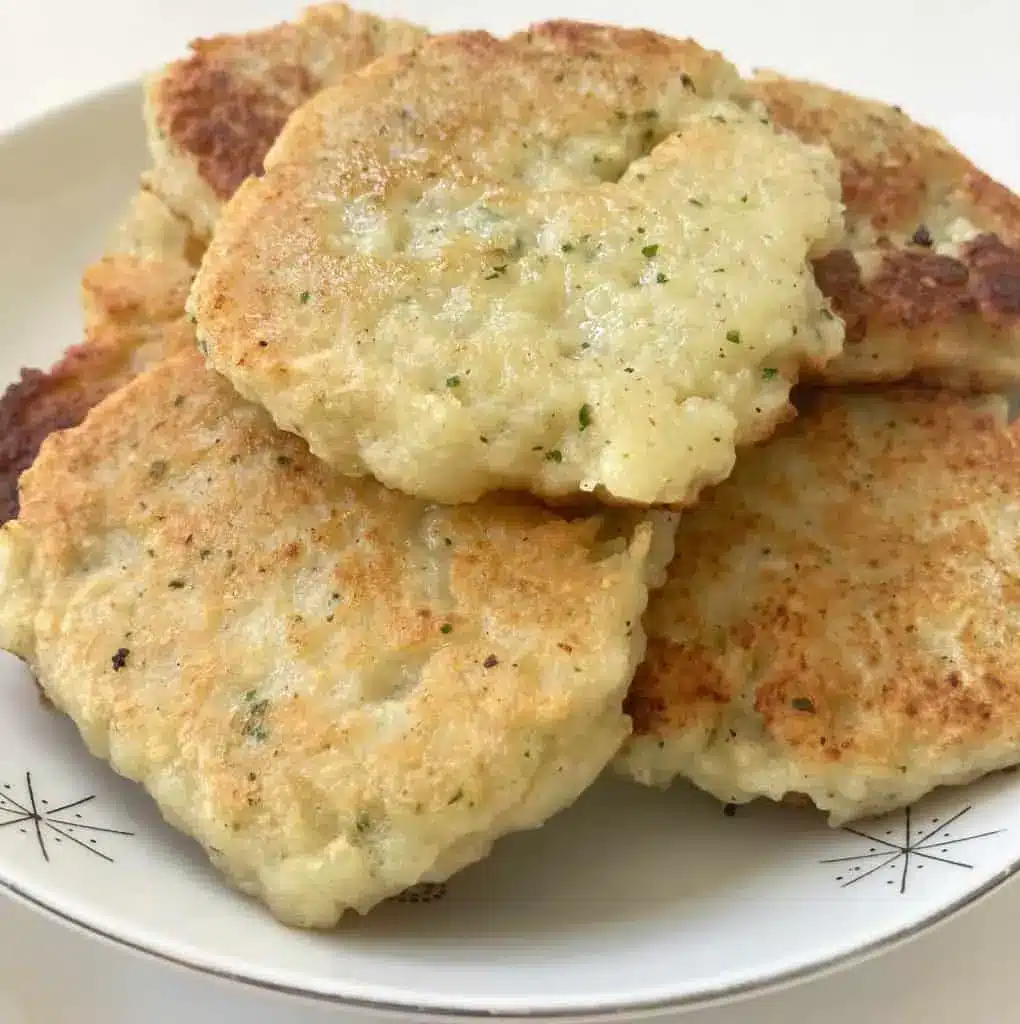
How to Serve Amish Potato Pancakes
Serving this authentic amish potato pancakes recipe is all about balancing the rich, fried flavors with bright or creamy accompaniments. In traditional Pennsylvania Dutch homes, you will often see these served with two specific sides: chilled applesauce and thick sour cream. The sweetness of the apples and the tang of the cream provide a perfect foil to the salty, savory potatoes.
For a more modern twist, you can turn these into a complete meal. Top them with a poached egg and some wilted spinach for a sophisticated breakfast, or serve them alongside a crisp green salad tossed in a sharp vinaigrette for lunch. They also make an excellent substitute for bread or hash browns when served with thick-cut bacon and breakfast sausage. If you are serving a crowd, put out a “topping bar” with bowls of sliced green onions, diced tomatoes, hot sauce, and even some crumbled feta cheese to let guests customize their own plates.
Storage and Reheating
While these are undeniably best when eaten fresh from the pan, you can store leftovers in an airtight container in the refrigerator for up to three days. To maintain the integrity of the traditional Amish cooking style, avoid using the microwave for reheating, as it will turn the crispy edges rubbery and soft.
Instead, reheat the pancakes in a dry skillet over medium heat for about two minutes per side until they are heated through and the exterior crisps back up. Alternatively, you can place them on a baking sheet in a 375°F oven for 8–10 minutes. If you have an air fryer, reheating these pancakes at 350°F for 3–4 minutes is perhaps the most effective way to restore their original “just-fried” texture.
Final Thoughts
The authentic amish potato pancakes recipe is a testament to the power of simple ingredients treated with care. By focusing on the technique of drying the potatoes and controlling your pan temperature, you can create a dish that feels like a warm hug on a plate. It is a versatile, dependable recipe that bridges the gap between a humble side dish and a star attraction. Whether you are revisiting a childhood favorite or discovering the joys of grated potatoes for the first time, these pancakes are sure to become a recurring request in your household. Grab your skillet, start grating, and enjoy the timeless taste of the Amish countryside.
Frequently Asked Questions
Do I have to peel the potatoes?
While the most traditional version of this authentic amish potato pancakes recipe calls for peeled potatoes for a uniform texture, you can certainly leave the skins on if you prefer a more rustic look. Just be sure to scrub the potatoes thoroughly to remove any dirt. The skins will add a bit more fiber and a slightly earthier flavor to the finished pancakes.
Can I make the batter ahead of time?
It is not recommended to make the batter more than 20–30 minutes in advance. Even with the onion juice helping to prevent oxidation, the potatoes will eventually release more liquid and begin to turn gray or brown. For the crispiest results and the best color, grate and mix the ingredients immediately before you plan to fry them.
What is the best potato to use for this recipe?
Russet potatoes (also known as Idaho potatoes) are the best choice because they have the highest starch content. This starch is crucial for achieving a crispy exterior and a fluffy interior. Waxy potatoes like Red Bliss or Yukon Gold have more moisture and less starch, which can result in a pancake that is gummy or fails to crisp up properly.
Can I freeze Amish potato pancakes?
Yes, these pancakes freeze surprisingly well. Once they have cooled completely, flash-freeze them in a single layer on a baking sheet before transferring them to a freezer-safe bag. They will stay fresh for up to two months. To serve, do not thaw them; simply bake them in a 400°F oven until they are hot and crispy throughout.
Can I use a food processor to grate the potatoes?
Absolutely. Using a food processor with the shredding disc attachment is a massive time-saver, especially if you are doubling the recipe for a large group. Just make sure you still follow the step of squeezing out the moisture with a towel afterward, as the food processor can sometimes release even more liquid from the vegetables than a hand grater.
Amish Potato Pancakes

A traditional Amish comfort food, these potato pancakes are the perfect way to transform leftover mashed potatoes into a crispy, golden-brown side dish or main course.
- 2 cups cold mashed potatoes
- 1 large egg, beaten
- 1/4 cup all-purpose flour
- 1/4 cup finely chopped yellow onion
- 1/2 teaspoon salt
- 1/4 teaspoon black pepper
- 2 tablespoons butter or vegetable oil for frying
- 1In a large bowl, combine the cold mashed potatoes, beaten egg, flour, onion, salt, and pepper. Stir until the mixture is well incorporated.
- 2Shape the potato mixture into 8 small, flat patties, approximately 1/2-inch thick.
- 3Heat the butter or oil in a large skillet over medium-high heat until shimmering.
- 4Place the patties in the skillet, working in batches if necessary, and fry for 3 to 5 minutes per side until golden brown and crispy.
- 5Remove from the skillet and drain on paper towels. Serve hot with applesauce or sour cream.
Keywords: Amish potato pancakes, leftover mashed potatoes, crispy potato cakes, traditional Amish recipes


