
White Velvet Cake

Finding the perfect balance between a cloud-like lightness and a rich, substantial crumb is the ultimate goal for any baker, and this best white velvet cake recipe delivers exactly that. Unlike a traditional sponge that can feel airy but dry, or a dense pound cake that lacks elegance, a “velvet” cake relies on a specific scientific interaction between ingredients to create a tight, silky crumb that practically melts on the tongue. It is the sophisticated cousin of the classic vanilla layer cake, offering a pristine white color that makes it the premier choice for weddings, birthdays, and upscale celebrations.
What sets this moist vanilla cake apart is the addition of buttermilk and a careful emulsion of fats, which work together to break down gluten strands and produce a texture that is noticeably finer than your average box mix or standard scratch recipe. This isn’t just a base for frosting; it is a dessert that stands on its own merits of flavor and feel. Whether you are a seasoned professional or a weekend hobbyist, mastering this buttermilk white cake will fundamentally change your approach to celebratory baking, providing a reliable, sturdy, yet incredibly soft foundation for your most creative decorating ideas.
Why You’ll Love This Recipe
- Superior Texture: The combination of cake flour and buttermilk creates a tight, “velvety” crumb that is significantly softer and more refined than cakes made with all-purpose flour.
- Sturdy for Decorating: Despite its delicate mouthfeel, the structure of these professional cake layers is stable enough to support heavy buttercream, ganache, or even tiered stacking for special events.
- Pure Visual Appeal: By using only egg whites and high-quality fats, the cake maintains a stunning, stark-white interior that provides a beautiful contrast to colorful fillings or dark chocolate accents.
- Balanced Flavor Profile: The subtle tang of buttermilk cuts through the sweetness of the sugar, while the silk-textured crumb carries the aromatic notes of vanilla and almond perfectly.
Ingredients You’ll Need
To achieve the signature results of the best white velvet cake recipe, the quality and temperature of your ingredients are paramount. Each component plays a specific role in ensuring the cake rises evenly while maintaining its delicate, non-greasy finish.
- Cake Flour: This is non-negotiable for a true velvet result. The lower protein content ensures the cake remains tender and prevents the development of tough gluten.
- Granulated Sugar: Beyond providing sweetness, sugar aerates the butter during the creaming process, which is essential for the cake’s lift and wedding cake flavor.
- Egg Whites: Using only the whites keeps the cake snowy white and provides a structural “lift” without the heavy fats or yellow tint found in yolks.
- Buttermilk: The acidity in buttermilk acts as a natural tenderizer for the flour’s proteins, resulting in a moist vanilla cake that stays fresh for days.
- Unsalted Butter: High-quality European-style butter provides the best flavor and a creamy emulsion when whipped correctly with the sugar.
- Vegetable Oil: A small amount of oil is often used alongside butter to ensure the crumb remains soft even when the cake is refrigerated.
- Vanilla and Almond Extracts: Pure vanilla provides the floral base, while a touch of almond extract adds that nostalgic, professional bakery aroma.
- Leavening Agents: A precise balance of baking powder and a pinch of salt ensures a level rise and enhances the overall flavor profile.
Variations and Smart Swaps
- Citrus Velvet: Infuse the sugar with fresh lemon or orange zest before creaming it with the butter to add a bright, acidic note to the buttermilk white cake.
- Berry Swirl: Gently fold in freeze-dried strawberry or raspberry powder into the batter for a natural pop of color and tart fruit flavor without compromising the moisture levels.
- Clear Flavoring: If you want the whitest cake possible, use “clear” vanilla extract to avoid the slight amber tint that natural vanilla bean paste can introduce.
- Toasted Coconut: Replace the almond extract with coconut extract and fold in finely shredded toasted coconut for a tropical twist on these professional cake layers.
How to Make the Best White Velvet Cake
Step 1: Prep and Sift the Dry Ingredients
Success begins with proper preparation. Sift your cake flour, baking powder, and salt together at least twice. This doesn’t just remove lumps; it aerates the flour, which is a critical step in achieving the silk-textured crumb we are looking for. When the flour is light and airy, it incorporates more easily into the wet ingredients without requiring excessive mixing, which could lead to a tough, rubbery cake.
Step 2: Cream the Butter and Sugar Thoroughly
In your stand mixer, beat the room-temperature butter and granulated sugar for at least 3 to 5 minutes. You are looking for a pale, almost white color and a fluffy texture. This step creates millions of tiny air bubbles that will expand in the oven. If you rush this process, your best white velvet cake recipe will turn out dense and heavy rather than light and velvety. Scrape the bowl frequently to ensure no streaks of unmixed fat remain.
Step 3: Incorporate the Egg Whites Gradually
Add your room-temperature egg whites one at a time, allowing each to be fully absorbed before adding the next. This builds a stable emulsion. If the batter looks curdled, your eggs may be too cold. Continue to beat until the mixture looks like smooth, thick shaving cream. This is where the professional cake layers get their structural integrity and much of their height.
Step 4: Alternate the Dry and Wet Ingredients
Turn your mixer to the lowest setting. Add the flour mixture in three parts, alternating with the buttermilk and extracts in two parts. Always start and end with the dry ingredients. Mix only until the white streaks disappear. Over-mixing at this stage is the most common mistake; you want to preserve those air bubbles you worked so hard to create during the creaming stage to ensure a moist vanilla cake.
Step 5: Bake and Cool for Perfection
Divide the batter evenly between prepared pans. Smooth the tops and tap the pans sharply on the counter to release any large air pockets. Bake until a toothpick comes out with just a few moist crumbs. The edges should just be starting to pull away from the sides. Let the cakes cool in the pans for about 10 minutes before transferring them to a wire rack. This “resting” period allows the delicate buttermilk white cake structure to set so the layers don’t break during transfer.
Pro Tips for Success
- Room Temperature is Key: Ensure your butter, buttermilk, and egg whites are all at room temperature (around 65-70°F). Cold ingredients will break the emulsion, leading to a greasy or uneven bake.
- Measure by Weight: For the best white velvet cake recipe, use a kitchen scale. Flour is easily packed into measuring cups, and even an extra ounce can make the cake dry.
- Don’t Overbake: White cakes are sensitive. Start checking for doneness 5 minutes before the timer goes off. An overbaked white cake loses its signature “velvet” feel instantly.
- Use Quality Pans: Heavy-duty aluminum pans distribute heat more evenly than thin or dark non-stick pans, preventing the edges from browning too deeply before the center is set.
- The Reverse Creaming Option: For an even tighter, more “velvety” crumb, some bakers prefer mixing the flour and butter first until it looks like wet sand, then adding the liquids. This further inhibits gluten.
Troubleshooting Common Problems
Why did my cake sink in the middle?
A sunken center usually occurs if the oven door was opened too early, causing a temperature drop, or if the leavening agents (baking powder) are expired. It can also happen if you over-creamed the butter and sugar, incorporating too much air that the structure couldn’t support once it hit the heat of the oven.
Why is the crumb coarse instead of velvety?
This is typically caused by using all-purpose flour instead of cake flour, or by under-creaming the butter and sugar. Without that fine aeration and low-protein flour, the bubbles are larger and the gluten strands are tougher, destroying the silk-textured crumb.
Why are there tunnels or large holes in the cake?
Tunnels are a classic sign of over-mixing once the flour has been added. When you mix too much, you develop gluten and trap large pockets of air that expand into tunnels. To keep your professional cake layers perfect, use a spatula to finish the mixing by hand once the mixer has done the bulk of the work.
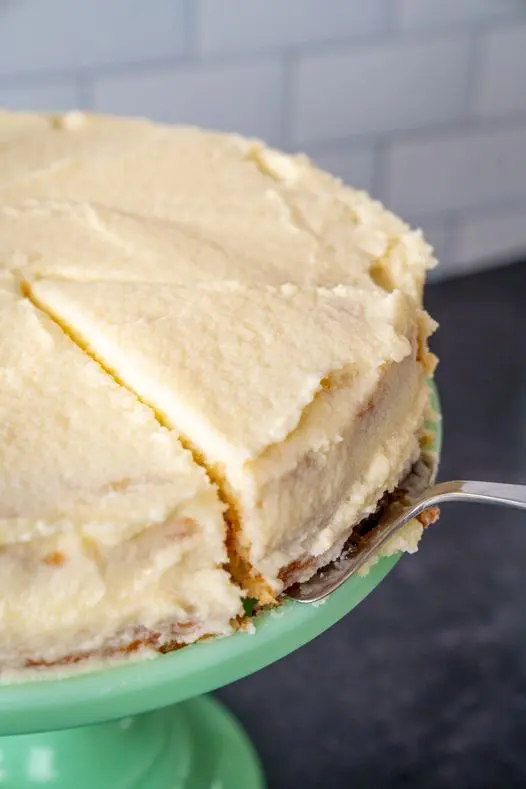
How to Serve This Recipe
The best white velvet cake recipe serves as a versatile canvas for a variety of finishes. Because the cake is so elegant, it pairs exceptionally well with a classic Swiss Meringue Buttercream, which is less sweet than American buttercream and mimics the cake’s silky texture. If you are serving this for a summer event, consider a filling of fresh macerated strawberries or a tart lemon curd to provide a bright contrast to the moist vanilla cake.
For presentation, keep the decorations as refined as the crumb. A simple “naked” frosting style or a smooth, pristine white-on-white finish with edible pearls looks stunning. If you want to lean into the wedding cake flavor, a light garnish of fresh flowers or a dusting of silver luster dust can elevate the look for a formal dinner party. Always serve the cake at room temperature; if it has been refrigerated, let it sit out for at least 30-60 minutes so the butter in the crumb can soften to its intended velvety state.
Storage and Make-Ahead
Storing Leftovers
Once frosted, the buttercream acts as an insulator, keeping the cake fresh. Store it under a cake dome at room temperature for up to two days. If your kitchen is warm or if you used a perishable filling (like fresh fruit), store it in the refrigerator in an airtight container for up to five days.
Freezing
These professional cake layers freeze beautifully. Wrap the un-frosted, cooled layers tightly in a double layer of plastic wrap and then a layer of aluminum foil. They can be frozen for up to three months. Thaw them in the refrigerator overnight while still wrapped to prevent condensation from making the cake soggy.
Making It Ahead
You can easily bake the layers a day in advance. Once cooled, wrap them and keep them at room temperature. Many decorators find that slightly chilled layers are easier to frost and trim, as the silk-textured crumb becomes a bit firmer and less likely to shed crumbs into the frosting.
Final Thoughts
Mastering the best white velvet cake recipe is a milestone for any home baker. It represents a move away from standard textures into the realm of professional-grade pastry work. By focusing on the temperature of your ingredients and the delicate handling of the cake flour, you create a dessert that is as much about the sensory experience of the texture as it is about the flavor. This cake is reliable, elegant, and guaranteed to be the highlight of your next celebration. Take your time with the creaming process, and you will be rewarded with a moist vanilla cake that your guests will be talking about long after the last crumb is gone.
Frequently Asked Questions
Can I use all-purpose flour if I don’t have cake flour?
While you can technically substitute it (remove 2 tablespoons of AP flour per cup and replace with cornstarch), the results will not be the same. Cake flour is chlorinated and milled much finer, which is essential for the specific silk-textured crumb that defines a velvet cake. For the best results, it is worth the trip to the store.
Can I turn this recipe into cupcakes?
Yes, this buttermilk white cake batter makes excellent cupcakes. Fill the liners about two-thirds full and reduce the baking time to 18-22 minutes. The result is a high-domed, incredibly soft cupcake that holds up well to heavy piping. Just be careful not to over-fill, as the velvet batter has a significant rise.
Why do I need to use only egg whites?
Using only whites ensures the cake remains bright white. Egg yolks contain fat and carotenoids that turn the cake yellow and make the flavor more “custardy.” For a wedding cake flavor profile, the clean, light lift of the whites is preferred. If you want a more golden, richer cake, you would be making a traditional yellow cake instead.
Is this cake sweet enough for a chocolate frosting?
Absolutely. While it is often paired with vanilla, the moist vanilla cake has a neutral enough sweetness to stand up to a rich dark chocolate ganache or a salted caramel buttercream. The slight tang from the buttermilk makes it an excellent partner for more intense, sugary toppings.
How do I prevent the cake from sticking to the pan?
For this best white velvet cake recipe, I recommend greasing the pans with butter, lining the bottoms with parchment paper, and then lightly dusting the sides with flour. This triple-threat method ensures that the delicate, soft edges of the cake don’t tear when you try to invert the pans.
Classic White Velvet Cake

This White Velvet Cake is incredibly soft, moist, and has a delicate crumb. Unlike a standard white cake, the "velvet" texture comes from the specific mixing method and the use of egg whites for a pure white color and light feel.
- 3 cups cake flour, sifted
- 2 cups granulated sugar
- 1 tablespoon baking powder
- 1/2 teaspoon salt
- 1 cup unsalted butter, room temperature
- 1 cup whole milk, room temperature
- 1 teaspoon vanilla extract
- 1/2 teaspoon almond extract
- 6 large egg whites, room temperature
- 1Preheat oven to 350°F (175°C). Grease and flour two 9-inch round cake pans.
- 2In a large bowl, whisk together the cake flour, sugar, baking powder, and salt.
- 3Add the softened butter and half of the milk. Beat on low speed until moistened, then increase to medium and beat for 2 minutes.
- 4In a separate bowl, whisk together the remaining milk, vanilla extract, almond extract, and egg whites.
- 5Gradually add the egg white mixture to the batter in three parts, beating for 30 seconds after each addition.
- 6Divide the batter evenly between the prepared pans.
- 7Bake for 30-35 minutes or until a toothpick inserted into the center comes out clean.
- 8Cool in pans for 10 minutes, then turn out onto wire racks to cool completely.
Keywords: white cake, velvet cake, dessert, baking, wedding cake, moist cake


