
German Chocolate Sheet Cake

There is something undeniably nostalgic about a best german chocolate sheet cake. Unlike a standard devil’s food or fudge cake, this recipe relies on a specific type of sweet baking chocolate that creates a mild, delicate crumb. The real star, however, is the iconic coconut pecan frosting. This golden, custardy topping is cooked on the stovetop until thick and rich, providing a beautiful textural contrast to the light sponge beneath. It is the kind of dessert that has anchored American potlucks and family celebrations for decades, offering a flavor profile that is sophisticated yet deeply comforting.
While the traditional version is often served as a towering layer cake, preparing it as a sheet cake makes the entire process much more approachable. You get the same incredible balance of flavors but with half the stress of assembly. Whether you are a seasoned baker or a beginner, this guide will help you master the traditional German chocolate cake method, ensuring a moist, airy result every single time.
Why You’ll Love This Recipe
- Unique Flavor Profile: By using sweet chocolate cake bars instead of bitter cocoa powder, the cake possesses a mellow, buttery sweetness that allows the vanilla and buttermilk to shine.
- Crowd-Friendly Format: Making this as a sheet cake means it is easy to transport, simple to slice, and provides the perfect frosting-to-cake ratio in every single bite.
- Superior Texture: The technique of folding in whipped egg whites creates an incredibly light and airy sponge that feels much more refined than a standard box mix.
- Authentic Custard Topping: The homemade coconut pecan frosting is rich, chewy, and deeply flavorful, far surpassing any store-bought alternative in both taste and quality.
Ingredients You’ll Need
Success with this best german chocolate sheet cake starts with selecting the right components. Each ingredient plays a specific role in achieving that signature light-yet-moist texture and the rich, caramel-like topping.
- German’s Sweet Baking Chocolate: This is the most critical ingredient. It is a mild, sweet chocolate developed by Samuel German, and it provides the classic flavor that distinguishes this from other chocolate cakes.
- Boiling Water: Used to melt the chocolate bars, the hot water ensures the chocolate is perfectly smooth and helps “bloom” the flavor before it enters the batter.
- Unsalted Butter: Butter provides the necessary fat for a tender crumb and a rich mouthfeel. Using unsalted allows you to control the exact salt content of the bake.
- Granulated Sugar: Beyond sweetness, sugar helps cream the butter to create air pockets, which contributes to the cake’s lift and structure.
- Eggs (Separated): This recipe uses a classic sponge technique. The yolks add richness to the batter, while the whites are beaten separately to provide a natural leavening.
- Buttermilk: The acidity in buttermilk reacts with the baking soda to create a soft, moist crumb and adds a very subtle tang that balances the sweetness.
- Cake Flour: Cake flour has a lower protein content than all-purpose flour, which results in a finer, more delicate texture that won’t feel heavy.
- Evaporated Milk: For the frosting, evaporated milk provides a concentrated creaminess that thickens beautifully into a custard without being as heavy as heavy cream.
- Shredded Coconut and Pecans: These provide the essential “crunch” and chew. Using sweetened shredded coconut adds moisture, while toasted pecans offer a nutty depth.
Variations and Smart Swaps
While the traditional recipe is a classic for a reason, there are several ways you can tweak this moist chocolate cake to suit your personal preferences or what you have in your pantry.
Nut Alternatives: If you aren’t a fan of pecans, toasted walnuts or even slivered almonds make an excellent substitute. They still provide that necessary crunch but offer a slightly different flavor profile.
Gluten-Free Option: You can successfully swap the cake flour for a high-quality gluten-free 1-to-1 baking flour. Just ensure the blend contains xanthan gum to help maintain the structure since the cake is already quite delicate.
Extra Chocolate Punch: If you prefer a more intense chocolate experience, you can drizzle the finished homemade sheet cake with a simple dark chocolate ganache before adding the coconut pecan topping. This adds a layer of bitterness that cuts through the sweet frosting.
Dairy-Free Swaps: You can replace the butter with a plant-based stick butter and use a “vegan buttermilk” made from soy milk and apple cider vinegar. For the frosting, full-fat canned coconut milk can replace the evaporated milk for an even more tropical flavor.
How to Make Best German Chocolate Sheet Cake
Step 1: Melt the Chocolate and Prep the Base
Start by breaking the sweet chocolate bars into small pieces and placing them in a heat-proof bowl. Pour the boiling water over the chocolate and stir gently until it is completely melted and glossy. This “blooming” process ensures the chocolate is evenly distributed throughout the batter. Set this mixture aside to cool slightly while you move on to the creaming process.
Step 2: Cream the Butter and Sugar
In a large mixing bowl, beat the softened butter and granulated sugar together until the mixture is light, fluffy, and pale yellow. This usually takes about 3 to 5 minutes. Incorporate the egg yolks one at a time, beating well after each addition. This stage is crucial for building the structural foundation of the cake. Once the yolks are in, stir in the melted chocolate and a splash of vanilla extract.
Step 3: Alternate the Dry Ingredients and Buttermilk
Begin adding the sifted cake flour, baking soda, and salt to the butter mixture, alternating with the buttermilk. Start and end with the flour. Mixing in stages prevents the batter from breaking and ensures that the flour is fully hydrated without overworking the gluten, which keeps the cake tender rather than tough.
Step 4: Fold in the Egg Whites
In a separate, clean bowl, beat the egg whites until they form stiff, upright peaks. This is the secret to the best german chocolate sheet cake texture. Gently fold the egg whites into the heavy chocolate batter using a spatula. Use a “cut and fold” motion to avoid deflating the air you’ve just beaten into the whites. Stop as soon as no white streaks remain.
Step 5: Bake to Perfection
Pour the batter into your prepared 9×13 pan and smooth the top. Bake in a preheated oven until a toothpick inserted into the center comes out clean or with just a few moist crumbs. Because this is a sheet cake, it bakes faster than layer rounds, so start checking a few minutes early. Let the cake cool completely in the pan before you even think about frosting it.
Step 6: Cook the Coconut Pecan Frosting
While the cake cools, combine the evaporated milk, sugar, egg yolks, butter, and vanilla in a saucepan over medium heat. Stir constantly as the mixture comes to a gentle boil. You are essentially making a stovetop custard. Continue cooking until the mixture thickens and turns a beautiful golden-brown color. Remove from the heat and stir in the coconut and pecans. Let the frosting cool until it reaches a spreadable consistency.
Pro Tips for Success
- Tip: Use Room Temperature Ingredients. Make sure your eggs, butter, and buttermilk are all at room temperature. This allows them to emulsify properly, creating a smooth, uniform batter that rises evenly.
- Tip: Don’t Overbeat the Batter. Once you add the flour, mix only until just combined. Overmixing at this stage will develop the gluten and result in a rubbery, dense cake.
- Tip: Achieving Stiff Peaks. Ensure your whisk and bowl are completely grease-free before beating the egg whites. Even a tiny drop of yolk or fat will prevent the whites from reaching their full volume.
- Tip: Toast Your Pecans. For the best flavor, toast the chopped pecans in a dry skillet or oven for 5 minutes before adding them to the frosting. This brings out their natural oils and adds a deeper nuttiness.
- Tip: Frost While Slightly Warm? While the cake should be cool, the frosting is easiest to spread when it is still slightly warm from the stovetop. If it gets too cold, it becomes very stiff and may tear the delicate surface of the cake.
Troubleshooting Common Problems
Why Is My Cake Dense and Not Airy?
The most common cause for a dense German chocolate cake is deflating the egg whites during the folding process. If you stir too vigorously, you lose the air bubbles that provide the lift. Additionally, check that your baking soda is fresh, as old leavening agents won’t produce the necessary carbon dioxide for a good rise.
Why Did My Frosting Not Thicken?
If your coconut pecan frosting remains runny, it likely wasn’t cooked long enough on the stovetop. It needs to reach a full, bubbling boil for several minutes to allow the egg yolks to cook and thicken the milk and sugar into a custard. Be patient and keep stirring until it coats the back of a spoon heavily.
Why Is the Cake Dry?
Overbaking is the primary culprit for a dry sheet cake. Sheet pans have a large surface area, meaning they can lose moisture quickly. Start testing for doneness at the 30-minute mark. If the edges are pulling away from the pan, it is likely finished.
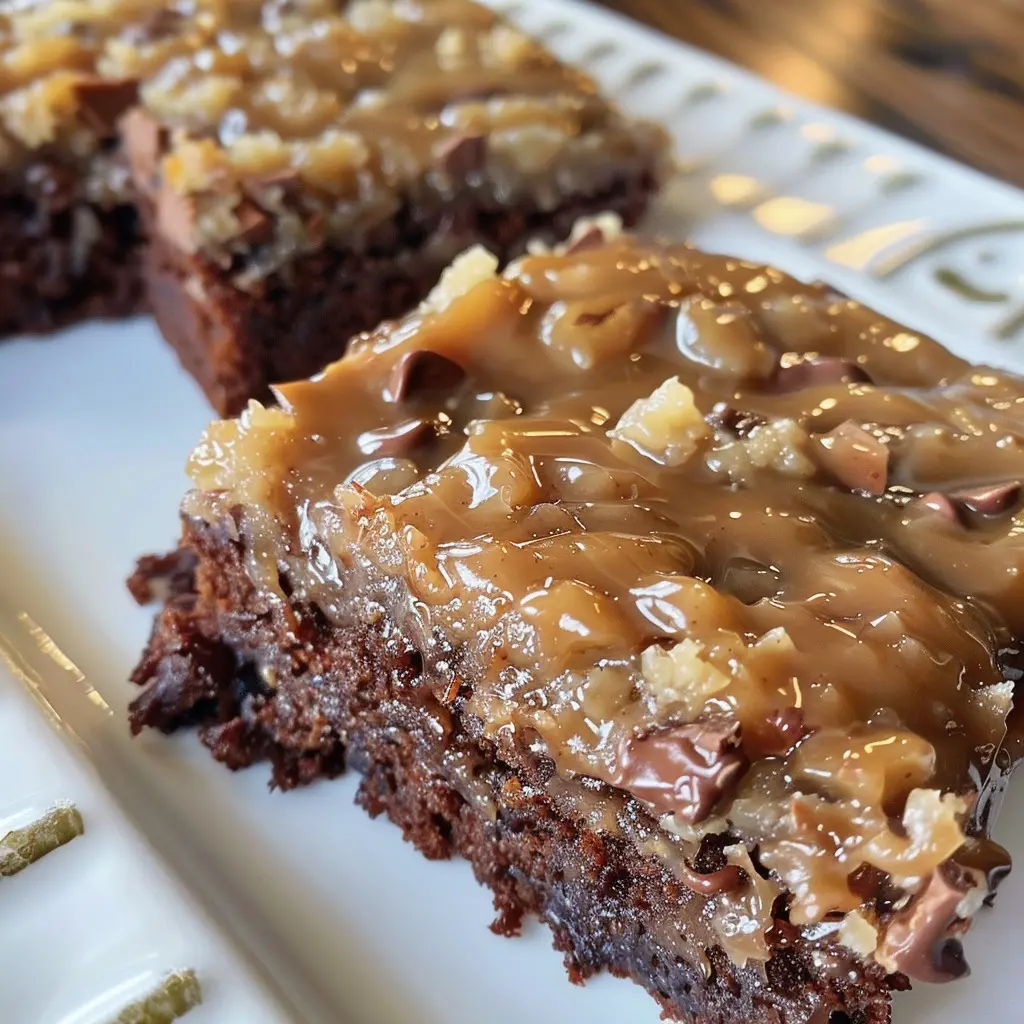
How to Serve Best German Chocolate Sheet Cake
This traditional German chocolate cake is best served at room temperature to ensure the frosting is soft and the cake is tender. Because it is a sheet cake, you can slice it into squares directly in the pan, making it perfect for casual gatherings or office parties.
Garnishes and Pairings
While the frosting provides plenty of flavor and texture, a small dollop of lightly sweetened whipped cream on the side can help cut through the richness. It also pairs exceptionally well with a hot cup of black coffee or a cold glass of milk, as the bitterness of the coffee complements the sweet chocolate and caramel notes of the frosting.
Presentation
If you want a more “bakery-style” look, you can sprinkle a few extra toasted pecan halves on top of each square right before serving. For an elegant touch, a very light dusting of powdered sugar on the plate can make the dark chocolate and golden frosting pop visually.
Storage and Make-Ahead
Storing Leftovers
Because the frosting contains egg yolks and milk, this cake should be stored in the refrigerator if you aren’t finishing it within a few hours. Cover the pan tightly with plastic wrap or aluminum foil to prevent the cake from absorbing other fridge odors. It will stay moist and delicious for up to 3 to 4 days.
Freezing
You can freeze the unfrosted cake base for up to 3 months. Wrap it tightly in several layers of plastic wrap and then foil. However, the coconut pecan frosting does not always freeze and thaw with the best texture, as the custard can become grainy. It is best to freeze the cake plain and make the frosting fresh when you are ready to serve.
Making It Ahead
You can easily bake the cake a day in advance. Once cooled, cover it and keep it at room temperature. You can also make the frosting a day early and store it in the fridge; just be sure to gently reheat it on the stovetop or in the microwave for a few seconds so it becomes spreadable again before applying it to the cake.
Final Thoughts
Mastering the best german chocolate sheet cake is a rite of passage for any home baker who loves American classics. By focusing on the traditional technique of folding in egg whites and taking the time to cook a proper stovetop custard frosting, you create a dessert that is far superior to anything found in a box. This moist chocolate cake strikes the perfect balance between light, airy sponge and rich, crunchy topping, making it a guaranteed hit for any occasion. Whether you’re serving it at a summer BBQ or a holiday dinner, it remains a timeless favorite that never goes out of style.
Frequently Asked Questions
Is German chocolate cake actually from Germany?
No, it is an American creation! The name comes from Samuel German, an American who developed the “German’s Sweet Chocolate” bar for the Baker’s Chocolate Company in 1852. The cake became famous in the 1950s after a recipe using his chocolate was published in a Texas newspaper.
Can I use regular cocoa powder instead of the baking bars?
While you can substitute cocoa powder in a pinch, the flavor will be significantly different. German chocolate is much milder and sweeter than unsweetened cocoa powder. If you must use cocoa, you will need to increase the sugar in the batter and add a bit more fat (like butter or oil) to mimic the properties of the melted baking bars.
Do I have to peel the pecans?
Pecans don’t have a “peel” like almonds, but they do have a thin skin. There is no need to remove this! In fact, the skin provides a lot of the characteristic flavor. Simply chop them up and toast them to bring out the best possible texture for your coconut pecan frosting.
Why do I have to separate the eggs?
Separating the eggs allows you to beat the whites into a foam, which acts as a powerful leavening agent. This is what gives the traditional German chocolate cake its signature “springy” and light texture. Without this step, the cake would be much denser and more like a standard snack cake.
Can I make this as a layer cake instead of a sheet cake?
Yes, this batter works perfectly in two 9-inch round cake pans. You will just need to adjust the bake time (usually 30-35 minutes) and ensure you have enough frosting to cover the middle layer and the top. For a layer cake, many people leave the sides unfrosted to show off the beautiful chocolate layers.
Does the frosting need to be refrigerated?
Yes, because the frosting is essentially a cooked egg custard with milk, it is safer to store the cake in the refrigerator. Just let the slices sit at room temperature for about 20 minutes before eating so the butter in the cake can soften back up for the best experience.
German Chocolate Sheet Cake

This German Chocolate Sheet Cake is a decadent, moist dessert featuring a rich chocolate base topped with the iconic, gooey coconut and pecan frosting. Perfect for crowds and celebrations.
- 2 cups all-purpose flour
- 2 cups granulated sugar
- 3/4 cup unsweetened cocoa powder
- 2 tsp baking soda
- 1 tsp baking powder
- 1 tsp salt
- 1 cup buttermilk
- 1/2 cup vegetable oil
- 2 large eggs
- 2 tsp vanilla extract
- 1 cup boiling water
- Frosting Ingredients:
- 1 cup evaporated milk
- 1 cup granulated sugar
- 3 large egg yolks
- 1/2 cup butter
- 1 tsp vanilla extract
- 1 1/3 cups sweetened shredded coconut
- 1 cup chopped pecans
- 1Preheat oven to 350°F (175°C) and grease a 13x9 inch baking pan.
- 2In a large bowl, whisk together flour, sugar, cocoa, baking soda, baking powder, and salt.
- 3Add buttermilk, oil, eggs, and vanilla; beat on medium speed for 2 minutes.
- 4Stir in boiling water by hand; the batter will be very thin.
- 5Pour into the prepared pan and bake for 30-35 minutes until a toothpick comes out clean.
- 6For the frosting, combine evaporated milk, sugar, egg yolks, butter, and vanilla in a saucepan.
- 7Cook over medium heat, stirring constantly, until thickened (about 12 minutes).
- 8Remove from heat and stir in coconut and pecans. Cool until spreadable, then frost the cooled cake.
Keywords: German chocolate cake, sheet cake, coconut pecan frosting, chocolate dessert, easy baking


