
Italian Cream Cake

The traditional italian cream cake recipe is a crowning achievement in the world of American Southern baking, offering a sophisticated blend of textures and flavors that few other desserts can match. Despite its name, this cake is a beloved staple of Southern hospitality, characterized by its moist buttermilk crumb, crunchy toasted pecans, and sweet shredded coconut. It is the quintessential celebration cake, frequently appearing at weddings, holiday dinners, and milestone birthdays where a standard sponge simply won’t suffice. What sets this Southern Italian cream cake apart is the unique combination of a rich, buttery base and the airy lift provided by whipped egg whites.
Achieving the perfect layered coconut cake requires a bit of patience and attention to detail, but the results are undeniably worth the effort. By focusing on the temperature of your ingredients and the gentle folding of the batter, you can create a towering dessert that is as light as it is decadent. This guide will walk you through the nuances of the traditional italian cream cake recipe, ensuring your finished product is moist, flavorful, and beautifully frosted every single time.
Why This Recipe Is a Keeper
- Dynamic Texture: Every bite of this buttermilk cake with pecans offers a delightful contrast between the soft, tender cake, the chewy coconut, and the crisp, toasted nuts.
- Balanced Flavor Profile: The natural tang of buttermilk and the acidity in the cream cheese frosting for cake perfectly balance the sweetness of the sugar and coconut.
- Impressive Presentation: With its high-reaching layers and rustic yet elegant frosting, this cake makes a stunning centerpiece for any dessert table or special event.
- Make-Ahead Friendly: Because the flavors actually deepen and the moisture settles over time, this cake often tastes even better on the second day, making it perfect for stress-free entertaining.
Ingredients You’ll Need
To create a truly authentic traditional italian cream cake recipe, you need ingredients that contribute to both structural integrity and sensory appeal. Each component plays a specific role in ensuring the cake is neither too heavy nor too fragile to hold the rich frosting.
- Unsalted Butter: Provides the rich, foundational flavor and a velvety mouthfeel. Using unsalted butter allows you to control the exact salt content of the batter.
- Buttermilk: This is the secret to the cake’s legendary tenderness. The acid in the buttermilk breaks down gluten strands, resulting in a crumb that is incredibly soft.
- Large Eggs (Separated): You will use the yolks for richness in the main batter and the whites to create a voluminous foam that lightens the heavy ingredients.
- Shredded Coconut: Typically, sweetened shredded coconut is used to add both moisture and a distinct, chewy texture that defines this layered coconut cake.
- Toasted Pecans: Toasting the pecans before adding them to the batter is essential, as it releases their natural oils and ensures they stay crunchy inside the moist cake.
- Cream Cheese: The base for the frosting must be full-fat and brick-style to ensure it has enough body to hold up between the heavy cake layers.
- Pure Vanilla Extract: A generous amount of vanilla enhances the nuttiness of the pecans and the floral notes of the coconut.
Variations and Smart Swaps
Nut Alternatives: If pecans aren’t your favorite or aren’t available, toasted walnuts make an excellent substitute. They provide a similar crunch and earthy flavor that complements the coconut beautifully.
Coconut Adjustments: For those who prefer a less sweet cake, you can substitute half of the sweetened shredded coconut with unsweetened desiccated coconut. This maintains the texture while slightly reducing the overall sugar impact.
Extract Variations: While vanilla is standard, adding a half-teaspoon of almond extract to the batter can emphasize the nutty characteristics of the traditional italian cream cake recipe and add a professional bakery aroma.
Fruit Additions: Some modern versions of this buttermilk cake with pecans include a thin layer of raspberry jam between the cake and the frosting to add a bright, tart contrast to the rich cream cheese layers.
How to Make the Traditional Italian Cream Cake Recipe
Step 1: Toast the Pecans and Prep Your Equipment
Begin by preheating your oven and preparing your cake pans with parchment paper and a light coating of flour. This is also the time to toast your chopped pecans. Spreading them on a baking sheet for just 5 to 7 minutes until they become fragrant is a vital step; it prevents the nuts from becoming soggy once they are folded into the moist batter. Allow them to cool completely before they touch the cake mixture to prevent the fats from melting prematurely.
Step 2: Cream the Butter and Sugars
In a large mixing bowl, beat the softened butter and granulated sugar together until the mixture is pale, fluffy, and noticeably increased in volume. This process, known as creaming, incorporates air into the fat, which helps the cake rise. Once fluffy, add the egg yolks one at a time, ensuring each is fully incorporated before adding the next. This creates a stable emulsion that will hold the rest of the liquid and dry ingredients together without curdling.
Step 3: Alternate the Dry Ingredients and Buttermilk
To maintain the structure of the traditional italian cream cake recipe, you must alternate adding the flour mixture and the buttermilk. Start with a third of the flour, follow with half of the buttermilk, and repeat, ending with the flour. This method prevents the batter from becoming over-saturated or overworked. Stir in the coconut and toasted pecans at the very end of this process, ensuring they are evenly distributed throughout the thick batter.
Step 4: Whip and Fold the Egg Whites
In a separate, perfectly clean bowl, whip the egg whites until they reach stiff peaks. This is the technical heart of the recipe. Gently fold about a third of the whites into the heavy batter to lighten it up, then carefully fold in the remaining whites using a spatula. Use a “cut and fold” motion to avoid deflating the air bubbles you worked so hard to create. This air is what gives the Southern Italian cream cake its signature light-yet-dense texture.
Step 5: Bake and Test for Doneness
Divide the batter evenly among your prepared pans and bake until the tops are golden brown and a toothpick inserted into the center comes out clean or with just a few moist crumbs. Avoid overbaking, as the coconut and nuts can cause the cake to dry out quickly if left in the heat too long. Allow the cakes to cool in the pans for about 10 minutes before transferring them to a wire rack to cool completely. The cakes must be entirely cold before you attempt to apply the cream cheese frosting for cake.
Step 6: Frost and Assemble the Layers
Whip the cream cheese and butter together until smooth before gradually adding powdered sugar and vanilla. To assemble, place the first layer on your serving plate and spread a generous amount of frosting to the edges. Repeat with the subsequent layers. Cover the top and sides with a thin “crumb coat” first, refrigerate for 20 minutes, and then apply the final decorative layer of frosting. This ensures a clean look without stray crumbs marring the white finish.
Pro Tips for Success
Tip: Use Room Temperature Ingredients. For the best emulsion, ensure your butter, eggs, and buttermilk are all at room temperature. Cold ingredients can cause the batter to break, leading to a greasy or dense finished product.
Tip: Don’t Overmix the Flour. Once the flour is added, mix only until just combined. Overworking the flour develops gluten, which will turn your tender buttermilk cake with pecans into something tough and bread-like.
Tip: Properly Clean Your Whisk. When whipping egg whites, ensure your bowl and whisk are completely free of grease or yolk. Even a tiny speck of fat will prevent the whites from reaching the stiff peaks necessary for the traditional italian cream cake recipe.
Tip: Chill Before Slicing. While you can eat the cake immediately, chilling it for at least two hours before serving allows the frosting to set and the layers to stabilize, resulting in much cleaner, more professional-looking slices.
Troubleshooting Common Problems
Why Did My Cake Sink in the Middle?
A sinking center usually happens if the oven door was opened too early or if the egg whites were folded in too aggressively, losing their air. It can also happen if the leavening agents (baking soda or powder) are expired. Ensure your oven is fully preheated and use a gentle hand when combining the whites with the batter.
Why Is My Cream Cheese Frosting Runny?
The most common cause of runny frosting is using cream cheese that is too warm or using the tub-style “spreadable” cream cheese instead of the blocks. If your frosting feels soft, refrigerate it for 30 minutes before spreading. You can also add a bit more powdered sugar to stiffen the consistency, though this will increase the sweetness.
Why Are the Pecans Sinking to the Bottom?
If your pecans all end up at the bottom of the layers, your batter may have been too thin. This often happens if the egg whites were deflated during folding. To help prevent this, ensure your pecans are chopped finely and toss them in a teaspoon of flour before adding them to the batter to help them “grip” the mixture.
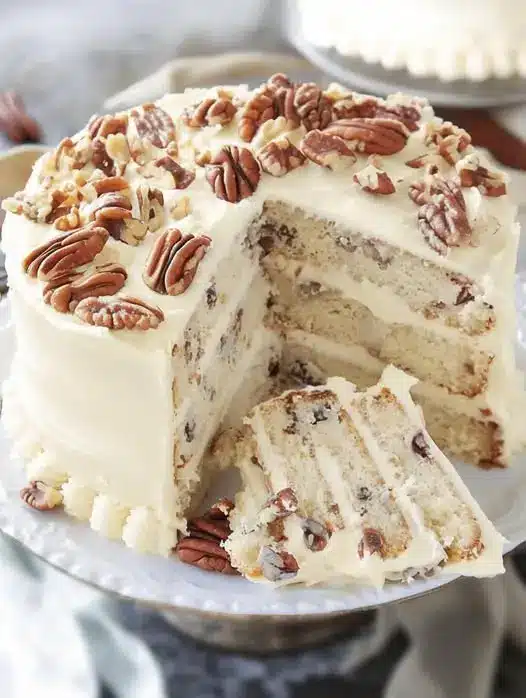
How to Serve the Traditional Italian Cream Cake
Presentation is key when serving a traditional italian cream cake recipe. Because the cake is quite rich, it is traditionally sliced into modest wedges. For a truly professional look, press additional chopped toasted pecans or large flakes of toasted coconut onto the lower third of the frosted cake sides.
Garnishes
Beyond the standard pecan topping, you can garnish the cake with whole pecan halves arranged in a sunburst pattern on top. Some bakers also like to add a light dusting of cinnamon or a few curls of white chocolate to highlight the creamy color of the frosting.
Perfect Pairings
This layered coconut cake pairs beautifully with a strong, dark roast coffee or a standard espresso, as the bitterness of the coffee cuts through the richness of the cream cheese. If serving at a celebration, a glass of slightly sweet sparkling wine or a dessert sherry can also complement the nutty flavors of the Southern Italian cream cake.
Storage and Make-Ahead
Storing Leftovers
Due to the high dairy content in the cream cheese frosting for cake, this dessert must be stored in the refrigerator. Place it in a cake carrier or cover the exposed sliced areas with plastic wrap to prevent the crumb from drying out. It will stay fresh and delicious for up to 5 days.
Freezing
This cake freezes exceptionally well. You can freeze the individual cake layers (unfrosted) by wrapping them tightly in plastic wrap and foil for up to 3 months. Alternatively, you can freeze individual slices of the fully frosted cake. Thaw overnight in the refrigerator before serving to maintain the best texture.
Making It Ahead
The traditional italian cream cake recipe is a great candidate for make-ahead preparation. You can bake the layers a day in advance and store them at room temperature (wrapped tightly). You can also frost the entire cake a full day before your event; the time spent in the fridge actually allows the moisture from the frosting to seep slightly into the cake, making it even more tender.
Final Thoughts
The traditional italian cream cake recipe is more than just a dessert; it is a labor of love that yields a truly world-class result. By mastering the balance of buttermilk, coconut, and pecans, you create a cake that feels both nostalgic and incredibly high-end. Whether you are a seasoned baker or taking on your first multi-layer project, following these steps ensures a buttermilk cake with pecans that will be remembered long after the last crumb is gone. Embrace the process, take your time with the egg whites, and enjoy the process of creating this Southern classic.
Frequently Asked Questions
Do I have to use buttermilk?
Yes, buttermilk is a critical component of the traditional italian cream cake recipe. The acidity is necessary to react with the baking soda for lift and to tenderize the flour. If you don’t have buttermilk, you can make a quick substitute by adding one tablespoon of lemon juice or white vinegar to a cup of whole milk and letting it sit for five minutes.
Can I make this cake without coconut?
While coconut is a defining characteristic of the layered coconut cake, you can omit it if you have a strong aversion. However, keep in mind that the coconut provides a significant amount of moisture and structure to the crumb. If you remove it, the cake may be slightly less chewy and more like a standard nut cake.
Why are my cake layers so thin?
Thin layers usually result from using pans that are too large (such as 10-inch pans instead of 8 or 9-inch) or from deflating the egg whites during the folding process. For the traditional italian cream cake recipe, it is essential to keep as much air in the batter as possible to ensure the layers rise significantly during baking.
Can I use canned frosting instead?
While you can technically use store-bought frosting, it is highly discouraged for this specific recipe. The cream cheese frosting for cake made from scratch has a specific tang and stability that store-bought versions lack. The homemade version is much better at supporting the weight of the heavy, nut-filled layers.
Is this cake actually from Italy?
Interestingly, the Southern Italian cream cake has no known origins in Italy. Most culinary historians believe it was created in the Southern United States, possibly named “Italian” due to the use of ingredients like almonds or walnuts in early versions, or simply as a way to denote a “fancy” or “continental” style of dessert.
Classic Italian Cream Cake

A Southern favorite featuring a moist crumb packed with shredded coconut and toasted pecans, finished with a luscious and velvety cream cheese frosting.
- For the Cake
- 1/2 cup unsalted butter, softened
- 1/2 cup vegetable shortening
- 2 cups granulated sugar
- 5 large eggs, separated
- 1 teaspoon vanilla extract
- 2 cups all-purpose flour
- 1 teaspoon baking soda
- 1 cup buttermilk
- 1 cup sweetened shredded coconut
- 1/2 cup chopped pecans
- For the Frosting
- 8 oz cream cheese, softened
- 1/2 cup unsalted butter, softened
- 1 pound powdered sugar
- 1 teaspoon vanilla extract
- 1/2 cup chopped pecans, for garnish
- 1Preheat oven to 350°F (175°C). Grease and flour three 9-inch round cake pans.
- 2In a large bowl, cream together 1/2 cup butter, shortening, and sugar until light and fluffy. Beat in egg yolks and 1 teaspoon vanilla.
- 3In a separate bowl, whisk together flour and baking soda. Add to the creamed mixture alternating with buttermilk, beginning and ending with flour.
- 4Stir in coconut and 1/2 cup chopped pecans.
- 5In a clean bowl, beat egg whites until stiff peaks form. Gently fold into the batter.
- 6Divide batter into prepared pans. Bake for 25 to 30 minutes or until a toothpick comes out clean. Cool in pans for 10 minutes before moving to wire racks.
- 7To make the frosting, beat cream cheese and 1/2 cup butter until smooth. Gradually add powdered sugar and 1 teaspoon vanilla, beating until creamy.
- 8Frost the cooled cake and garnish with the remaining pecans.
Keywords: Italian Cream Cake, Southern Recipe, Coconut, Pecan, Cream Cheese Frosting


