
Beef Stew Bread Bowl

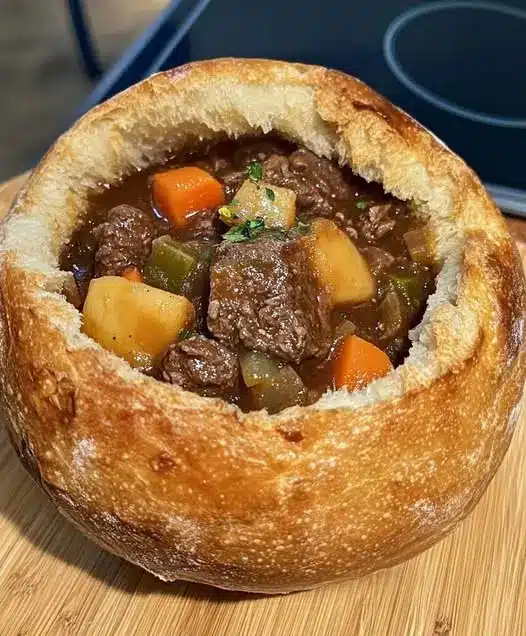
There is something uniquely comforting about a meal that serves as its own container. This beef stew bread bowl recipe transforms a humble, rustic stew into a restaurant-quality experience right in your own kitchen. Imagine tender, melt-in-your-mouth chunks of beef simmered in a rich, velvety gravy with earthy root vegetables, all nestled inside a crusty, hollowed-out sourdough loaf. As the stew sits, the bread absorbs those savory juices, creating a soft, flavorful interior while the outer crust maintains its satisfying crunch. It is the ultimate hearty winter dinner that promises warmth and satisfaction in every spoonful.
Making this dish is as much about the process as it is about the final result. From the initial sear of the beef to the slow simmer that fills your home with an irresistible aroma, this recipe is a celebration of classic comfort food recipes. While it looks impressive and sophisticated on the table, the techniques are approachable and grounded in traditional slow-cooking methods. Whether you are hosting a cozy dinner party or looking to upgrade your Sunday family meal, this recipe provides a tactile, sensory dining experience that is impossible to resist.
Why You’ll Love This Recipe
- Textural Contrast: The combination of the thick, succulent stew against the crisp, toasted walls of the bread bowl creates a multi-dimensional eating experience that a regular bowl simply cannot match.
- Interactive Dining: There is a playful, rustic joy in tearing off pieces of the “bowl” to dip into the gravy, making this a favorite for both children and adults who enjoy a more hands-on meal.
- Deep Flavor Profile: By utilizing a slow-simmering technique and properly searing the protein, this homemade beef stew develops a complex, savory depth that tastes even better the next day.
- Easy Presentation: Serving individual bread bowls automatically elevates the presentation of the meal, turning a simple stew into a centerpiece-worthy dish without needing extra garnishes or fancy plating.
Ingredients You’ll Need
To achieve the best results, selecting the right components for your beef stew bread bowl recipe is essential. Each ingredient plays a specific role in building layers of flavor and ensuring the bread maintains its structural integrity under the weight of the rich gravy.
- Beef Chuck Roast: This is the gold standard for stew. Its high fat and connective tissue content break down during the long cooking process, resulting in exceptionally tender meat and a rich sauce.
- Sourdough Bread Bowls: Sourdough is preferred for its sturdy crust and tangy flavor. It holds up significantly better than softer breads, preventing the stew from leaking through the bottom.
- Beef Stock: Use a high-quality, low-sodium stock to control the saltiness while providing a robust liquid base for the simmering process.
- Root Vegetables: Carrots and potatoes are the classic choices. They provide sweetness and starch, which naturally helps thicken the stew as they soften.
- Aromatics (Onion and Garlic): These provide the foundational flavors. Sautéing them until translucent releases their natural sugars and creates a fragrant base for the liquid.
- Tomato Paste: A small amount of tomato paste adds acidity and a deep umami character, which darkens the gravy and intensifies the beefy flavor.
- Worcestershire Sauce: This provides a hit of salt, spice, and vinegar, acting as a secret weapon to brighten the heavy flavors of the meat and broth.
- Fresh Herbs: Rosemary and thyme add an earthy, woody fragrance that cuts through the richness of the beef, providing a balanced, garden-fresh finish.
Variations and Smart Swaps
- Protein Alternatives: While chuck roast is traditional, you can use venison for a leaner, gamier profile, or even lamb for a more Mediterranean-inspired slow cooked beef stew.
- Bread Options: If sourdough isn’t available, look for hearty Italian rounds or French boules. The key is a thick, hard crust that can withstand the moisture of the stew.
- Vegetable Boost: Feel free to add parsnips, celery root, or even frozen peas at the very end of cooking to add more color and nutritional variety to the filling.
- Guinness Twist: Replace one cup of beef broth with a bottle of stout beer. The hops and malt add a dark, slightly bitter complexity that pairs beautifully with the sourdough.
How to Make a Beef Stew Bread Bowl
Step 1: Sear the Beef for Maximum Flavor
Begin by patting your beef cubes dry with paper towels; moisture on the surface of the meat will cause it to steam rather than brown. In a heavy-bottomed pot or Dutch oven, heat oil over medium-high heat. Work in batches to sear the beef until a deep, dark crust forms on all sides. This “Maillard reaction” is critical because those browned bits at the bottom of the pot, known as fond, are concentrated flavor nuggets that will eventually dissolve into your gravy.
Step 2: Sauté the Aromatics and Build the Base
Remove the meat from the pot and add your diced onions and carrots. Sauté them in the remaining beef fat until they begin to soften and the onions turn a pale golden color. Add the garlic and tomato paste during the last minute of this process. Cooking the tomato paste for a minute or two “caramelizes” it, removing the raw metallic taste and replacing it with a rich, mellow sweetness that defines a high-quality beef stew bread bowl recipe.
Step 3: Deglaze and Begin the Simmer
Pour in a splash of beef stock or red wine to deglaze the pot, using a wooden spoon to scrape up all the browned bits from the bottom. Return the beef to the pot along with the remaining stock, Worcestershire sauce, and herbs. Bring the liquid to a gentle boil, then immediately reduce the heat to a low simmer. Covering the pot and allowing it to cook slowly ensures the beef fibers relax and become tender without drying out.
Step 4: Add Potatoes and Thicken the Gravy
About halfway through the cooking time, add the cubed potatoes. Adding them later prevents them from disintegrating into mush before the beef is finished. If you prefer a thicker consistency, you can whisk together a small slurry of flour and water and stir it into the pot during the final 30 minutes. The stew is ready when the beef pulls apart easily with a fork and the liquid has reduced into a glossy, thick gravy.
Step 5: Prepare the Sourdough Bread Bowls
While the stew finishes, use a small serrated knife to cut a circle out of the top of each sourdough loaf. Remove the “lid” and carefully hollow out the center, leaving about an inch of bread against the crust to ensure the bowl stays strong. Do not throw away the bread you removed! It can be toasted and used for dipping. Place the hollowed-out bowls in the oven for a few minutes to crisp up the interior, which creates a protective barrier against the liquid stew.
Step 6: Assemble and Serve
Ladle the hot stew into the prepared bread bowls, ensuring a generous mix of beef and vegetables in each. The heat from the stew will further soften the inner lining of the bread. Top with a sprinkle of fresh parsley or thyme for a pop of color, and place the bread lid back on top at an angle for a professional, restaurant-style presentation.
Pro Tips for Success
- Don’t Crowd the Pan: When searing the beef, ensure there is space between the chunks. If the pan is too full, the temperature will drop, and the meat will grey rather than brown.
- Uniformity Matters: Cut your potatoes and carrots into similar-sized pieces so they cook at the same rate, preventing some from being hard while others are overcooked.
- Toast the Interior: Always toast your hollowed-out bread bowls for 5-7 minutes at 350°F before filling. This “seals” the bread and prevents the beef stew bread bowl recipe from turning the bottom of the loaf into a soggy mess.
- Low and Slow: Never rush the simmering process. Boiling the beef on high heat will actually make the muscle fibers toughen up. A gentle bubble is all you need for a slow cooked beef stew.
- Season in Layers: Taste the stew at the beginning, middle, and end. Salt and pepper should be added incrementally to ensure the flavors are perfectly balanced.
Troubleshooting Common Problems
Why Is My Beef Still Tough?
If the beef is chewy, it simply hasn’t cooked long enough. Beef chuck roast contains a lot of collagen, which only turns into tender gelatin after prolonged exposure to low heat. Put the lid back on and give it another 30 minutes; it will eventually give in and become tender.
The Stew Is Too Thin to Fill a Bread Bowl
A thin, watery stew will soak through the bread too quickly. To fix this, you can simmer the stew with the lid off for the final 20 minutes to evaporate excess liquid, or add a cornstarch slurry (one tablespoon cornstarch mixed with one tablespoon cold water) and boil for one minute until thickened.
The Bread Bowl Leaked
This usually happens if you hollowed out too much of the bread or used a loaf with a very thin crust. Next time, leave a thicker “wall” of bread (at least an inch) and ensure you are using a dense sourdough or crusty artisan loaf rather than a soft dinner roll style bread.
How to Serve Your Beef Stew
The presentation of a beef stew bread bowl recipe is its greatest asset. When serving, place each bread bowl on a slightly larger plate to catch any potential drips or crumbs. It is traditional to serve the “cap” of the bread alongside the bowl, as it provides a perfect extra piece of crusty goodness for those who want to scoop out every last drop of gravy.
Garnishes and Toppings
Freshness is the perfect foil for a rich, heavy stew. A generous sprinkle of chopped Italian parsley, chives, or even a few cracks of fresh black pepper can brighten the dish. For a bit of luxury, a small dollop of sour cream or a sprinkle of sharp cheddar cheese can be added directly onto the stew inside the bowl.
Side Dish Ideas
Because the bread bowl provides a massive amount of carbohydrates, you don’t need much else. However, a crisp, acidic side salad with a lemon vinaigrette or some roasted green beans can provide a refreshing contrast to the savory, heavy nature of the hearty winter dinner.
Storage and Make-Ahead
Storing Leftovers
If you have leftover stew, do not store it inside the bread bowl. The bread will become completely saturated and fall apart overnight. Instead, transfer the stew to an airtight container and store it in the refrigerator for up to four days. Store the bread separately in a dry paper bag at room temperature.
Reheating Instructions
Reheat the stew on the stovetop over medium-low heat, adding a splash of water or broth if it has thickened too much in the fridge. To revive the bread, place it in a 350°F oven for 5 minutes until the crust is crisp again before filling it with the hot stew.
Making It Ahead
The stew itself is actually better when made a day in advance, as the flavors have more time to meld. If you are preparing this for a crowd, cook the stew fully, refrigerate it, and then simply reheat it and prep your fresh bread bowls right before you are ready to serve.
Final Thoughts
Mastering this beef stew bread bowl recipe is a rewarding endeavor that brings a touch of rustic charm to your dining table. It is a dish that encourages lingering over the meal, savoring the slow-developed flavors and the unique texture of the sourdough. By focusing on quality ingredients and patient cooking techniques, you can create a homemade beef stew that rivals the best comfort food found in any cozy bistro. It is warm, filling, and undeniably satisfying—the perfect way to embrace the colder months.
Frequently Asked Questions
What is the best type of beef for stew?
For a beef stew bread bowl recipe, the best cut is undoubtedly beef chuck roast. It comes from the shoulder and contains the perfect ratio of lean meat to fat and connective tissue. As it simmers, the collagen melts into the sauce, providing a silky mouthfeel and ensuring the beef stays juicy and tender rather than becoming dry and stringy.
Can I make this stew in a slow cooker?
Yes, you can certainly adapt this into a slow cooked beef stew for a Crock-Pot. Sear the beef and sauté the aromatics in a pan first to develop flavor, then transfer everything to the slow cooker. Cook on low for 7-8 hours or on high for 4-5 hours. Just ensure the liquid level isn’t too high, as slow cookers don’t allow for evaporation, which could lead to a thinner stew.
How do I keep the bread bowl from getting soggy?
The secret is a two-step process: choose a very crusty, dense bread like sourdough and toast the hollowed-out bowls in the oven before filling them. The heat dries out the interior surface of the bread, creating a “crust” on the inside that acts as a barrier, slowing down the absorption of the liquid and keeping the bowl intact longer.
Can I freeze beef stew?
Beef stew freezes beautifully! Store it in freezer-safe containers for up to three months. However, the potatoes may change texture slightly and become a bit grainy after thawing. If you plan on freezing the entire batch, you might consider leaving the potatoes out and adding fresh ones when you reheat the stew for serving.
What if I can’t find individual bread bowls?
If your local bakery doesn’t sell small round boules, you can buy one large sourdough loaf and turn it into a communal “stew pot.” Everyone can scoop their portion out of the center, and you can tear the walls of the large loaf apart as you go. It’s a very social and fun way to share a hearty winter dinner with friends or family.
Do I have to use wine in the stew?
Not at all. While red wine adds a lovely depth and acidity, you can easily substitute it with extra beef broth or even a tablespoon of balsamic vinegar. The goal is to provide a bit of acidity to balance the richness of the beef fat, but the stew will still be delicious using only high-quality stock and aromatics.
Hearty Beef Stew Bread Bowl

Warm up with this ultimate comfort food: a rich, savory beef-style stew served in a toasted sourdough bread bowl. Perfect for chilly evenings!
- 4 large sourdough bread bowls
- 1 lb vegetarian beef-style tips or chunks
- 3 large potatoes, cubed
- 2 carrots, sliced
- 2 stalks celery, chopped
- 1 onion, diced
- 3 cups vegetable broth
- 1 tbsp tomato paste
- 1 tsp dried thyme
- 2 tbsp flour
- Salt and pepper to taste
- 1In a large pot, sauté onions, carrots, and celery until softened.
- 2Add the vegetarian beef tips and brown slightly.
- 3Stir in flour and tomato paste, cooking for 1 minute.
- 4Gradually pour in broth, then add potatoes and thyme.
- 5Simmer for 30 minutes or until potatoes are tender and stew has thickened.
- 6Cut the tops off bread bowls and hollow out the centers.
- 7Ladle stew into bowls and serve immediately.
Keywords: beef stew, bread bowl, comfort food, dinner, vegetarian stew


