
Meatloaf with Mashed Potatoes and Cheese

There is something inherently comforting about a platter of cheesy meatloaf with mashed potatoes landing on the dinner table at the end of a long day. This dish represents the pinnacle of American comfort food dinner, combining the savory, umami-rich flavors of a well-seasoned loaf with the creamy, buttery clouds of perfectly whipped spuds. While traditional meatloaf is a staple in many households, the addition of molten cheese elevates the experience from a standard weekday meal to something truly indulgent that children and adults alike will request on repeat.
Creating this easy weeknight meal is less about complex culinary gymnastics and more about understanding the harmony of textures. The secret lies in a moist meat mixture that doesn’t crumble under the knife, paired with a tangy glaze and a hidden pocket of gooey cheese that surprises you with every bite. It is an approachable, satisfying, and deeply nostalgic meal that transforms humble ingredients into a centerpiece-worthy feast.
Why You’ll Love This Recipe
- The Ultimate Texture: By using a specific ratio of binders and moisture-rich aromatics, this moist meatloaf recipe avoids the common pitfall of being dry or dense, resulting in a tender crumb that melts in your mouth.
- Gooey Cheese Surprise: Incorporating cheese—whether it’s folded into the mix or stuffed in the center—adds a creamy richness that balances the savory beef and the acidic sweetness of the tomato glaze.
- A Complete Meal: This family-friendly dinner provides protein and starch in one cohesive presentation, making it a “one-stop-shop” for a balanced and filling evening meal.
- Superior Leftovers: Like many braised or baked meat dishes, the flavors of the meatloaf deepen overnight, making the next day’s sandwiches arguably as good as the initial dinner.
Ingredients You’ll Need
The success of a cheesy meatloaf with mashed potatoes depends on choosing ingredients that provide both structural integrity and deep flavor. You don’t need a massive pantry to pull this off, but the quality of your staples will determine how well the final dish holds together and how vibrant the flavors remain after an hour in the oven.
- Ground Beef (80/20 Blend): For the best flavor and moisture, a slightly higher fat content is essential. Lean beef can lead to a crumbly, dry loaf, while the fat in an 80/20 blend renders out to baste the meat from within.
- Breadcrumbs and Milk (The Panade): Soaking breadcrumbs in milk creates a “panade.” This mixture coats the meat proteins, preventing them from bonding too tightly and turning the meatloaf into a tough “brick.”
- Sharp Cheddar Cheese: A high-quality sharp cheddar provides enough acidity and bite to cut through the richness of the beef. Using freshly grated cheese is preferred as it melts smoother than pre-shredded varieties.
- Aromatics (Onion and Garlic): Finely minced or grated onion provides moisture and a sweet, foundational flavor. Sautéing them briefly before adding them to the meat ensures they are fully tender by the time the loaf is done.
- Worcestershire Sauce: This fermented condiment acts as a liquid gold mine of umami, adding depth and a slightly savory-tangy note that highlights the beefiness of the dish.
- Starchy Russet Potatoes: For homemade mashed potatoes, Russets are the gold standard. Their high starch content and low moisture allow them to mash into a light, fluffy texture that absorbs butter and cream efficiently.
- Unsalted Butter and Heavy Cream: These are the pillars of great mashed potatoes. Using unsalted butter allows you to control the seasoning, while heavy cream provides a luxurious mouthfeel that milk alone cannot achieve.
Variations and Smart Swaps
- The Protein Swap: If you prefer a lighter profile, you can substitute half of the ground beef with ground pork or even use ground turkey. Just ensure you increase the moisture binders if using turkey to prevent dryness.
- Change Up the Cheese: While cheddar is classic, using Pepper Jack adds a subtle heat, or Smoked Gouda can provide a sophisticated, outdoor-grilled flavor to your cheesy meatloaf with mashed potatoes.
- Glaze Alternatives: Instead of the traditional ketchup-based glaze, try using a thick BBQ sauce or a balsamic reduction for a more modern, tangy twist on the topping.
- Potato Mix-ins: Fold in roasted garlic, chopped chives, or even a dollop of sour cream into your mashed potatoes to add layers of flavor and a silky tang to the side dish.
How to Make Cheesy Meatloaf with Mashed Potatoes
Step 1: Prepare the Potato Base
Start by peeling and dicing your Russet potatoes into uniform chunks. Consistency is key here; if the pieces vary too much in size, the smaller ones will become waterlogged before the larger ones are tender. Place them in cold salted water and bring to a boil. Cooking them from a cold start ensures the exterior doesn’t disintegrate before the center is cooked through. Once fork-tender, drain them thoroughly and let them sit in the hot pot for a minute to allow excess steam to escape—this “drying” step is vital for a fluffy texture.
Step 2: Build the Flavor Foundation
In a small skillet, sauté your finely minced onions and garlic in a touch of butter until they are translucent and fragrant. This step removes the harsh “raw” bite of the onion and begins the caramelization process, which adds a subtle sweetness to the moist meatloaf recipe. Once cooled slightly, mix these aromatics with your milk-soaked breadcrumbs, egg, and seasonings. This creates a flavor slurry that ensures every inch of the meat is evenly seasoned without overworking the beef later.
Step 3: Shape and Stuff the Meatloaf
Gently combine the ground beef with your flavor slurry. It is imperative not to over-mix at this stage; using your hands is often the best way to keep the mixture light. Place half of the meat into a loaf pan or onto a lined baking sheet. Create a shallow well in the center and fill it with your grated cheddar cheese. Cover with the remaining meat and seal the edges tightly. This “stuffing” method creates a molten cheese core that remains contained until the meatloaf is sliced.
Step 4: Bake and Apply the Glaze
Slide the loaf into a preheated oven. After the initial phase of cooking has set the shape of the loaf, brush on your glaze. Applying the glaze too early can cause the sugars to burn, but applying it with about 15-20 minutes left in the baking process allows it to tack up and form a beautiful, shiny lacquer. Use a meat thermometer to ensure the internal temperature reaches 160°F, ensuring the meat is safe and the cheese center is fully melted.
Step 5: Finish the Creamy Mash
While the meatloaf rests—a crucial step for juice redistribution—finish the potatoes. Pass them through a ricer or use a masher, then gently fold in warm cream and cold butter. Warming the cream prevents the potatoes from cooling down too quickly, while cold butter creates a more stable emulsion for a silkier finish. Season generously with salt and white pepper for a clean look and a homemade mashed potatoes experience that rivals any steakhouse.
Pro Tips for Success
- Tip: Don’t Overwork the Meat. Over-mixing causes the proteins to break down and creates a rubbery texture. Mix just until the ingredients are incorporated for a tender, juicy result.
- Tip: Grate Your Own Cheese. Pre-shredded cheese is coated in potato starch to prevent clumping, which can interfere with the melting process inside the meatloaf. Freshly grated cheese provides a much better “cheese pull.”
- Tip: Let the Meatloaf Rest. Cutting into the loaf immediately after it leaves the oven will cause all the savory juices (and the melted cheese) to run out. Give it 10 minutes to settle.
- Tip: Warm the Potato Liquid. Always heat your milk or cream before adding it to the mashed potatoes. Cold liquid can shock the starches and lead to a gummy, unpleasant texture.
- Tip: Use a Baking Sheet. Baking the meatloaf on a sheet rather than in a loaf pan allows the edges to caramelize and gives the fat a place to drain away, resulting in a better crust.
How to Serve Cheesy Meatloaf with Mashed Potatoes
Presentation is everything when serving a comfort food dinner. To showcase the “cheesy” aspect of the dish, slice the meatloaf into thick, one-inch slabs. This reveals the beautiful molten center and the distinct layers of the glaze and meat. Arrange two slices per plate, leaning them slightly against a generous mound of the creamy mashed potatoes. This “propped” arrangement helps keep the glaze from running into the potatoes before you’re ready to eat.
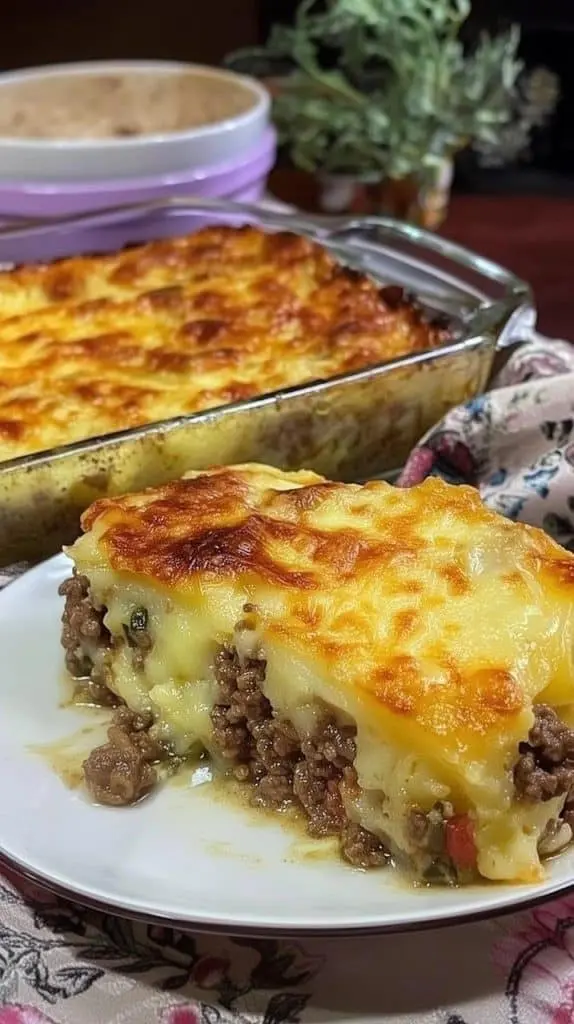
To brighten up the plate, consider adding a vibrant green garnish. Freshly chopped parsley or a sprinkle of chives over the potatoes adds a pop of color and a mild onion note that complements the beef. A side of roasted carrots or steamed green beans provides a necessary crunch and a bit of sweetness to balance the salty, savory profile of the main dish. For the ultimate indulgence, you can even spoon a bit of the pan drippings or a simple brown gravy over the potatoes.
Storage and Make-Ahead
Storing Leftovers
Leftover cheesy meatloaf with mashed potatoes can be stored in an airtight container in the refrigerator for up to 3 to 4 days. It is often best to store the meatloaf and the potatoes in separate containers to prevent the potatoes from absorbing too much moisture from the meat and glaze.
Reheating
To maintain the moisture in the meatloaf, reheat slices in the oven at 325°F covered with foil, adding a splash of water or beef broth to the pan. For the mashed potatoes, a splash of milk and a quick stir during microwaving or stovetop heating will restore their creamy consistency.
Making It Ahead
You can prepare the meatloaf mixture a day in advance and keep it tightly wrapped in the fridge. This actually allows the flavors to meld even further. However, mashed potatoes are always best made fresh, as the starch structure changes significantly once cooled and reheated.
Final Thoughts
Mastering a cheesy meatloaf with mashed potatoes is a rite of passage for any home cook looking to provide a truly soul-warming meal. By focusing on the small details—like the moisture-locking panade, the high-quality sharp cheddar, and the technique of drying the potatoes—you transform a basic dinner into a culinary highlight. It is a dish that proves you don’t need expensive ingredients to create a memorable experience. Whether it’s a rainy Tuesday or a Sunday family gathering, this classic combination remains a timeless favorite for very good reason.
Frequently Asked Questions
Can I make this recipe gluten-free?
Absolutely. To make this a gluten-free comfort food dinner, simply swap the traditional breadcrumbs for a gluten-free variety or use crushed pork rinds for a zero-carb binder. Ensure your Worcestershire sauce is also a certified gluten-free brand, as some contain barley malt vinegar.
Why did my meatloaf fall apart when I sliced it?
Crumbly meatloaf is usually caused by one of two things: a lack of binder (eggs and breadcrumbs) or cutting it too soon. Ensure you follow the binder ratios carefully and, most importantly, let the loaf rest for at least 10 minutes after baking so the proteins can firm up.
What is the best cheese to use for the center?
While we recommend sharp cheddar for its flavor, any good melting cheese will work. Mozzarella provides the best “stretch,” while Monterey Jack is very creamy. Avoid very hard cheeses like Parmesan for the center, as they won’t provide that molten texture you’re looking for.
Can I freeze the cooked meatloaf?
Yes, meatloaf freezes exceptionally well. Wrap the cooled loaf (or individual slices) tightly in plastic wrap and then foil. It will stay fresh for up to 3 months. Thaw it in the refrigerator overnight before reheating. We do not recommend freezing the mashed potatoes, as they can become grainy upon thawing.
How do I prevent the meatloaf from being greasy?
Using a baking rack set over a sheet pan allows the rendered fat to drip away from the meat. If you use a loaf pan, the meat sits in its own fat, which can make the bottom soggy. Also, ensure you are using an 80/20 blend; anything fattier than that will produce excessive grease.
Vegetarian Meatloaf with Mashed Potatoes and Cheese

A savory, meatless version of the classic meatloaf, layered with fluffy garlic mashed potatoes and topped with melted cheddar cheese for a perfect comfort meal.
- 2 cups cooked brown lentils, well-drained
- 1 cup finely chopped mushrooms
- 1/2 cup panko breadcrumbs
- 1 large egg, beaten
- 1/4 cup ketchup
- 1 tbsp soy sauce
- 1 tsp dried thyme
- 4 large Russet potatoes, peeled and boiled
- 1/4 cup salted butter
- 1/2 cup whole milk
- 1.5 cups shredded sharp cheddar cheese
- 1Preheat your oven to 375°F (190°C) and grease a standard loaf pan.
- 2In a large mixing bowl, combine the cooked lentils, mushrooms, breadcrumbs, egg, ketchup, soy sauce, and thyme. Mix until well incorporated.
- 3Press the lentil mixture firmly into the prepared loaf pan.
- 4Bake for 30 minutes until the edges are firm.
- 5While the loaf is baking, mash the boiled potatoes with butter and milk until smooth and creamy.
- 6Remove the loaf from the oven, spread the mashed potatoes evenly across the top, and sprinkle generously with cheddar cheese.
- 7Return to the oven and bake for an additional 15-20 minutes, or until the cheese is melted and slightly golden.
- 8Let the loaf rest for 10 minutes before slicing to ensure it holds its shape.
Keywords: vegetarian meatloaf, meatless loaf, mashed potatoes, cheesy dinner, plant-based comfort food, savory lentils


